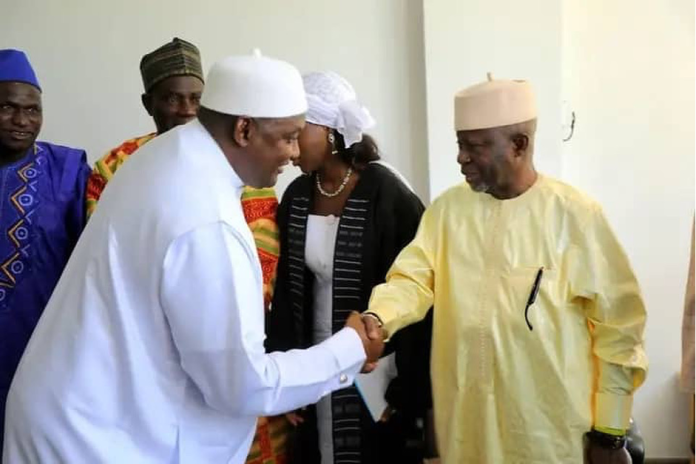
Adama Barrow secured victory in the 2016 election, defeating then-incumbent Yahya Jammeh in The Gambia. This electoral triumph was particularly significant as it marked the end of a long and often oppressive era under Jammeh's rule, positioning Barrow as a figure of hope and change. Barrow's win marked a significant political shift in the nation, ushering in expectations of democratic reform and improved governance after decades of authoritarianism. The article posits that elections function as performance reviews for leaders, rather than occasions for expressing gratitude for past achievements. This perspective frames the electoral process as an assessment of current governance and future promises, rather than a reward for historical actions or a mere acknowledgment of a leader's role in a previous transition. It emphasizes that the electorate's focus should be on the tangible results and the direction a leader is steering the country, rather than on their initial role in overcoming a past challenge.
The Shadow of Jammeh's Rule
Yahya Jammeh governed The Gambia for twenty-two years before his departure from power, a period characterized by significant human rights abuses and economic mismanagement. His rule, which began with a military coup in 1994, had deeply entrenched itself in the fabric of Gambian society, making his eventual defeat and departure a momentous event. His downfall was attributed to a combination of factors, according to reports. These included the unified efforts of various coalition partners who successfully rallied behind a single candidate, thus presenting a formidable challenge to the incumbent. Sustained diplomatic engagement by ECOWAS, the Economic Community of West African States, played a key role in mediating the post-election crisis and ensuring a peaceful transfer of power. The application of regional military pressure from ECOWAS member states showed the international community's resolve to uphold the democratic outcome. Jammeh's own strategic miscalculations were also cited as contributing significantly to the end of his lengthy rule, as his refusal to concede defeat ultimately led to his isolation and the international community's firm stance against his continued hold on power. The end of his presidency marked a profound period of transition for the nation, moving away from an era that had defined Gambian politics for over two decades and offering a fresh start for its citizens.
A Presidency Lacking Substance
Adama Barrow's presidency, spanning from 2016 to the present, has been described as intellectually thin and administratively inert. This assessment suggests a leadership style that has struggled to articulate a clear vision for the nation's development and implement effective policies. Throughout this period, living costs in The Gambia have climbed steadily, placing an increasing burden on ordinary citizens, while incomes have largely stagnated for its citizens, leading to a decline in real purchasing power and a growing sense of economic hardship. Public institutions within the nation are characterized as being swollen with loyalty appointments, yet simultaneously starved of competence. This situation implies that positions of authority and influence are often filled based on personal allegiance rather than merit or expertise, which inevitably compromises the efficiency and effectiveness of government services and operations.
Critics also point to the handling of transitional justice under Barrow's administration, noting that it has been selectively embraced and subsequently diluted. The process, intended to address the abuses of the Jammeh era and provide redress for victims, has been perceived as lacking the necessary political will to fully implement its recommendations, leading to concerns about accountability and reconciliation. The country's foreign policy is often seen as oscillating between dependency on external actors and a general incoherence in its direction. This lack of a consistent and strong foreign policy strategy can undermine the nation's standing on the international stage and its ability to pursue its national interests effectively. These factors collectively contribute to a perception of a presidency struggling to deliver substantive governance, leaving many Gambians questioning the trajectory of their country under the current leadership.
The Argument Against Re-election
The article asserts that President Adama Barrow's administration asks Gambians to cast their votes not for a vision of the future, but rather against their collective memory of past challenges. This framing suggests that the government might be leveraging the historical context of Jammeh's rule to downplay its own shortcomings, rather than presenting a compelling case for its future plans and achievements. Throughout his tenure, youth unemployment in The Gambia has reportedly become a permanent fixture of the economic landscape, indicating a persistent failure to create sufficient opportunities for the younger generation, which constitutes a significant portion of the population. This entrenched issue contributes to social instability and a sense of disillusionment among young Gambians.
Critics observe that while anti-corruption rhetoric is frequently employed by the government, concrete anti-corruption actions remain scarce. This disparity between proclaimed intentions and actual implementation raises questions about the administration's commitment to tackling graft and promoting transparency. Ministers within Barrow's cabinet are rotated not based on their performance, but reportedly on their proximity and loyalty to the president. Such a practice suggests a focus on consolidating personal power and maintaining political alliances rather than prioritizing effective governance and ministerial accountability. This approach can lead to instability within government ministries, hinder long-term policy implementation, and ultimately undermine public trust in the administration's ability to govern impartially and efficiently. The cumulative effect of these criticisms suggests a growing sentiment that the current leadership has not lived up to the hopeful expectations that accompanied its initial ascent to power.