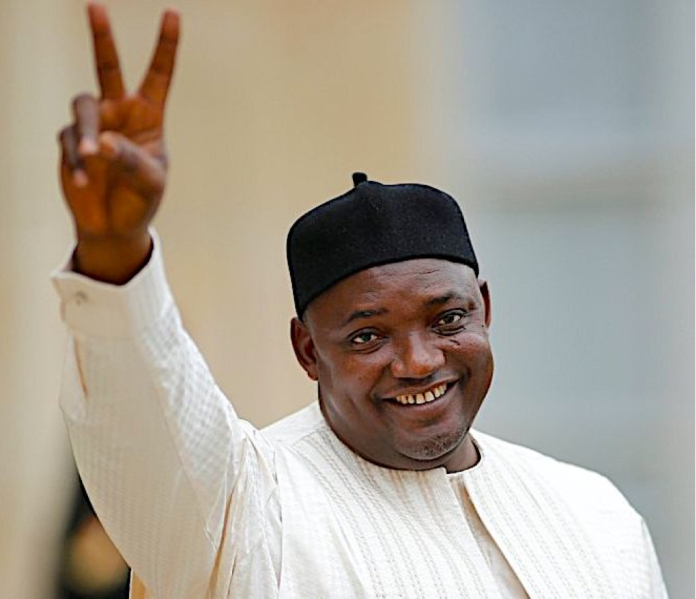
President Adama Barrow will indeed seek a third term in office, a decision that has drawn significant scrutiny and prompted an article urging him against such a move. The article argues that a victory for Mr. Barrow in the December 2026 elections would represent an illusory success and a stain on his legacy. This potential outcome, the article states, would be built upon broken promises, fundamentally undermining the democratic principles he once championed. The article specifically urges President Barrow not to seek a third term in office, noting the profound implications for The Gambia's nascent democracy.
Broken Promises and Shifting Stances
Term limits were a significant rallying cry and a key campaign promise made by candidate Adama Barrow in 2016. During his initial campaign, Barrow also promised to serve for only three years before returning to his private business. This commitment was a cornerstone of his appeal to voters seeking a departure from prolonged presidential rule. He further assured a Senegalese journalist that he would never engage in "wakh wakhet," meaning he would not break his promise, reinforcing his image as a leader committed to his word. These pledges were instrumental in garnering public support and setting expectations for his presidency.
However, when journalist Fatou Touray of Kerr Fatou reminded President Barrow of these earlier commitments, he responded, "If you are campaigning you can say all sorts of things." This statement marks a significant departure from his previous assurances and has been widely interpreted as a dismissal of his past pledges. This shift in perspective has raised questions about the sincerity of his initial promises and his commitment to the principles he espoused during his campaign.
In a televised interview around July 2023, President Barrow articulated a different stance on term limits, stating, "I’m a big fan of term limits... Most presidents overstay in power. Sometimes when you overstay, sometimes you go out of ideas. You don’t have anything again to move things forward. I don’t want that to happen in this country. We don’t want people to overstay in power. We want you to come and do your quota and go. So I’m a big fan of term limits." This declaration, made years after his initial promises, presents a complex perspective on the issue of presidential tenure, seemingly advocating for term limits while simultaneously positioning himself to seek a third term. The apparent contradiction between his stated belief in term limits and his current political trajectory has become a central point of contention in the ongoing debate.
Constitutional Ambiguity and Historical Context
Those who argue for President Adama Barrow's eligibility to seek a third term frequently reference the 1997 Gambian constitution. This document, they assert, does not explicitly preclude him from running again, thereby providing a legal basis for his potential candidacy. However, the desire for presidential term limits has a long history in The Gambia, indicating a consistent public sentiment that predates the current constitutional framework. As early as 1994, Gambians conveyed their preference for such limits to the National Consultative Committee, noting a sustained public demand for restricting presidential tenure to prevent the entrenchment of power.
More recently, the issue of term limits significantly affected a proposed constitutional reform. The 2020 draft constitution ultimately suffered a stillbirth largely because of controversy over its provisions, or lack thereof, regarding presidential term limits. The failure to enact this draft constitution showed the deep divisions and strong public feelings surrounding the issue, demonstrating that term limits are not merely a legal technicality but a deeply held aspiration for many Gambians. The inability to resolve this contentious point proved to be a major obstacle to full constitutional reform, leaving the existing ambiguities open to political interpretation and manipulation.
Echoes of Dictatorship and Future Stability
Some of Adama Barrow’s senior advisers have stated their desire for him to seek as many as ten terms in office. This sentiment suggests a move away from established democratic norms regarding presidential tenure and raises serious concerns about the direction of governance in The Gambia. Additionally, a prominent adviser to President Barrow recently declared that the president would not hand over power to anyone, stating that the presidency would instead become an inheritance. These statements from within President Barrow's circle have raised profound concerns about the long-term stability of democratic governance in The Gambia and the potential for a reversal of the country's hard-won democratic progress. Such pronouncements echo past political rhetoric associated with prolonged, undemocratic rule in the region, drawing parallels to authoritarian tendencies that have historically undermined democratic institutions in other African nations. The implications of such declarations for the future of Gambian democracy are a significant cause for alarm among observers and citizens alike.
Lessons from Regional Leaders
Former Senegalese president Macky Sall declared he was no longer seeking a third term in office, a decision that drew international praise. President Adama Barrow commended Sall's decision on July 4, 2023, stating on Facebook, "I commend President Macky Sall for his decision not to run for office for a third term. It is a courageous move and will strengthen democracy in Senegal, the sub-region and Africa at large." This public commendation from President Barrow for a regional leader's adherence to term limits stands in stark contrast to his own political trajectory. His endorsement of Sall's actions as beneficial for democracy across the continent notes the perceived inconsistency in his own position, leading many to question the sincerity of his praise and the implications for his legacy. The divergence between his stated admiration for democratic principles and his actions regarding his own tenure has become a critical point of public debate.