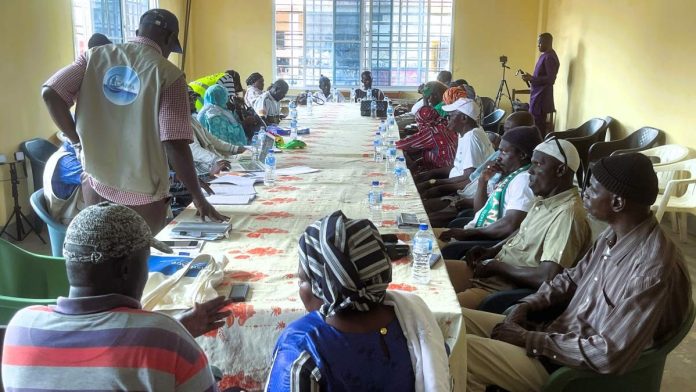
The African Confederation of Professional Organizations of Artisanal Fisheries (CAOPA) recently convened small-scale fisheries organizations from The Gambia, Senegal, and Guinea-Bissau to discuss collaborative management efforts. This gathering aimed to foster a unified approach to sustainable fisheries management within the region. A series of meetings were organized from July 11 to 17 across several locations. These discussions aimed to foster a unified approach to sustainable fisheries management within the region, with the overarching goal of establishing a joint commission for sustainable fisheries across the three nations.
The meetings took place in Ziguinchor, Senegal, alongside Gunjur and Brufut in The Gambia. Additional sessions were held in Guinea-Bissau. CAOPA facilitated these gatherings to strengthen regional cooperation among artisanal fishing communities. The initiative shows a commitment to addressing shared challenges and promoting sustainable practices across the three West African nations. The full nature of these discussions, spanning multiple key locations, noted the urgency and importance of regional collaboration in safeguarding vital marine resources.
Building Regional Cooperation
The African Confederation of Professional Organizations of Artisanal Fisheries (CAOPA) represents men and women working in small-scale marine and inland fisheries across 29 African countries. The organization was founded in 2010 in Banjul, The Gambia, to advocate for the interests of artisanal fishing communities. To enhance regional cooperation and sustainable management, a new tripartite commission is planned. This commission will bring together the National Inter-professional Council for Artisanal Fisheries of Senegal (CONIPAS), the National Association of Artisanal Fisheries Operators (NAFFO) of The Gambia, and the National Network of Women in Artisanal Fisheries (RENAMUP) of Guinea-Bissau. The initiative aims to consolidate efforts among these key national entities to address shared challenges and promote sustainable practices across the three West African nations. This collaborative structure is designed to leverage the unique strengths and perspectives of each organization, ensuring a holistic and representative approach to fisheries governance.
The establishment of this tripartite commission represents a significant step towards formalizing and strengthening the ties between these national bodies. By creating a dedicated platform for dialogue and action, the commission seeks to move beyond ad-hoc collaborations to a more integrated and sustained management framework. The involvement of CONIPAS, NAFFO, and RENAMUP ensures that both professional fishing operators and the vital role of women in artisanal fisheries are central to the commission's mandate. This inclusive approach is key for developing policies that are both effective and equitable for all stakeholders involved in the small-scale fisheries sector.
Key Objectives and Challenges
The primary objective of the proposed tripartite commission is to establish a joint body dedicated to sustainable fisheries management across The Gambia, Senegal, and Guinea-Bissau. This initiative aims to create a structured framework for the shared governance of fisheries resources that are common to all three nations. By developing a unified approach, the commission seeks to address the challenges inherent in managing transboundary marine ecosystems. The initiative specifically aimed to establish a framework for shared governance of fisheries resources common to the three countries, recognizing the interconnectedness of their marine environments.
The commission's mandate also includes promoting the 'effective participation' of local fishing communities in the decision-making processes related to fisheries management. This emphasis on community involvement is designed to ensure that policies and practices are informed by the experiences and needs of those directly dependent on these resources. The framework seeks to integrate local knowledge with broader conservation strategies, fostering a collaborative environment for resource protection and sustainable utilization. One of the key priorities for the commission would be to tackle pricing issues in the fisheries sector, which directly impacts the livelihoods of artisanal fishers and their communities. A critical objective is to combat illegal, unreported, and unregulated (IUU) fishing, a widespread threat that undermines conservation efforts and economic stability across the region.
Media's Role and Future Steps
A key proposal emerging from the discussions involves establishing joint committees on small-scale fisheries. These committees would operate between the National Association of Artisanal Fisheries Operators (NAFFO) of The Gambia and the National Inter-professional Council for Artisanal Fisheries of Senegal (CONIPAS), and also between CONIPAS and the National Network of Women in Artisanal Fisheries (RENAMUP) of Guinea-Bissau. A primary objective for the planned tripartite commission would be to address pricing issues within the fisheries sector and to combat illegal, unreported, and unregulated fishing activities across the region. This initiative aligns with the United Nations Sustainable Development Goals, specifically targeting those that promote partnerships for sustainable development. During the meeting held in The Gambia, journalists were also convened for a dedicated session that focused on the media's role in supporting these collaborative efforts and disseminating information about sustainable fisheries management. This dedicated session showed the importance of public awareness and informed discourse in achieving the commission's goals.
The integration of these joint committees is expected to facilitate more direct and localized problem-solving, allowing for tailored responses to specific challenges faced by fishing communities at the national level while contributing to the broader regional strategy. The commission's alignment with the United Nations Sustainable Development Goals, particularly those encouraging partnerships, reinforces its commitment to global best practices in sustainable resource management. The emphasis on media engagement notes a proactive approach to transparency and public education, ensuring that the critical work of the tripartite commission resonates beyond official circles and reaches the communities it aims to serve. These concerted efforts are anticipated to lay a strong foundation for the long-term sustainability of artisanal fisheries in West Africa.