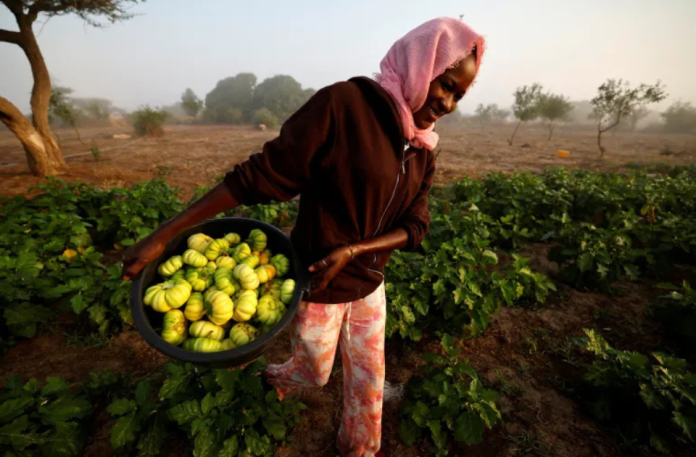
More than two months into the US-Israel war on Iran, it appears we are veering towards another global food crisis. The conflict is driving up the costs of fuel, fertilisers, plastics, and transport, resulting in higher food prices for communities from Manila to Quito. International agencies have expressed concern about the potential implications for Africa, where hundreds of millions already face food shortages. Many African nations are highly dependent on food imports, a vulnerability that could be exacerbated by geopolitical instability and the rising costs of essential agricultural inputs. This precarious situation shows the urgent need for resilient and sustainable food systems across the continent.
The Fertilizer Crisis Deepens
The current geopolitical landscape has significantly disrupted global supply chains, particularly impacting the vital fertilizer market. Upwards of 20 per cent of global fertilizer exports are currently unable to move through the Strait of Hormuz, leading to blockages in shipments of natural gas and sulphur. This substantial disruption has profound financial implications for African nations, many of which rely heavily on imported fertilizers to sustain their agricultural output. The inability of these critical inputs to reach their destinations not only creates scarcity but also drives up prices, placing immense pressure on national budgets and individual farmers alike.
Malawi, for instance, provides a stark example of this economic strain. The nation allocated substantial funds to subsidize fertilizers, a necessary measure to support its agricultural sector and ensure food production. However, this critical expenditure necessitated cuts to its public infrastructure and education budgets, noting the difficult trade-offs countries are forced to make in the face of such crises. The ripple effects of these budget cuts extend far beyond the immediate agricultural season, impacting long-term development and human capital formation.
Adding to the financial burden on African farmers and governments is the structure of the fertilizer market itself. The corporations and traders that control this market make profit margins of 30-80 per cent across the continent, further inflating costs. This situation was further exacerbated in early March when Dangote’s company increased its urea prices by 40 per cent. This significant price hike occurred just one week after the United States and Israel began their assault on Iran, demonstrating the immediate and direct impact of geopolitical events on essential commodity prices. The dominance of such large players, exemplified by Aliko Dangote who runs Africa’s largest urea fertilizer factory in Nigeria, gives them considerable leverage in pricing, often to the detriment of local farmers and national economies.
Agroecology: A Proven Alternative
In light of these challenges, agroecological practices offer farmers a viable and sustainable alternative to industrial agricultural methods, which are heavily reliant on external inputs. This approach emphasizes ecological processes and local knowledge, reducing dependence on costly and environmentally damaging synthetic fertilizers. Farmers in West Africa, for example, typically do not use chemical inputs for traditional crops such as cassava, relying instead on natural soil fertility and traditional farming techniques. Similarly, sorghum cultivation in the Sahel and banana farming around the Great Lakes region often forgo synthetic fertilizers, showcasing long-standing practices that align with agroecological principles.
The growing movement towards agroecology is supported by various grassroots organizations across the continent. Groups like Beo-neere, the Convergence des Femmes Rurales pour la Souverainete Alimentaire, and the Nous Sommes la Solution movement are actively working to advance agroecological methods. These organizations support tens of thousands of farmers across several countries, providing training, resources, and community networks to facilitate the transition away from conventional, input-intensive farming. Their efforts demonstrate a collective commitment to building more resilient and equitable food systems from the ground up.
In Tunisia, the Network for Agroecological Transition and the Tunisian Association of Permaculture actively promote food systems that do not rely on synthetic fertilizers. Their initiatives include the development of a "Nourriture Citoyenne" (citizen food) label, which aims to connect consumers with locally and sustainably produced food, fostering a more direct and transparent food chain. These efforts highlight how agroecology is not just about farming techniques but also about reimagining the entire food system, from production to consumption.
The efficacy of agroecological approaches is not merely anecdotal; it is supported by strong scientific evidence. A series of studies conducted in the 2000s, encompassing 208 agricultural projects across 52 countries and involving nine million farmers, found compelling results. These studies revealed yield increases of 50-100 per cent for various food staples when environmentally sensitive agricultural techniques were applied. This data directly challenges the common misconception that agroecology cannot match the productivity of industrial agriculture. Economic benefits for farmers are also evident. Data from Senegal indicates that farmers employing agroecology achieved 17 per cent higher yields and 36 per cent higher incomes compared to their conventional counterparts. The financial gains are even more pronounced in other regions; in Brazil, farmers utilizing agroecological approaches saw 49 per cent higher yields and an impressive 177 per cent higher incomes than those using conventional methods. These figures show agroecology's potential to not only enhance food security but also improve the livelihoods of smallholder farmers.
Rethinking Agricultural Policy
The ongoing conflict has contributed to increased costs for fuel, fertilizers, plastics, and transport, leading to higher food prices for communities globally, from Manila to Quito. This situation recalls lessons from the 2008 global food crisis, during which development banks and African governments initiated programs that, in retrospect, exacerbated some of the continent's vulnerabilities. These programs often pushed for the adoption of industrial agricultural models, which transferred extensive areas of African land to agribusiness companies and provided subsidies for chemical fertilizers. While intended to boost production, this approach deepened reliance on external inputs and global markets, making countries more susceptible to price shocks and supply chain disruptions.
The environmental impact of chemical fertilizers further strengthens the case for a shift in agricultural policy. Chemical fertilizers are responsible for more global greenhouse gas emissions than air travel, contributing significantly to climate change. This environmental concern has prompted international discussions on sustainable practices and the need to decarbonize agriculture. For instance, last month, 60 governments convened in Colombia to discuss phasing out fossil fuels as a measure to combat climate change effectively. These discussions highlight a broader recognition of the need to reassess agricultural policies and their environmental footprint, moving towards systems that are not only productive but also ecologically sound and socially equitable. By embracing agroecology, Africa can forge a path towards food sovereignty, reducing its vulnerability to global shocks while simultaneously contributing to a healthier planet.