The concept of stewardship is central to governance, providing it with a moral purpose, as transparency offers visibility and institutional culture contributes character. This framework suggests that authority inherently comes with accountability, power with responsibility, and leadership with stewardship. Indeed, if transparency provides governance with visibility and institutional culture provides it with character, stewardship gives governance its moral purpose. Authority is consistently accompanied by accountability, power is accompanied by responsibility, and leadership is always accompanied by stewardship. Institutions achieve longevity only when they are constructed on lasting principles, specifically citing integrity, accountability, transparency, professional competence, stewardship, and trust as essential foundations. When stewardship is forgotten, institutions inevitably begin to decline. Conversely, when stewardship is embraced, institutions flourish, demonstrating a direct correlation between this moral purpose and institutional vitality. Financial governance, in this context, extends beyond monetary considerations, fundamentally centering on the element of trust. For financial governance has never been merely about money; it has always been about trust.
The Foundation of Trust
Public officials serve as custodians of public funds, not owners, acting on behalf of citizens. It is key to understand that public officials are not the owners of public funds; rather, they are custodians acting on behalf of the citizenry. Similarly, directors are fiduciaries for corporate assets, representing shareholders, not owners. Directors, likewise, are not the owners of corporate assets; they serve as fiduciaries acting on behalf of the shareholders. This perspective indicates that every individual holding a public or corporate office assumes responsibilities that are fiduciary in nature. Consequently, the Receiver occupies a position of exceptional fiduciary responsibility, according to an analysis of institutional governance. Every holder of public or corporate office, therefore, assumes responsibilities that are fundamentally fiduciary in nature.
Regardless of specific roles, such as Minister, Permanent Secretary, Procurement Officer, Board Chairman or Director, Chief Financial Officer, Company Secretary, Auditor, Receiver, Liquidator, Trustee, Regulator, Compliance Officer, or Lawyer, the fundamental obligation remains consistent. Whether one serves as a Minister, Permanent Secretary, Procurement Officer, Board Chairman or Director, Chief Financial Officer, Company Secretary, Auditor, Receiver, Liquidator, Trustee, Regulator, Compliance Officer, or Lawyer, the underlying obligation remains unchanged. Authority is presented not as an entitlement but as a fiduciary trust. Authority is never an entitlement; it is, in fact, a fiduciary trust. The decline of institutions is observed when stewardship is neglected, while their flourishing is linked to its embrace.
Integrity is described as essential for effective governance. Without it, transparency can become merely performative, accountability may turn selective, and laws risk becoming ineffective. Without integrity, transparency becomes merely performative. Without integrity, accountability becomes selective. Without integrity, laws become ineffective. In such scenarios, governance risks degenerating into a procedure devoid of its intended purpose. Without integrity, governance degenerates into a procedure devoid of purpose. Investor Warren Buffett emphasized the critical role of integrity in personnel selection, stating, "In looking for people to hire, you look for three qualities: integrity, intelligence and energy. And if they don’t have the first, the other two will kill you." This view suggests that intelligence and energy, without a foundational commitment to integrity, can become detrimental.
Tests of Institutional Integrity
Procurement processes globally represent a significant area of public expenditure and pose a substantial test of institutional integrity. Across the world, procurement represents one of the largest areas of public expenditure and one of the most significant tests of institutional integrity. The concept of "value for money" in this context extends beyond merely securing the cheapest quotation. True "value for money" is not synonymous with the cheapest quotation. It encompasses a broader assessment that includes quality, sustainability, efficiency, transparency, competition, risk management, lifecycle costs, and long-term public benefit. True value considers quality, sustainability, efficiency, transparency, competition, risk management, lifecycle costs, and long-term public benefit. A key governance question to assess decisions is whether decision-makers would be entirely comfortable explaining and defending their choices before bodies such as Parliament, auditors, regulators, journalists, citizens, or a future Commission of Inquiry. A useful governance question to pose is this: Would decision-makers be entirely comfortable explaining and defending this decision before Parliament, auditors, regulators, journalists, citizens, or a future Commission of Inquiry?
The true strength of governance systems is most severely tested during periods of financial distress, as prosperity often masks underlying weaknesses. Governance is tested most severely during periods of financial distress. Prosperity rarely reveals the true strength of governance systems; adversity does. Adversity, rather than good times, reveals the resilience and effectiveness of these systems. Effective boards are characterized by both competence and independence in their operations. The most effective boards possess both competence and independence. The role of a Chief Financial Officer (CFO) today is multifaceted, requiring them to act as a strategic adviser, a steward of financial integrity, a leader in risk management, a champion of governance, and a trusted adviser to both executive management and the board. Today’s CFO is simultaneously a strategic adviser, steward of financial integrity, risk leader, governance champion, and trusted adviser to both executive management and the board.
It has been observed that numerous institutions that ultimately failed had employed exceptionally intelligent professionals. Many failed institutions employed exceptionally intelligent professionals. Their collapse stemmed not from a lack of knowledge or expertise, but from inadequate governance structures and practices. Their failure arose not from inadequate knowledge, but from inadequate governance. While technology offers capabilities to automate various processes, it cannot, by its nature, automate integrity within an institution. Technology can automate processes, but it cannot automate integrity.
Lessons from Inquiry and Transformation
As The Gambia reviews the findings from its various Commissions of Inquiry, the country stands at a critical juncture, facing a choice between two distinct paths. As The Gambia reflects upon the lessons arising from its various Commissions of Inquiry, the nation faces an important choice: to regard those commissions merely as historical investigations into past events, or to embrace them as catalysts for institutional transformation. The nation can opt to consider these commissions solely as historical examinations of past occurrences, or it can utilize them as instruments for broader institutional transformation, according to observers. This period of reflection is seen as key for the country's governance framework.
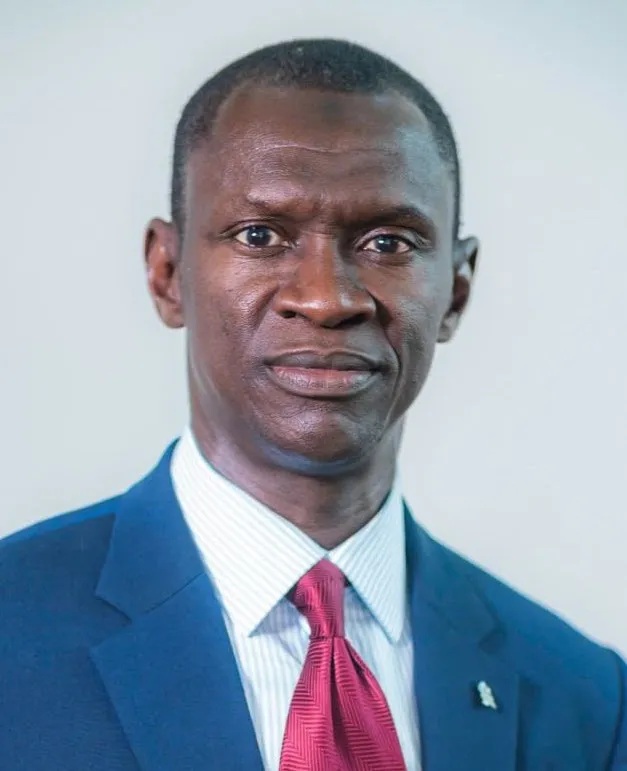
The late Alhaji FaFa Edrissa M’Bai held a firm conviction that public office constituted a sacred trust. My late father, Alhaji FaFa Edrissa M’Bai, believed that public office was a sacred trust and that no nation could achieve lasting prosperity without strong institutions, accountability, and respect for the rule of law. He maintained that enduring national prosperity was unattainable without strong institutions, a commitment to accountability, and unwavering respect for the rule of law. His perspective showed the foundational elements necessary for stable and effective governance.
During a period when strengthening financial discipline and fostering institutional accountability demanded significant resolve, Alhaji FaFa Edrissa M’Bai actively promoted reforms. At a time when strengthening financial discipline and promoting institutional accountability required exceptional courage, he championed reforms, including commissions of inquiry, in the belief that public confidence in government could only be sustained through transparency and accountability. These initiatives included the establishment of commissions of inquiry. He championed such measures, believing that public trust in government could only be maintained through consistent transparency and strict accountability.
Prosperity Through Strong Institutions
Countries consistently attracting investment, maintaining economic stability, and inspiring international confidence share a common characteristic: strong institutions. Countries that consistently attract investment, maintain economic stability, and inspire international confidence invariably possess one characteristic in common: strong institutions. Sustainable prosperity, it is suggested, rests upon institutions capable of commanding trust. Sustainable prosperity rests upon institutions that command trust. These strong institutions are not accidental; they are deliberately constructed through ethical leadership, competent boards, independent oversight, prudent financial management, effective legal and regulatory frameworks, courageous professional advice, and an uncompromising commitment to integrity. Strong institutions do not emerge accidentally; they are deliberately constructed through ethical leadership, competent boards, independent oversight, prudent financial management, effective legal and regulatory frameworks, courageous professional advice, and an uncompromising commitment to integrity. Singapore, for instance, transformed from a resource-constrained nation into one of the world's most respected financial and commercial centers through disciplined governance, fiscal prudence, institutional professionalism, transparency, and an unrelenting commitment to accountability. Singapore transformed itself from a resource-constrained nation into one of the world’s most respected financial and commercial centres through disciplined governance, fiscal prudence, institutional professionalism, transparency, and unrelenting commitment to accountability. Former UN Secretary-General Kofi Annan stated, "Good governance is perhaps the single most important factor in eradicating poverty and promoting development." Ultimately, the true measure of a nation’s greatness is not its accumulated wealth, elected political leaders, or enacted laws, but the quality of the institutions it establishes. The true measure of a nation’s greatness is not the wealth it accumulates, nor the political leaders it elects, nor even the laws it enacts. It is the quality of the institutions it leaves behind. Institutions endure only when they are built upon enduring foundations: integrity, accountability, transparency, professional competence, stewardship, and trust.