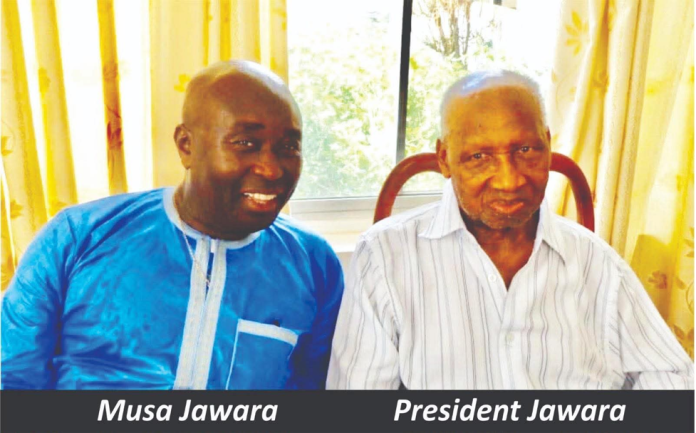
Economist and author Musa Bassadi Jawara has criticized post-Kairaba Jawara administrations in The Gambia for allegedly exacerbating tribal divisions. Jawara stated that these subsequent governments have drawn lines along tribal and ancestral footprints, rather than promoting national unity. This approach, according to the author, has contributed to political segmentation within the country. The intervening administrations after Sir Dawda Kairaba Jawara are particularly criticized for this perceived shift away from national cohesion.
Historical Roots and Current Manifestations
Former President Sir Dawda Kairaba Jawara is remembered for constructing a Republic that operated in a "tribal-blind" manner. This approach sought to transcend ethnic divisions in governance and foster a unified national identity. However, subsequent political actions have been cited as contributing to tribal segmentation. Foni, a region known for its significant Jola concentration, notably received five National Assembly seats during the administration of Yahya Jammeh. This allocation was perceived by some as an attempt to consolidate political support within specific ethnic groups, thereby reinforcing tribal affiliations in the political landscape. The article addressing these issues was originally scheduled for release on July 1.
Evidence of Tribal Influence
Foni District, a region in The Gambia, was divided into five National Assembly constituencies during former President Yahya Jammeh's 22-year administration. The boundaries for these constituencies were specifically drawn to align with existing ethnic settlement patterns, a move that critics argue further entrenched tribal considerations in political representation. This decision granted Foni, a region home to the largest Jola concentration, five National Assembly seats. More recently, concerns about tribalism have surfaced in media reports, indicating that these issues persist. A broadcast on Hilltop Radio on June 11, 2026, for instance, featured a story specifically addressing tribalism and hate speech within the country, noting ongoing public discourse on the matter.
Further evidence of tribal considerations in politics emerged from a leaked audio recording featuring Seedy Njie, who serves as both Deputy Speaker of the National Assembly and deputy spokesperson for the ruling National People’s Party (NPP). In the recording, Mr. Njie was heard discussing the revocation of a director general's nomination. He reportedly cited the individual's tribal affiliation as Mandinka and their association with the opposition United Democratic Party (UDP) as reasons for the action. This incident sparked considerable public debate. Mr. Njie subsequently confirmed the authenticity of this leaked audio recording, acknowledging the veracity of the statements attributed to him. In the recording, he was heard bragging about revoking the nomination of a director general based on tribe and party affiliation, specifically mentioning the individual's Mandinka ethnicity and connection to the opposition UDP.
Demographic Landscape
The Gambia, a West African nation, spans an area of 11,300 km² or 4,400 square miles. Its diverse population was detailed in the 2013 national census, which reported Mandinka/Jahanka as the largest ethnic group at 34.4%, followed by Fula/Tukulor/Lorobo at 24.1%, Wolof at 14.8%, Jola at 10.5%, Sarahule at 8.2%, Serere at 3.1%, Manjago at 1.9%, Bambara at 1.3%, and Krio/Aku at 0.5%. The 2023 census presented similar proportions, with Mandinka at 34.4%, Fula at 25.0%, Wolof at 15.4%, Jola at 9.5%, and Sarahule at 8.2%. These demographic figures show the multi-ethnic fabric of the nation, making the issue of tribal-blind governance particularly pertinent for maintaining social harmony and equitable representation.
The Path Forward: A Return to Inclusivity
Interior Minister Hon. Abdoulie Sanyang addressed the National Assembly on June 10, stating that the government will not tolerate actions that threaten national unity and peace. The minister's remarks showed an official commitment to maintaining social cohesion amidst concerns about tribalism in Gambian politics. This stance suggests a focus on policies that aim to transcend ethnic divisions and foster a unified national identity. His statement comes as discussions around "tribal-blind" governance gain traction, advocating for an approach similar to that attributed to former President Sir Dawda Kairaba Jawara's administration. The government's position signals a potential shift towards mitigating the impact of tribal considerations in public life and decision-making, aiming to address issues that have reportedly contributed to political segmentation. This commitment from the Interior Ministry notes a recognition of the challenges posed by tribalism and an intention to promote an inclusive political environment for all Gambians.