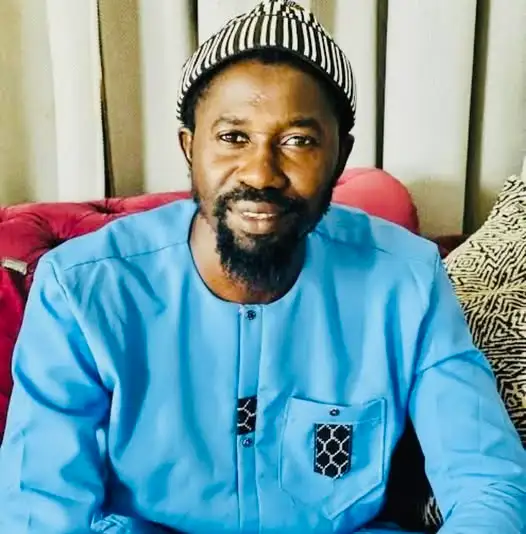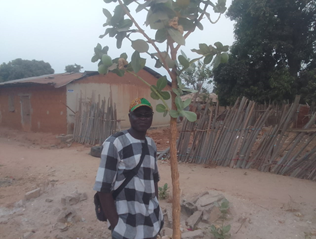
Omar Badjie died on September 26, 2025, an event that eyewitnesses and community members allege occurred after police officers handcuffed and severely assaulted him. The circumstances surrounding his death have prompted urgent calls for justice and accountability from his family and the wider community. Before his unexpected passing, Omar Badjie had begun constructing a house for his family, a project that remains tragically unfinished, a stark reminder of his aspirations and the sudden end to his life.
The incident that led to Mr. Badjie's death occurred during a police operation in Mandinary, Kombo North, a community situated in the West Coast Region. Initial police reports had claimed that Omar Badjie simply collapsed from physical exhaustion while being pursued by officers. However, this narrative was immediately challenged by eyewitnesses and community members who came forward with allegations contradicting the official account. These individuals asserted that officers had handcuffed and severely assaulted Mr. Badjie prior to his death, painting a very different picture of the events that transpired. The discrepancy between the initial police reports and community allegations set the stage for a thorough investigation.
Inquest Details and Findings
The inquest, which concluded in April 2026 after running from October 2025, determined that Omar Badjie died from an acute brain injury. This critical finding directly challenged the initial police claims. The report stated unequivocally that this injury was caused by physical exertion, stress, and assault during a police operation. Principal Magistrate Anna O. Mendy presided over the proceedings at the Brikama Magistrates’ Court, meticulously overseeing the presentation of evidence and testimonies. The inquest's findings directly contradicted the assertion that Mr. Badjie had simply collapsed from exhaustion, a point of significant contention from the outset.
During the course of the inquest, a total of 12 witnesses were examined, providing full testimonies regarding the incident. These testimonies were key in piecing together the events of September 26, 2025, and in establishing the context surrounding Mr. Badjie's death. The detailed examination of these witnesses allowed the inquest to gather a broad range of perspectives and evidence, contributing to its strong conclusions.
Following the conclusion of the inquest, the coroner issued a significant recommendation: that the case be forwarded to the Director of Public Prosecutions. This recommendation called for criminal charges to be pursued against the officers involved in the incident, signaling a clear path towards accountability. The specific details of the police operation that led to Mr. Badjie's death were examined extensively during the inquest, including the actions of the officers involved. The findings noted the sequence of events that contributed to the acute brain injury, emphasizing the role of the physical exertion and stress alongside the assault as direct causes. The inquest's rejection of exhaustion as the sole cause of death shows the gravity of its conclusions regarding police conduct and the need for further legal action. The decision to recommend criminal charges signals a significant step towards accountability in the case, moving beyond mere administrative review to potential prosecution.
The inquest's final report was officially released on April 20, 2026, making its findings public and accessible. Subsequently, Chief Justice Hassan B. Jallow, who had initially ordered the independent coroner's inquest into Mr. Badjie's death under the Coroners Act, later endorsed these findings. This endorsement from the highest judicial authority lent significant official support and weight to the inquest's conclusions, reinforcing the legitimacy of its determination regarding the cause of death and the recommended actions. The Chief Justice's involvement from ordering the inquest to endorsing its findings showed the institutional commitment to uncovering the truth in this high-profile case.
Omar Badjie's Life and Family's Plight
Omar Badjie, who was 27 years old at the time of his death, died during a police operation in Mandinary, Kombo North, located in the West Coast Region. He was the eldest son in his household, which faced considerable economic hardship. This familial responsibility weighed heavily on him. Poverty significantly impacted Mr. Badjie's early life, compelling him to discontinue his education after completing primary school. This early cessation of his schooling meant he had to enter the workforce at a young age, foregoing further academic pursuits to contribute to his family's survival.
To support his struggling family, Mr. Badjie engaged in various forms of strenuous labor. He routinely undertook demanding construction jobs, which provided inconsistent but vital income. In addition to this, he molded concrete blocks, a physically demanding task that required significant effort and time. He produced charcoal for sale, a laborious and often arduous process, to generate additional income. These concerted efforts were central to his family's sustenance and solidified his role as a primary provider, demonstrating his dedication and commitment to their well-being. His ambition to build a house for his family was a testament to his hopes for their future and his desire to improve their living conditions. His untimely death left this dream unfulfilled and his family in an even more precarious position, grappling not only with their profound loss but also with the economic void he left behind.
Official Response and Lingering Questions
The local police station in Mandinary has remained closed since the incident involving Omar Badjie. The closure followed widespread protests that erupted in Mandinary shortly after Mr. Badjie's death. These demonstrations noted deep-seated community concerns regarding the circumstances of his passing and the conduct of law enforcement. The protests were a powerful expression of public discontent and a demand for justice, showing the severity of the community's reaction to the events of September 26, 2025. The continued closure of the station serves as a tangible reminder of the unresolved tension and the community's demand for accountability.
On May 5, 2026, the Attorney General’s Chambers confirmed receipt of the inquest report. The Chambers stated that an internal legal review of the findings had commenced, a necessary step following the coroner's recommendation for criminal charges against the officers involved. This review is a critical procedural stage designed to assess the legal implications of the inquest's conclusions and to determine the appropriate course of action, including whether to proceed with prosecutions.
To facilitate a full assessment and ensure a thorough examination of all relevant facts, the Ministry of Justice formally requested the full police operational file from the Inspector General of Police. This file is expected to provide further detailed information regarding the police operation during which Mr. Badjie died, including operational plans, incident reports, and any other pertinent documentation. The request for the operational file indicates a commitment by the Ministry of Justice to conduct a thorough and impartial evaluation of the incident, using all available evidence to inform its decision-making process regarding potential criminal charges. The transparency and completeness of this file are considered key for the integrity of the ongoing legal evaluation.
Family's Call for Justice
Initial police reports claimed that Omar Badjie collapsed from physical exhaustion while being pursued by officers, a narrative that was quickly challenged by eyewitness accounts. In response to mounting public pressure and the serious allegations, Chief Justice Hassan B. Jallow subsequently ordered an independent coroner's inquest into Mr. Badjie's death, operating under the Coroners Act. This decision reflected the gravity of the situation and the need for an impartial investigation to establish the truth. During the proceedings, the coroner examined 12 witnesses to gather full testimonies regarding the incident, ensuring a wide range of perspectives were considered. The inquest's final report was officially released on April 20, 2026, detailing its findings and conclusions. Chief Justice Jallow later endorsed these findings, lending official support and credibility to the inquest's conclusions regarding the cause of death and the recommendation for criminal charges. The family of Omar Badjie continues to seek accountability following the determination that police assault contributed to his death, emphasizing their unwavering resolve for justice to be served. Their ongoing plea notes the emotional toll of their loss and their determination to see those responsible held to account for their actions. The family's plight remains a central focus of the community's demand for transparency and justice in the aftermath of Mr. Badjie's tragic and untimely passing.