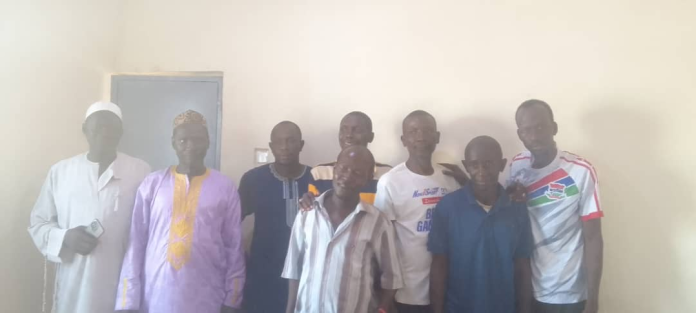
Nineteen families in Farato, Kombo South, are currently embroiled in a land dispute stemming from claims made by the late Alkalo of Bafuloto, Manku Saidy. Saidy had asserted ownership of farmland belonging to these families, a claim which has been a source of significant contention for over a decade. The Supreme Court recently upheld a previous decision by the High Court regarding the ongoing dispute, reaffirming the legal position in favor of the families. Foroyaa has reported on the matter, noting that the allegations presented during a recent press conference, where the families voiced their frustrations and pleas for government intervention, have not been independently verified by their journalists. The families, numbering nineteen households in total, have consistently maintained their ancestral rights to the land, which they describe as key for their livelihoods and community stability.
A Long History of Court Victories
The land dispute involving Farato families traces its origins back to 2006, marking it as a protracted legal battle spanning more than fifteen years. Prior to the High Court proceedings that would later solidify their claims, a District Tribunal had already ruled in favor of the families, recognizing their legitimate claim to the land in contention. This initial decision by the District Tribunal served as a foundational legal precedent, establishing the families' rights early in the dispute and setting the stage for subsequent legal battles in higher courts. The tribunal's ruling showed the local recognition of their ownership, providing an important early victory for the Farato families in their struggle to retain their ancestral lands.
In 2012, the High Court further solidified the families' position by ruling unequivocally in their favor against Manku Saidy. This significant judgment by the High Court not only affirmed the families' ownership but also imposed a financial penalty on the claimant. As part of its judgment, the High Court ordered Saidy to pay a substantial sum of D300,000 to the affected families as compensation for the disruption and legal costs incurred. This ruling represented a major victory for the Farato community, reinforcing the legal validity of their claims. The legal victories continued through the Gambian judicial system, demonstrating a consistent pattern of courts upholding the families' rights.
The Supreme Court subsequently weighed in on the matter, providing the highest judicial affirmation of the families' rights. The nation's apex court meticulously reviewed the case and ultimately affirmed the previous judgments, specifically upholding the decisions made by the High Court and the District Tribunal. In addition to affirming these rulings, the Supreme Court ordered a further payment of D90,000, bringing the total ordered compensation to D390,000. These cumulative court decisions from multiple levels of the judiciary showed the persistent and undeniable legal recognition of the Farato families' land rights. Following these definitive rulings, which spanned from the District Tribunal to the Supreme Court, the families successfully obtained a writ of possession. This key legal instrument was intended to enforce their right to occupy and control the disputed land, providing them with the legal backing necessary to reclaim what was rightfully theirs according to the courts.
Escalating Tensions and Unenforced Judgments
Despite the clear and consistent judicial pronouncements, the implementation of these judgments has been fraught with challenges. Complaints related to the land dispute, lodged at police stations in Farato, Busumbala, and Banjulinding, have regrettably not led to prosecutions, according to reports from the affected families. This lack of enforcement at the local level has allowed the dispute to fester. Alagie Jobe, a figure deeply involved in the dispute and allegedly representing the opposing side, reportedly continues to encroach on the families' land. The families claim that Jobe has not only encroached but has also allegedly proceeded to sell over 100 plots of the contested land. This ongoing activity has occurred despite the numerous judicial rulings that unequivocally favor the Farato families, noting a significant gap between legal judgment and practical enforcement.
In an effort to enforce the court judgments and restore order, the Sheriff Division and the Department of Physical Planning issued demolition notices targeting structures that had been illegally erected on the disputed land. These notices were a direct consequence of the legal victories achieved by the Farato families, aiming to clear the land and allow the rightful owners to assume control. However, these enforcement actions met significant resistance from the opposing party. In 2017, a group reportedly led by Alagie Jobe actively resisted a scheduled demolition exercise. During this confrontation, Jobe's group allegedly attacked the enforcement team with weapons, resulting in injuries to officers who were attempting to carry out their duties. The violence escalated further, with the group also reportedly burning a grader and a Mercedes-Benz vehicle belonging to the enforcement team, effectively halting the demolition process through intimidation and force.
Despite these alleged incidents of violence, obstruction, and continued encroachment, Alagie Jobe and others involved in resisting the enforcement were reportedly released repeatedly without charges being filed. This repeated release without prosecution has been a major point of frustration and concern for the Farato families, who see it as a failure of the justice system to protect their legally recognized rights. The Farato families claim they have made significant financial payments to facilitate the enforcement of court orders, demonstrating their commitment to seeing justice served. They allegedly paid D135,000, D80,000, and D20,000 for police escorts intended to accompany demolition orders, totaling D235,000 in payments. However, these orders were ultimately not carried out, leaving the families out of pocket and their land still illegally occupied, despite their substantial efforts and financial outlay.
Failed Mediation and Impasse
Recognizing the escalating tensions and the persistent failure of enforcement, the Office of the Governor of the West Coast Region initiated efforts to resolve the long-standing land dispute through alternative means. The Governor's office convened two mediation meetings between the involved parties, aiming to find a peaceful and mutually agreeable resolution outside of the formal judicial process. These meetings were intended to facilitate dialogue and compromise, hoping to bridge the divide that had led to years of conflict and legal battles.
However, according to reports from those involved, both mediation sessions concluded without an agreement being reached between the Farato families and the group associated with Alagie Jobe. This failure showed the deep-seated disagreements and the difficulty in finding common ground. During these mediation attempts, the families put forward a constructive proposal aimed at finding a compromise that acknowledged the realities on the ground while upholding their fundamental rights. Their proposition suggested that individuals who had already developed plots on the disputed land would be permitted to remain in their current locations, thus avoiding additional displacement and potential hardship for those who had built homes. Simultaneously, the families sought to reclaim any undeveloped land within the contested area, asserting their ownership over the portions that had not yet been built upon. This pragmatic proposal, designed to offer a path to settlement and reduce further conflict, was allegedly rejected by Jobe's group. The rejection of this compromise proposal effectively prevented a potential path to settlement, reinforcing the impasse. The failure of these mediation meetings meant that the parties could not find common ground despite the intervention of the regional governor's office, leaving the families with little recourse other than to continue their plea for the enforcement of the Supreme Court's decisions.