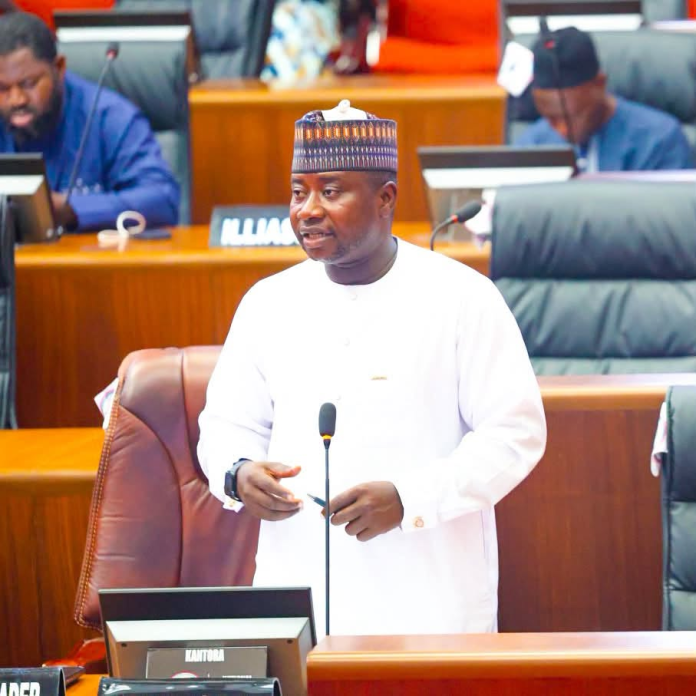
The National Assembly reviewed the National Environment Management Bill, 2025, on Monday, 19 October 2026. Environment Minister Rohey John Manjang originally introduced the legislation in 2025. The session held on Monday, 19 October 2026, served as a formal opportunity for the legislative body to examine the contents and potential implications of the proposed environmental framework.
Minister Rohey John Manjang stated, "The enactment of the Bill is essential in fostering an environmentally sustainable future for The Gambia." She noted, "It also aims to safeguard the environment as a common heritage for both present and future generations by reinforcing principles such as sustainable development, accountability, public participation, the polluter-pays principle, and the precautionary principle." According to the Minister, "This will ensure that environmental protection becomes a shared responsibility among all stakeholders, and invariably contribute significantly to safeguarding natural resources, improving public health, and promoting socio-economic development, thereby ensuring a balanced relationship between development and environmental conservation."
The Minister’s address to the National Assembly showed the government’s commitment to integrating these core principles into the national legal framework. By emphasizing the polluter-pays principle and the precautionary principle, the legislation seeks to establish a strong regulatory environment that prioritizes long-term ecological stability. Minister Rohey John Manjang indicated that the integration of these concepts is designed to provide a clear roadmap for environmental governance.
Legislative Goals and Vision
National Assembly members scheduled the third reading of the National Environment Management Bill, 2025, for Thursday, 29 October 2026. This session follows the initial review process and marks a final stage in the legislative progression of the proposed environmental regulations. The upcoming third reading on Thursday, 29 October 2026, will allow members to finalize their deliberations before the bill moves toward its conclusion in the legislative process.
Clause 5(1) of the bill introduces a requirement for all individuals residing in The Gambia. This provision mandates that every person holds a duty to safeguard the environment. The clause further specifies that citizens must report any activities observed that adversely affect the natural environment. By codifying this duty, the bill seeks to encourage active civic engagement in environmental monitoring and protection efforts across the nation.
Clause 6 of the bill focuses on the management of competing interests. It establishes a legal framework designed to coordinate activities that may conflict with established environmental objectives. By creating this structure, the legislation intends to manage actions that could otherwise undermine the environmental protections outlined in the bill. This framework is specifically designed to reconcile the needs of various stakeholders while ensuring that environmental standards remain the primary consideration in development projects. Through the enforcement of these clauses, the National Environment Management Bill, 2025, aims to create a full mechanism for oversight and accountability, ensuring that the environmental goals of The Gambia are consistently met and protected against competing industrial or developmental pressures.