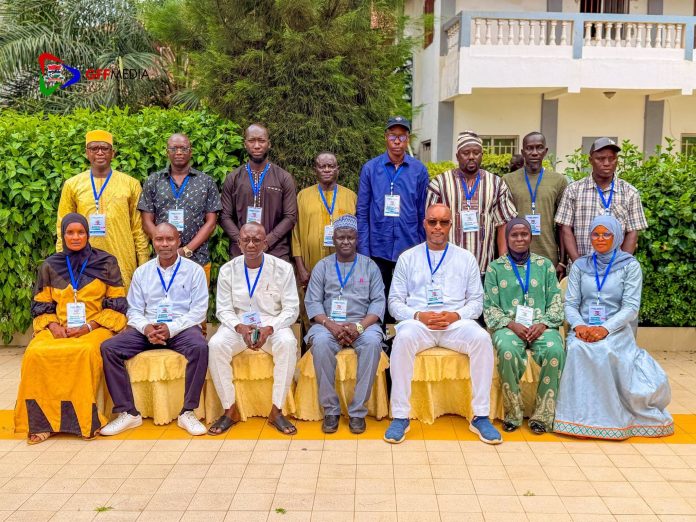
The election for the Gambian football administration has concluded, with Kemo Ceesay and his incoming administration securing the confidence of the electorate. This democratic exercise has set the stage for a new era in the sport's governance. While Musa Jammeh and Team Falcons received support from some voters, demonstrating a diverse range of perspectives within the football community, the outcome has led to clear calls for reconciliation and unity. The article advocates strongly for an end to post-election divisions, emphasizing the urgent need for immediate rebuilding efforts across all facets of Gambian football. The election has produced a president, and the critical next step is for the new leadership to demonstrate tangible progress in Gambian football, translating electoral success into developmental achievements. The divisions that arose during the electoral competition must now end, and the vital work of rebuilding must begin without delay.
Embracing Unity and Shared Responsibility
The author's commitment to Gambian football is not conditional upon electoral victory, according to a statement. This sentiment shows a broader dedication to the sport's advancement, irrespective of who holds administrative power. Musa Jammeh’s campaign, despite not securing the presidency, contributed meaningfully to the national conversation regarding the future direction of Gambian football. Their platform raised important questions and proposed solutions that remain relevant to the ongoing discourse. This perspective was reiterated in a message to the editor, which stated, "Musa Jammeh’s campaign contributed meaningfully to the national conversation about the direction of Gambian football. His supporters should therefore remain constructive, vigilant and patriotic participants in the football ecosystem." This call for continued engagement from all stakeholders notes the importance of diverse voices in shaping the sport's future.
The newly elected President, Kemo Ceesay, now has the profound opportunity to demonstrate leadership that extends beyond electoral results. His mandate is to govern for the entirety of Gambian football, aiming to unite various factions and stakeholders under a common vision. This approach suggests a focus on inclusive development rather than partisan interests, recognizing that the sport's success depends on collective effort. President Kemo Ceesay's leadership must transcend mere electoral arithmetic; he must govern with a full view that encompasses all segments of Gambian football, ensuring that every voice is heard and every contribution valued. The administration's actions in the coming months will be observed for signs of this unifying leadership, particularly in how it engages with those who did not support its electoral bid. The emphasis on collective responsibility and broader participation is seen as essential for sustained progress within the sport, fostering an environment where all can contribute to its growth.
Transforming Institutions for Progress
The Gambia Football Federation (GFF) must transition into an institution where inclusion supersedes factionalism, competence outweighs allegiance, and the national interest is prioritized over individual personalities. This transformation is not merely desirable but essential for the long-term health and credibility of Gambian football. Gambian football requires a fundamental institutional transformation, moving beyond a recurring cycle of individuals vying for prominence and instead focusing on building strong, enduring structures. The GFF must become an institution where inclusion is demonstrably stronger than factional divides, where competence is valued above personal allegiance, and where the national interest in football's development is always prioritized over any individual personality or agenda.
Priorities for the sport are extensive and interconnected, forming a full roadmap for advancement. These include establishing credible governance frameworks that instill trust and accountability, ensuring absolute financial transparency in all dealings, securing sustainable financing models that reduce dependency on ad-hoc solutions, and developing modern infrastructure suitable for contemporary football. Professional administration is key for efficient operations, alongside strong grassroots development programs that nurture talent from a young age. The advancement of women's football is also a critical area of focus, requiring dedicated resources and strategic planning. Further improvements are needed in the provision of qualified coaching at all levels, the establishment and support of effective youth academies, full player welfare initiatives, innovative commercialization strategies to generate revenue, and the creation of a genuinely competitive domestic league that can serve as a strong foundation for national teams.
Professional football specifically demands a strong ecosystem comprising financially viable clubs that can operate sustainably, enforceable player contracts that protect both athletes and clubs, diversified and sustainable revenue streams, credible sponsorship partnerships that bring commercial value, and strong broadcasting partnerships that increase visibility and fan engagement. It also necessitates competent administration at club and league levels, and appropriate infrastructure to support its growth, including training facilities and match venues. Every young player within the system deserves a clear, structured pathway for development, offering opportunities to progress from grassroots to professional levels. Similarly, every serious coach requires opportunities for continuous professional growth and development, ensuring high standards of instruction. Clubs need a stable framework that ensures their long-term sustainability, protecting them from financial instability and mismanagement. All stakeholders, from players and coaches to club officials and fans, are entitled to clarity regarding processes, objectives, and decision-making within the football administration. Institutions within Gambian football are expected to communicate honestly and openly, engage in meaningful consultation with all relevant parties, and account transparently for their actions and financial management. As stated in a message to the editor, "The GFF belongs to Gambian football, not to any individual administration. Presidents are temporary. Institutions are permanent." This shows the need for lasting, principled structures over transient leadership.
Building a Sustainable Football Ecosystem
The Gambia has repeatedly demonstrated that extraordinary footballing talent exists, according to a message to the editor. This inherent talent is a national treasure, waiting to be fully harnessed. The message further stated, "Our challenge is to build institutions capable of identifying, developing, protecting and retaining that talent." This notes the critical gap between raw potential and structured development. Modern football is far more than just a game; it is a complex and dynamic economic ecosystem that encompasses a wide array of sectors. This includes broadcasting rights and media coverage, lucrative sponsorship deals, sports tourism opportunities, traditional and digital media engagement, merchandising, technological innovation in sports science and analytics, significant employment generation, and key international branding and reputation building for the nation. The Gambia Football Federation (GFF) must recognize and treat Gambian football not merely as a sport, but as a vital national economic and cultural asset, capable of contributing significantly to the country's development and global standing.
Achieving this ambitious vision requires the cultivation of strategic partnerships. The GFF needs to actively collaborate with the Government of The Gambia to align football development with national priorities and secure necessary support. Partnerships with the private sector are essential for investment, sponsorship, and commercial expertise. Strong relationships with international governing bodies such as Fifa and Caf are key for technical assistance, funding, and adherence to global standards. Collaborations with broadcasters are vital for increasing visibility and generating revenue, while engaging with investors can unlock significant financial resources for infrastructure and programs. Leveraging the expertise and resources of the Gambian diaspora can provide invaluable support and connections. These alliances are key for fostering sustainable growth and ensuring long-term viability within the sport, transforming it into a powerful engine for national pride and economic benefit.
Measuring Success Through Tangible Outcomes
The performance of the Gambia Football Federation (GFF) over the next four years should be rigorously measured by tangible outcomes that reflect real progress and development. These include the development of better facilities, such as modern training grounds and stadiums, which are fundamental for player development and hosting competitions. The establishment of stronger clubs, both financially and competitively, is another key indicator, leading to a more strong domestic league. The creation of professional leagues, complete with proper structures, regulations, and financial backing, is essential for raising the standard of play. Further benchmarks comprise greater financial transparency across all operations, ensuring accountability and building trust. Improved youth structures, from grassroots to academies, are vital for nurturing future talent, and stronger women’s football initiatives are necessary for equitable development and broader participation. Enhancements in player welfare, including medical support, education, and career pathways, are critical. The availability of more qualified coaches at all levels is key for technical development, and the development of a more commercially sustainable football industry, capable of generating its own revenue, is a critical indicator of long-term success.
President Kemo Ceesay's administration is expected to demonstrate clear, measurable progress in all these identified areas. The GFF must transition into an institution where inclusion supersedes factionalism, where competence outweighs allegiance, and where the national interest in football's holistic development is consistently prioritized. This involves establishing credible governance structures that are transparent and accountable, ensuring unwavering financial transparency in all transactions, securing sustainable financing mechanisms that guarantee long-term stability, and developing modern infrastructure that meets international standards. Professional administration at all levels, strong grassroots development programs, and the strategic advancement of women's football are also critical areas of focus for the GFF to ensure a truly sustainable and thriving football ecosystem for all Gambians. The election has produced a president; now, the leadership must produce tangible progress that benefits the entire Gambian football community.