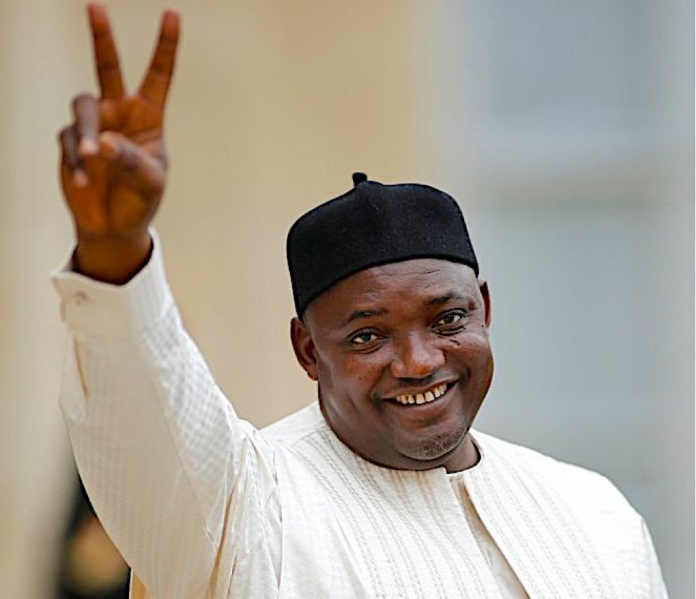
President Adama Barrow, whose administration has faced scrutiny regarding its adherence to democratic principles, can seek reelection an unlimited number of times, according to a claim made within the article. Indeed, the claim goes further, suggesting that President Adama Barrow can run for reelection one million times if he wants, noting the perceived lack of constitutional constraints on his political future. The statement reflects concerns among some observers about the potential for extended presidential terms in The Gambia, following the country's transition from decades of authoritarian rule. This potential for indefinite leadership raises questions about the long-term democratic trajectory of a nation that recently emerged from a prolonged period of autocratic governance. The article, which examines the political landscape under President Barrow, was published on July 16, 2026. This publication date places the analysis at a critical juncture in The Gambia's political development, offering a contemporary perspective on the challenges and criticisms facing the current administration. The issues discussed within the article touch upon fundamental aspects of governance, public welfare, and the integrity of democratic institutions, providing a full, albeit critical, assessment of President Barrow's tenure.
The Constitution and Endless Ambition
The constitution in The Gambia today places no hard limit on President Adama Barrow's ambition for re-election. This constitutional provision, or rather the absence of a restrictive one, is a central point of contention for those concerned about the consolidation of power and the potential for a return to authoritarian tendencies. The ability for a sitting president to seek an indefinite number of terms can be seen as a departure from the spirit of democratic renewal that characterized the country's recent political transition. Critics argue that such a framework could undermine the principles of accountability and rotation of power that are fundamental to a healthy democracy. The Gambia gained Independence in 1965, a historical context that often informs contemporary discussions about governance and the preservation of hard-won freedoms. The nation's journey since independence has been marked by periods of both democratic aspiration and authoritarian setback, making the current constitutional arrangement regarding presidential term limits a particularly sensitive issue. The lack of a clear, codified restriction on re-election stands in stark contrast to many modern democratic constitutions that impose term limits to prevent the entrenchment of power. This constitutional ambiguity allows for the possibility of President Barrow extending his rule for an unlimited duration, fueling public debate and concern among various segments of Gambian society and international observers alike.
Systemic Failures and Public Suffering
The daily realities for many Gambians paint a stark picture of systemic failures and profound public suffering. In Kerewan, a worker’s monthly wage is reportedly exhausted by the tenth day of each month, illustrating the acute economic hardship faced by ordinary citizens. This dire situation means that for the majority of the month, families in Kerewan and likely beyond struggle to meet their basic needs, noting the widespread issue of low wages and high cost of living. The Gambian government allocates a mere 1.52% of its Gross Domestic Product to health spending, a figure that falls significantly short of international recommendations and contributes directly to the country's struggling healthcare system. This underfunding has tangible and tragic consequences for the population's health outcomes. Data indicates a maternal mortality rate of 289 deaths per 100,000 live births in The Gambia, a statistic that shows the severe risks faced by women during childbirth and the urgent need for improved maternal healthcare services. The under-5 mortality rate stands at 56 deaths per 1,000 live births, reflecting inadequate access to essential pediatric care, nutrition, and sanitation. These figures point to a public health crisis that demands immediate and full intervention.
A significant portion of the population, 48.6%, lives below the poverty line, struggling daily to access basic necessities such as food, shelter, and healthcare. This widespread poverty exacerbates the existing health challenges. Public health concerns are widespread, with nine in ten Gambians lacking access to medical aid, meaning the vast majority of the population cannot rely on formal support for their healthcare needs. Eight in ten citizens express fears about their ability to afford necessary medical care, even if it were available, creating a climate of anxiety and vulnerability regarding health. The adult literacy rate in the country is recorded at 58.67%, indicating that a substantial portion of the adult population lacks fundamental literacy skills, which can hinder economic development and social progress. Educational outcomes also present significant challenges, as only 3.94% of West African Senior School Certificate Examination (WASSCE) students achieve a passing grade with five credits, including English and Mathematics. This exceptionally low pass rate in critical subjects reveals deep-seated issues within the education system, limiting opportunities for young people and impacting the nation's human capital development. These societal conditions coincide with recent economic pressures that have further strained household budgets. On April 30, the government announced a substantial increase in fuel prices, an event that directly impacts transportation costs, food prices, and the overall cost of living for an already struggling populace. The cumulative effect of these economic and social indicators paints a grim picture of the challenges confronting The Gambia under the current administration.
Allegations of Corruption and Lost Accountability
President Adama Barrow's financial declarations have drawn considerable public attention, raising pointed questions about transparency and accountability within his administration. Reports in 2021 indicated he declared assets exceeding D200 million. This declaration occurred amid broader concerns regarding transparency and accountability within his administration, especially given the context of a nation striving to overcome a legacy of corruption. The figure represents a significant accumulation of wealth during his tenure, which began following a period of political transition in The Gambia. Such a substantial increase in declared assets by a public official, particularly in a country grappling with widespread poverty, naturally invites scrutiny and demands for greater clarity. Discussions around public officials' asset declarations often center on the need for strong mechanisms to scrutinize sources of wealth and prevent illicit enrichment, particularly in post-authoritarian contexts where institutional weaknesses can be exploited. The reported D200 million figure has been a point of intense public discussion regarding the financial conduct of high-ranking government officials in the country, with many citizens questioning the origins and legitimacy of such wealth accumulation in a relatively short period.
Further questions about accountability have arisen from the controversial dismissal of the Auditor General. The Auditor General was sacked for doing his job, according to reports, a claim that has sent ripples of concern through civil society and international monitoring bodies. This action raised significant concerns among observers regarding the independence of oversight institutions within the Gambian government, which are key for maintaining democratic checks and balances. The role of an Auditor General typically involves scrutinizing public spending, identifying financial irregularities, and ensuring fiscal probity and transparency in government operations. A dismissal under such circumstances can be perceived as a direct attack on the integrity of the auditing process and as undermining efforts to hold government bodies and officials accountable for their financial management. The incident has contributed to a perception of declining institutional independence, which is critical for maintaining checks and balances in a democratic system and for fostering public trust. Such actions can also deter other independent bodies from conducting thorough investigations into government operations, potentially fostering an environment where corruption is less likely to be exposed or addressed, thereby eroding the very foundations of good governance. The abrupt removal of the Auditor General has been cited as an example of a broader trend affecting the autonomy of key oversight functions in The Gambia, suggesting a pattern of behavior that prioritizes political control over institutional integrity and accountability. This incident, combined with the questions surrounding asset declarations, paints a troubling picture of an administration struggling to uphold the principles of transparency and good governance that were promised during the transition.
The Politics of Poverty and Public Service
The economic challenges in The Gambia are acutely reflected in its youth demographics, where a significant portion of the younger generation faces substantial hurdles in securing their future. A staggering 37% of young people are categorized as Not in Education, Employment, or Training (NEET). This figure indicates a significant portion of the youth population is disengaged from both educational and labor market opportunities, representing a substantial loss of human potential and a source of considerable social and economic instability. The high NEET rate suggests a failure of the system to integrate young people into productive roles within society, leading to disaffection and vulnerability. The overall youth labor force participation rate stands at a low 35%, showing the limited availability of employment opportunities for those who are actively seeking work. These statistics highlight the profound difficulties young Gambians face in securing employment and contributing to the formal economy, leading to widespread frustration and a sense of hopelessness among this critical demographic. The low participation and high NEET rates show the economic pressures impacting the country's younger generation, who represent the future of The Gambia.
The combination of high youth unemployment, limited educational attainment, and widespread poverty creates a fertile ground for social unrest and outward migration, as many young people seek opportunities elsewhere. The government's ability to address these fundamental issues of youth engagement and economic inclusion is critical for the nation's stability and long-term development. The current situation, characterized by systemic failures in health, education, and economic opportunity, alongside concerns about governance and accountability, paints a challenging portrait of The Gambia under President Barrow's leadership. The promise of a democratic reset following decades of authoritarian rule appears to be under severe strain, as the nation grapples with the complex interplay of political ambition, economic hardship, and institutional integrity. The issues raised in this analysis, from the constitutional ambiguities surrounding presidential terms to the daily struggles of ordinary citizens and the erosion of oversight mechanisms, collectively point to a critical juncture for The Gambia's democratic future. The path forward demands renewed commitment to transparency, accountability, and genuine public service to fulfill the aspirations of its people.