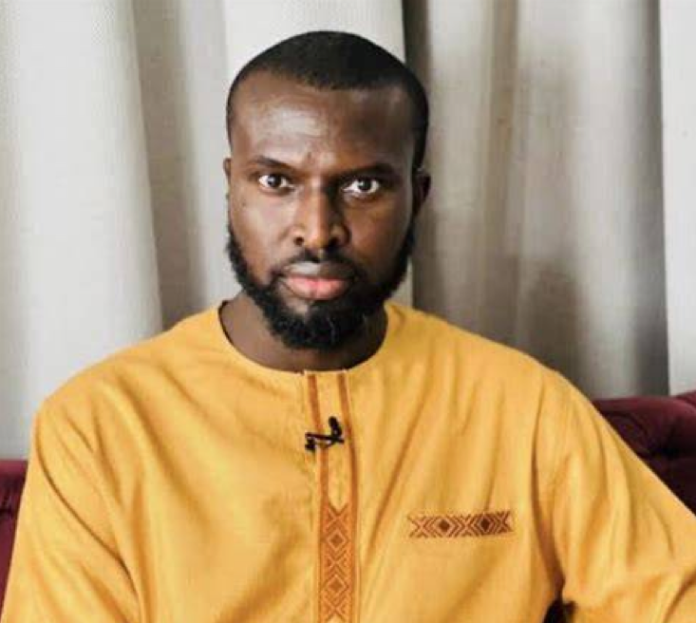
Prince Ebrahim Sanyang, Founder and Party Leader of the Economic Freedom Fighters (EFF), The Gambia, declared that "poverty is not the destiny of the Gambian people" during the official launch of EFF Gambia at Jama Hall on Saturday, August 22, 2026. The new political movement, according to Sanyang, was established in response to "the cries of ordinary Gambians," aiming to address economic hardship across the nation. Sanyang emphasized that his political movement was born out of listening intently to the widespread cries of ordinary Gambians who have been struggling with daily economic realities.
Sanyang asserted that the true measure of development extends beyond Gross Domestic Product (GDP) figures, emphasizing instead whether mothers can adequately feed their children and if every child receives a fair opportunity for education. He stated that the ultimate test of a nation's development should not be found in abstract economic indicators like GDP figures, but rather in the tangible well-being of its citizens. The EFF leader stated, "No family should go hungry because basic commodities have risen beyond their reach." The party outlined ten solemn, non-negotiable promises to the Gambian populace, which form the bedrock of its proposed governance. Sanyang further declared, "No Gambian who works honestly should remain trapped in poverty. This is not charity from political leaders but the rightful return of the people's resources to the people." He added, "We have come with credible solutions and to restore politics to its highest purpose: the honest and courageous service of the people."
Full Ten-Point Plan
Prince Ebrahim Sanyang, leader of the Economic Freedom Fighters (EFF), outlined a multi-faceted economic agenda for The Gambia, beginning with a pledge to establish Freedom Stores across the country. These stores would provide affordable and subsidised essential commodities to the populace, directly addressing the cost of living for families. To further stabilize prices and prevent artificial scarcity, the EFF plans to create a National Food Buffer Stock Company, designed to manage national food reserves and ensure consistent availability. The party’s agricultural strategy includes an initiative titled "1 Village, 1 Cooperative," aimed at boosting rural farming efforts through collective action and resource sharing. Additionally, Sanyang detailed plans for the revival of produce marketing boards, which would complement increased access to modern machinery, irrigation systems, and financing for farmers, thereby enhancing agricultural productivity and market access.
The EFF’s vision for food security also encompasses the establishment of a National Fishing Company. This entity is intended to make fish affordable for consumers while simultaneously generating thousands of jobs within the sector, from fishing to processing and distribution. These initiatives collectively form part of the party's first promise, focusing comprehensively on Food Security for all Gambians. This first promise specifically includes the establishment of Freedom Stores, the National Food Buffer Stock Company, the National Fishing Company, and the "1 Village, 1 Cooperative" agricultural program.
The second promise centers on Jobs and Economy. This includes a mission to achieve zero unemployment, a bold target aimed at ensuring every willing Gambian has gainful employment. The party plans the implementation of "1 Ward, 1 Industry" to stimulate local production and create employment opportunities at the community level. The EFF envisions the development of a 24-hour economy, designed to maximize productivity and create continuous economic activity. Additionally, the EFF plans to introduce enterprise grants specifically for young people and women to foster entrepreneurship and support the growth of small and medium-sized enterprises.
Education and Health constitute the third key promise of the EFF's agenda. The party aims to provide progressively free quality education across the nation, ensuring that financial barriers do not prevent any child from accessing learning opportunities. In healthcare, plans include free primary, maternal, and emergency services, making essential medical care accessible to everyone. To enhance local medical access and improve healthcare infrastructure, the EFF proposes initiatives such as "1 Village, 1 Clinic" and "1 Community, 1 Ambulance."
Under the fourth promise, Family Relief and Dignity, the EFF proposes monthly relief packages for low-income households, offering direct financial assistance to those most in need. A significant component of this promise is a D1,500 monthly stipend for all citizens aged 60 and above, aiming to provide financial support and dignity to the elderly population of The Gambia.
Infrastructure development forms the basis of the fifth promise. This includes ensuring affordable access to water, electricity, and internet for every household in The Gambia, recognizing these as fundamental necessities for modern living and economic participation. A specific initiative, "1 Village, 1 Borehole," is also planned to address water accessibility in rural areas, ensuring clean and reliable water sources for all communities.
Finally, Public Safety is addressed in the sixth promise. The EFF intends to implement measures such as "1 Community, 1 Police Station" and "1 District, 1 Fire Service" to enhance security and emergency response capabilities across all neighborhoods, ensuring that every community is safe and well-protected. These initiatives are designed to bring essential safety services closer to the people, improving response times and community engagement.
Transforming Key Sectors
Prince Ebrahim Sanyang, leader of the Economic Freedom Fighters (EFF), outlined proposals for significant changes to key public services and infrastructure if his party comes to power. Sanyang pledged that if elected, his government will ban the National Water and Electricity Company (NAWEC) in its current form. He stated, "When we come to power, NAWEC will be banned." The EFF leader promised to replace the existing utility with a sustainable, modern electricity plan aimed at ensuring stable and affordable power for the entire nation. This initiative shows the party’s focus on reliable public utilities as a foundation for economic development and improved quality of life. The new plan is envisioned to provide consistent and cost-effective electricity, moving away from the current challenges faced by consumers and businesses.
The EFF’s seventh promise, titled Women, Youth, and Families, details commitments to social equity and development. The party aims to recognize women and young people as equal partners in national progress, ensuring their full participation in all spheres of Gambian society. This promise includes specific investments in youth leadership development, sports programs, and skills training initiatives designed to empower these demographic groups, preparing them for active roles in the economy and governance. The full approach seeks to integrate women and youth into the economic and political fabric of The Gambia, fostering their potential and contribution.
Further social commitments outlined by the EFF include the establishment of a national living wage, intended to improve the financial well-being of workers across the country by ensuring fair compensation for their labor. The party also plans to implement improved conditions for civil servants, aiming to enhance the public sector workforce through better remuneration, training, and working environments. Additionally, the EFF proposes affordable housing schemes to address the nation’s housing needs, making homeownership accessible to more citizens. The party also pledges full support for persons with disabilities, ensuring their inclusion and welfare through targeted programs and policies.
The tenth promise focuses on World-Class Infrastructure and Sustainable Communities. This ambitious agenda includes plans for several large-scale development projects designed to modernize the nation's physical landscape. Among these are the construction of a national railway system, which would revolutionize transportation and logistics across the country, and a new international airport, aimed at boosting tourism and trade. The party also intends to establish a national airline and a shipping line, enhancing connectivity and reducing dependence on foreign carriers. The EFF plans to develop additional affordable housing projects and create industrial parks across the country, aiming to stimulate economic activity, attract investment, and generate widespread job creation through strong infrastructure development.
Governance and Accountability
The Economic Freedom Fighters (EFF) outlined their eighth promise, "The Gambia in Africa and the World," which focuses on maintaining independence in foreign affairs. The party plans to deepen cooperation across Africa, promoting regional integration and collective development. It also aims to promote trade and investment internationally, seeking beneficial partnerships for The Gambia. A key aspect of this promise is to advocate for and stand up for Gambians living in the diaspora, recognizing their contributions and protecting their interests abroad.
Under their ninth promise, "Honest Government and Strong Institutions," the EFF committed to combating corruption vigorously and ensuring the transparent management of public funds. This promise also includes strengthening the country's courts and oversight bodies to enhance institutional integrity, judicial independence, and accountability across all levels of government. The party aims to foster a culture of integrity and public service.
Prince Ebrahim Sanyang, the EFF leader, pledged that every commitment made by the party would be properly accounted for, phased, and monitored throughout its implementation. Sanyang further stated that an EFF government would only borrow to finance productive development projects, ensuring fiscal responsibility. These projects, he explained, must be specifically designed to create wealth and generate sustainable jobs for Gambians, thereby contributing directly to the nation's economic growth and the well-being of its citizens.