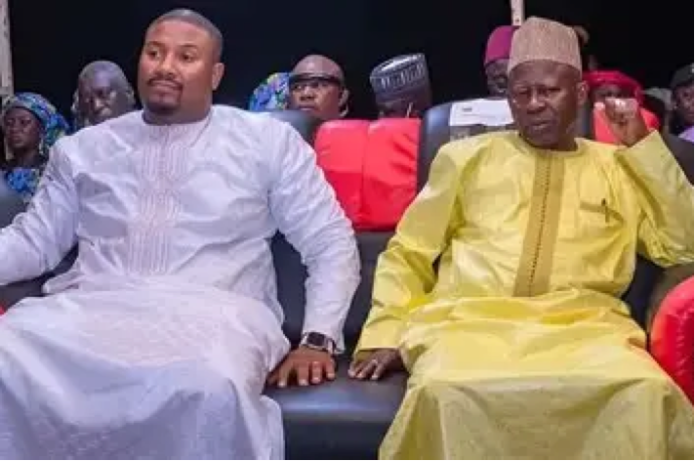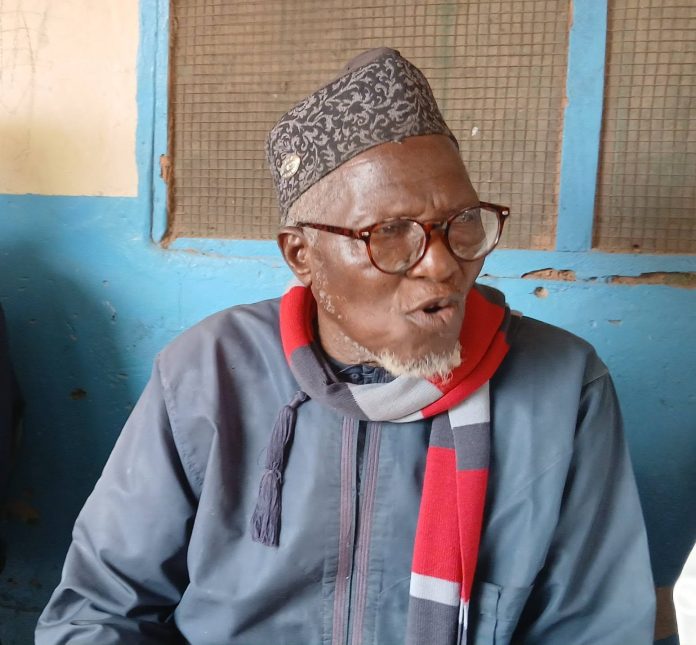
The Foni Berefet District Tribunal Court resumed hearing a land dispute between Lalo Badjie of Somita Village and Dodou Tamba of Kanaw Village on Wednesday, 22 July 2026. The proceedings were held at Somita Village. During the hearing, Lalo Badjie, one of the parties involved in the dispute, responded with "No" to a question posed by the tribunal, indicating a denial or disagreement with a specific point raised during the proceedings. Dodou Tamba, the other party, stated, "All members of my family are Gambians." This statement was made as part of the evidence presented to the court regarding the ancestral land claim, specifically addressing his family's origins. The court is addressing the long-standing disagreement over land ownership in the region, a common issue in rural areas where historical claims and current occupation often clash. The tribunal convened in Somita Village to hear further testimony and evidence from both the plaintiff and the defendant in this complex case.
Plaintiff's Ancestral Claim
Lalo Badjie, the plaintiff in the case, stated his claim is that the disputed land originally belonged to his grandfather. This ancestral claim forms the core of his argument for ownership. He further asserted that his father had allowed Landingba Tamba to settle on the land and cultivate it, suggesting a historical arrangement of tenancy or permission rather than outright transfer of ownership. This detail is key to Lalo Badjie's case, as it implies that the land was never fully relinquished by his family. The plaintiff’s first witness, Landing Badjie of Somita Village, testified that their grandfather, Mamadi Badjie, originally owned the disputed land. Landing Badjie told the tribunal, "The disputed land belonged to our grandfather, Mamadi Badjie," corroborating the plaintiff's primary claim.
Landing Badjie further testified that the land was located in Kanaw. He stated that his father had personally shown him the boundaries of the land, implying direct knowledge passed down through generations. When asked about his knowledge of the land's perimeter, Landing Badjie replied, "I can identify some parts but not all," indicating a partial but not full understanding of the exact demarcation. He also conceded that he did not know the exact size of the land, stating, "I do not know the size of the land." This admission noted a potential gap in the witness's detailed knowledge of the property. The witness's testimony aimed to establish a direct lineage of ownership and knowledge of the land's location and historical use by his family.
The witness clarified a point regarding the location of Kanaw, explaining, "I was referring to Kanaw in Casamance." This indicated the location was in the Casamance region of Senegal, not the local Kanaw Village in The Gambia, which could significantly alter the jurisdictional and historical context of the claim. This distinction is vital, as it implies a cross-border element to the ancestral claim, potentially complicating the tribunal's assessment. Landing Badjie also stated that he was unaware of the specific discussions that had taken place between his father and Landingba Tamba concerning the land. He noted, "I do not know what my father discussed with Landingba Tamba, but those people were living in Casamance at the time," further emphasizing the Casamance connection and the historical distance of the events. Lalo Badjie concluded his testimony by confirming that his father had never instructed him to reclaim the land, a detail that could be interpreted in various ways regarding the urgency or legitimacy of the current claim. This point raises questions about the timing of the dispute and why it is being pursued now, despite no prior instruction from his father.
Defendant's Challenge and Counter
Dodou Tamba challenged the testimony of Landing Badjie, arguing that he could not provide reliable evidence regarding the land dispute. This direct challenge aimed to discredit the plaintiff's key witness. During the cross-examination, Dodou Tamba questioned Landing Badjie about the whereabouts of his family when Landing’s father reportedly showed him the boundaries of the disputed land. This line of questioning sought to expose inconsistencies or lack of personal presence during key historical moments related to the land. Dodou Tamba subsequently rejected Landing Badjie’s evidence in its entirety, maintaining that the witness had no personal knowledge of the land in question. He argued that Landing Badjie's inability to identify all boundaries or state the land's size, coupled with the Casamance reference, undermined the credibility of his testimony.
Dodou Tamba also addressed a previous suggestion that his family had originated from Casamance, stating, "All members of my family are Gambians." This assertion aimed to counter any implication that his family's claim might be weakened by a foreign origin, firmly establishing their Gambian nationality and long-standing presence in the area. This statement was a direct response to the earlier testimony that mentioned his family living in Casamance. A panel member of the tribunal commented that the matter appeared difficult to determine because Dodou Tamba’s family had cleared the land and settled there many years ago. This observation by a tribunal panel member notes the inherent complexities of ancestral land claims, especially when current occupation and significant development by one party have occurred over an extended period. The panel member's remark shows the difficulty in balancing historical claims with the realities of long-term settlement and land improvement.
Tribunal Observations and Next Steps
District Chief Junkung Camara observed that the plaintiff's claim regarding the disputed land appeared to have changed over the course of the proceedings. "The plaintiff’s claim has shifted from the farms, gardens and settlement area to the bush land between three villages," District Chief Junkung Camara stated. This observation suggests a potential re-evaluation of the specific areas under contention as the hearing progressed, possibly in response to challenges to the plaintiff's initial assertions. This shift in focus could indicate an evolving strategy by the plaintiff or a clarification of the actual land being disputed, moving away from areas actively cultivated or inhabited by the defendant. The tribunal acknowledged the complexities of the case, particularly given the long-standing occupation and cultivation of the land by Dodou Tamba's family. The shift in the plaintiff's focus from cultivated areas to undeveloped land located between three communities introduces a new dimension to the land dispute that the tribunal will need to consider, as it changes the nature of the claim from active agricultural land to more undeveloped territory.
To gain a clearer understanding of the geographical aspects of the case, the tribunal will arrange a physical visit to the disputed area. This inspection is intended to provide tribunal members with direct visual evidence and context regarding the land, its features, and its relation to the surrounding villages. Such on-site visits are a standard procedure in land dispute cases to verify claims and assess the physical characteristics of the property in question, which can be key for an informed decision. The tribunal's decision to conduct an inspection shows the importance of corroborating testimonial evidence with direct observation, especially given the conflicting accounts and the shifting nature of the plaintiff's claim. This direct observation will allow the tribunal to assess the current state of the land, identify any markers, and understand the practical implications of the claims made by both Lalo Badjie and Dodou Tamba. The tribunal will visit and inspect the disputed area before the next hearing to gather firsthand information.
Following these proceedings and the planned site inspection, the court adjourned the matter. The next hearing is scheduled for Wednesday, 30 July 2026. This adjournment allows time for the tribunal to conduct its visit to the disputed site and for all parties to prepare for the subsequent session, where further evidence or arguments may be presented based on the findings of the inspection. The court's schedule indicates a methodical approach to resolving the complex ancestral land claim, ensuring that all relevant information is gathered before a final determination is made. The adjournment provides a key period for the tribunal to deliberate on the testimonies heard and to prepare for the physical examination of the land in question, which is expected to provide critical insights into the long-standing dispute.