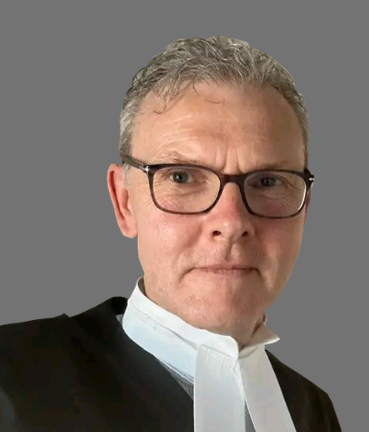
Special Prosecutor Martin Hackett has been appointed in The Gambia to lead investigations and prosecutions into alleged human rights violations and serious crimes committed during former President Jammeh’s rule. Hackett’s appointment shows a critical step in the nation's ongoing pursuit of justice for past atrocities. The Special Prosecutor is specifically tasked with leading these investigations and prosecutions, a role that carries significant weight for a country grappling with its recent history. Hackett’s appointment was announced during an event commemorating the International Day for Victims of Enforced Disappearances. Addressing victims and their families, Hackett acknowledged the challenges ahead, recognizing the complexity and emotional toll of the work. "We may made mistakes, but we will be honest with you, and will do our best on your behalf," Hackett stated, emphasizing the Special Prosecutor's commitment to transparency and justice. The office is tasked with holding perpetrators accountable for abuses that occurred over more than two decades, ensuring that those responsible for human rights violations and serious crimes face appropriate legal consequences.
Addressing Victims' Pain
Special Prosecutor Martin Hackett addressed victims and families of enforced disappearances at a memorial and reflection event hosted by WAVE-Gambia at Alliance Française. This significant gathering provided a platform for those directly impacted by the Jammeh-era abuses to share their experiences and demand accountability. The event commemorated the International Day for Victims of Enforced Disappearances, drawing attention to one of the most painful aspects of the former regime's legacy. Fatoumatta Sandeng, daughter of the late Solo Sandeng, described the profound pain experienced by victims during the event. Her testimony noted the deep emotional scars left by the disappearances, resonating with many in attendance. "When you are in a room where everyone lost a husband, father or child, you can’t help but cry," Sandeng stated, emphasizing the shared grief that permeated the gathering. Her family recovered and buried part of her father’s remains after seven years. Sandeng recounted the emotional difficulty of the process, saying, "When I saw his bones, I asked, ‘Is that my father?’ He was strong and great, and yet all we could gather were his bones. It was painful, but it gave us closure." She offered solidarity to others, adding, "To families still waiting: I know how you feel. I hope one day you will have the chance to bury your loved ones and say goodbye." Sandeng clarified her role at the gathering, stating, "Here, I am not an activist. I am simply a daughter who lost her father." Enforced disappearances remain among the gravest violations documented by The Gambia's Truth, Reconciliation and Reparations Commission (TRRC), a body established to uncover the truth about past abuses.
Reparations Commission Challenges
WAVE-Gambia stated the event aimed to amplify victims' voices and push for the full implementation of the Truth, Reconciliation and Reparations Commission's (TRRC) recommendations concerning accountability, reparations, and guarantees of non-recurrence. Badara Loum, a member of the Reparations Commission, acknowledged the high expectations from victims regarding their work. Loum emphasized the commission's primary mandate to deliver reparations, despite facing significant resource constraints. The Reparations Commission's mandate is specifically to deliver reparations to victims, an essential component of restorative justice. However, the commission continues to navigate its responsibilities with limited financial and logistical resources. "The victims expect a lot from us," Loum stated, adding, "Unfortunately, the resources at our disposal are limited. We are managing them to ensure equitable distribution." The commission's ability to fulfill its mandate is thus challenged by the limited resources available, making the equitable distribution of reparations a complex task. The ongoing efforts to secure additional funding and support are key for the commission to adequately address the needs of all victims.
Commitment to Justice
The recent gathering at Alliance Française brought together survivors, families of victims, civil society organisations, and government officials to confront the most painful legacy documented by The Gambia's Truth, Reconciliation and Reparations Commission (TRRC). This convergence of diverse stakeholders showed the ongoing national effort to acknowledge suffering and to ensure accountability for the abuses that occurred during the former regime. The event served as a critical platform to address the deep wounds left by past human rights violations and to reinforce the collective commitment to achieving justice for those affected. The gathering itself was a powerful symbol of solidarity, bringing together those directly impacted by the atrocities and the institutions now charged with delivering redress.
By uniting these key groups, the gathering facilitated a shared understanding of the historical injustices and the path forward towards healing and reconciliation. It provided a space for those directly impacted to voice their experiences alongside representatives from institutions tasked with delivering justice and reparations. The presence of both survivors and officials noted the intricate nature of confronting a past marked by significant human rights abuses, emphasizing the need for a unified approach to overcome the challenges inherent in such a process. This collaborative engagement is central to addressing the TRRC's findings and working towards a future where such violations are prevented. The commitment shown by Special Prosecutor Martin Hackett and the ongoing work of the Reparations Commission are vital pillars in The Gambia's journey towards healing and ensuring that the painful lessons of the past are never forgotten.