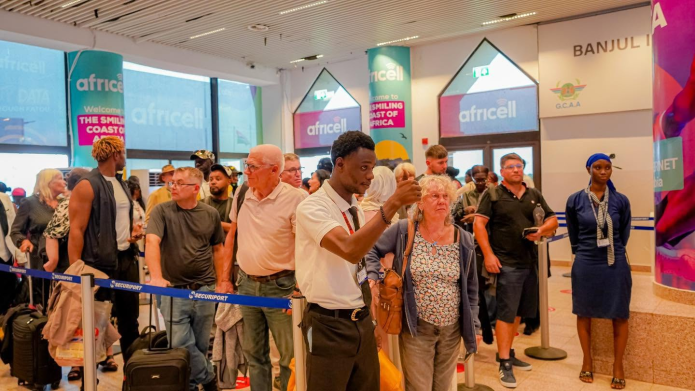
The Gambia officially launched its 2026/27 tourism season on Friday at Banjul International Airport, signaling the start of the country's efforts to revitalize its vital sector. The official opening ceremony at the airport marked a key moment for the nation's economic recovery strategy. The inaugural flight arrived carrying tourists via The Gambia Experience, a UK-based tour operator. This flight, which originated from London, brought 139 visitors to the West African nation, marking a concrete beginning to the new season. This marks the beginning of the period for which the West African nation hopes to see a significant recovery in visitor numbers, key for its economy.
Economic Significance of Tourism
Tourism contributes significantly to The Gambia's economy, accounting for 18-20 percent of its Gross Domestic Product, according to the Gambian Bureau of Statistics (GBOS, 2025). This substantial contribution shows the sector's importance to the nation's overall economic health and the livelihoods of its citizens. The sector experienced a substantial downturn following the Covid-19 pandemic, which sharply reduced international arrivals. The global health crisis severely impacted travel and hospitality, leading to a dramatic drop in visitor numbers that reverberated throughout the Gambian economy. Prior to the pandemic, international arrivals had reached more than 235,000 in 2019, as reported by the World Bank, noting the industry's strong performance before the widespread disruptions. The launch of the 2026/27 tourism season is therefore critical for the West African nation as it seeks to regain its pre-pandemic visitor numbers and restore the economic vitality provided by the industry. The recovery is essential for supporting local businesses and employment opportunities tied to the sector, from hotels and restaurants to local craft markets and tour operators. A thriving tourism sector is seen as a cornerstone for sustainable development and job creation across various related industries.
Industry Challenges and Warnings
Despite the optimism surrounding the new season, The Gambia Hotel Association issued a warning in September 2026, emphasizing several critical issues that require immediate attention for the sustained recovery of the tourism sector. The association stated that The Gambia must address beach erosion, a pressing environmental concern that impacts coastal infrastructure and natural attractions. The association noted the necessity of maintaining its road infrastructure, essential for facilitating tourist travel and access to various sites, and ensuring buildings are kept in good condition, which directly affects the quality of accommodation and services. These infrastructure concerns are vital for providing a positive and comfortable experience for international visitors. The warning noted the necessity of improving safety measures across tourist areas, a critical concern for ensuring visitor confidence and well-being. These factors were presented as essential for attracting and retaining visitors in the competitive international tourism market, where destinations are constantly vying for attention. The association’s press release underlined the need for proactive steps to safeguard the industry’s long-term viability and to build on the momentum generated by the new tourism season, ensuring that initial gains are sustained and expanded upon.
Voices from the Ground
The first chartered flight for the 2026/27 tourism season arrived from London, bringing 139 visitors to The Gambia. This initial influx of tourists aligns with projections for the season, offering an encouraging start to the recovery efforts. The Gambia Tourism Board Seasonal Forecast indicates an expected 15 percent increase in overall arrivals for the 2026/27 season, signaling potential growth for the sector. This forecast provides a quantitative measure of the anticipated positive trend in visitor numbers, which is key for the country's tourism-dependent economy. The arrival of the first flight marks a tangible step in the government's strategy to revitalize the industry after previous challenges, demonstrating the practical implementation of their recovery plans. The predicted increase in arrivals is a key metric for assessing the success of the new season's initiatives, offering hope for a strong rebound and a stronger future for Gambian tourism.