Ousainu Darboe, leader of the United Democratic Party (UDP), claimed that serious crime has seen an unprecedented rise in The Gambia under President Adama Barrow's administration. Darboe cited numerous killings and cases of bodies being discovered dumped in forests as evidence of the escalating situation. He specifically noted instances of individuals being killed and their remains subsequently abandoned in forested areas, painting a grim picture of the nation's security landscape. "Even during Jammeh’s time, crime was not this rampant," Darboe stated, further asserting, "Adama is not good for The Gambia." He also expressed hope for younger supporters of the National People’s Party (NPP), saying, "I’m praying that the other youths that are still with NPP, may God rescue them." Darboe's remarks showed his belief that the current government has failed to adequately address the growing public safety concerns across the country.
Crime Surge Allegations and Governance Critique
Ousainu Darboe, leader of the United Democratic Party (UDP), claimed President Adama Barrow has failed to meet the expectations of Gambians. He elaborated that the populace had anticipated significant improvements in various sectors, including security and governance, which have not materialized under the current leadership. Darboe previously asserted that serious crime has seen an unprecedented rise in The Gambia during Barrow's administration. He cited numerous killings and instances of bodies discovered in forests as evidence of what he described as an escalating situation. The UDP leader specifically pointed to the frequency of these violent acts and the macabre discovery of human remains as indicators of a deteriorating security environment. "Even during Jammeh’s time, crime was not this rampant," Darboe stated, further asserting, "Adama is not good for The Gambia." Darboe also expressed hope for younger supporters of the National People’s Party (NPP), saying, "I’m praying that the other youths that are still with NPP, may God rescue them." His comments reflect a deep concern for the nation's trajectory and the well-being of its citizens.
Political Defections Context
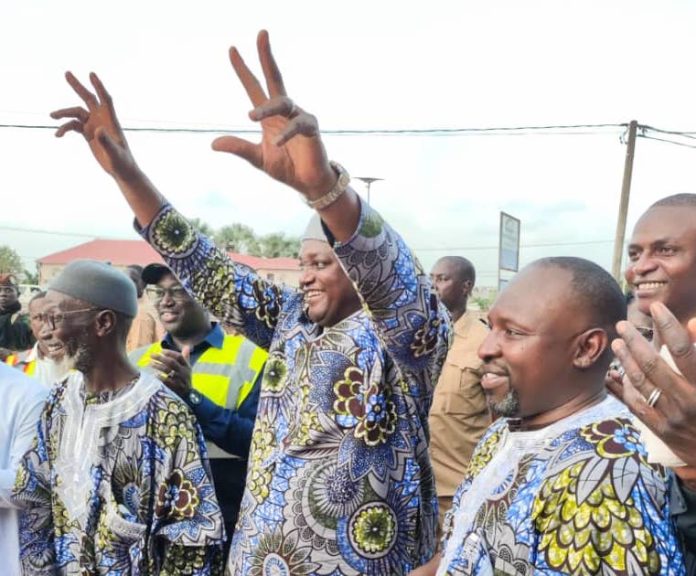
Ousainu Darboe, leader of the United Democratic Party (UDP), made his recent remarks concerning crime levels during an event held to welcome youths from Sukuta Quarry. These young individuals had recently decamped from the National People’s Party (NPP) to join the UDP. The gathering provided the platform for Darboe to articulate his views on the current administration's performance regarding public safety and governance in The Gambia. His comments were delivered as part of the formal reception for the new members, showing the political context of his statements on the nation's security situation. The defection of youths from Sukuta Quarry to the UDP served as the backdrop for Darboe's assertions regarding what he described as an unprecedented rise in serious crime under President Adama Barrow. The event noted the UDP's ongoing efforts to attract new members and consolidate its position as a leading opposition force.
Opposition Leader's Critique on Resource Management
Ousainu Darboe, leader of the United Democratic Party (UDP), stated that the government possesses the necessary resources to alleviate hardship within The Gambia. However, Darboe accused those in power of not utilizing these resources judiciously. His remarks came as part of a broader critique of the current administration, during which he also addressed public safety concerns. Darboe emphasized that despite the availability of means, including national revenues and potential international aid, the government's approach to resource management has not translated into tangible relief for the populace. He reiterated his party's stance that the current leadership has fallen short of expectations regarding governance and economic stewardship, failing to effectively deploy available assets for the benefit of all Gambians. Darboe's comments showed his belief that the nation's challenges stem from mismanagement rather than a lack of capacity, suggesting that a more responsible and transparent approach to resource allocation could significantly improve the lives of citizens. He called for greater accountability from those in power regarding the nation's finances and assets.