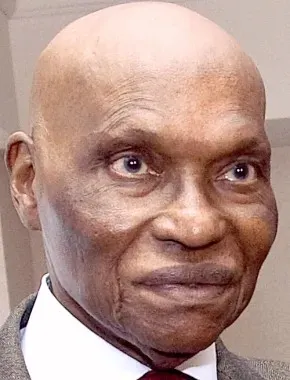
Abdoulaye Wade, Senegal's former president, celebrated his 100th birthday on Friday, marking a significant milestone for the statesman who led the nation from 2000 to 2012. This centennial celebration acknowledges a lifetime dedicated to public service and political engagement in Senegal. Official festivities are scheduled to commence on June 4th to commemorate the centenarian's life and extensive political career. Wade's presidency spanned over a decade, during which he oversaw various national developments and left an indelible mark on the country's trajectory. The planned celebrations will honor his profound contributions to the nation, recognizing his enduring legacy and influence.
A Long Political Journey
Abdoulaye Wade's distinguished career began in academia, where he taught law at the University of Dakar, which is now known as Cheikh Anta Diop University. His early legal career was also marked by his participation in the defense of Prime Minister Mamadou Dia in 1962, a key moment in Senegal's post-independence history. This early involvement in significant legal and political events foreshadowed his future role as a national leader. Wade later established a significant presence in Senegalese politics by founding the Senegalese Democratic Party (PDS) on July 31, 1974. This act solidified his position as a prominent opposition figure and laid the groundwork for his eventual rise to power. His ambition for the presidency became evident through multiple attempts, making unsuccessful bids in 1978, 1983, 1988, and 1993 before eventually securing the highest office in the land. These persistent efforts showed his unwavering commitment to leading the nation and implementing his vision for its future.
Presidential Tenure and Legacy
Abdoulaye Wade first ascended to the presidency in March 2000, successfully defeating incumbent Abdou Diouf in the second round of the election. This victory marked a significant political transition for Senegal, ending decades of rule by the Socialist Party and ushering in a new era of multi-party democracy. His inauguration as president was a historic moment, fulfilling a long-held ambition after numerous electoral challenges. Wade's tenure spanned twelve years, from 2000 to 2012, during which his administration implemented various reforms and development initiatives across the nation, aiming to modernize infrastructure and stimulate economic growth. His presidency was characterized by efforts to promote education, improve public services, and strengthen Senegal's international standing. However, his political career as president concluded in 2012 when he was defeated in the presidential election by Macky Sall. Sall, who had previously served as prime minister under Wade, secured the presidency following a contentious electoral period, marking another significant transition in Senegalese politics.
Honoring a National Figure
Abdoulaye Wade was officially born on May 29, 1926, in Saint-Louis, a historic city in northern Senegal. The former head of state's centennial is being recognized with several events organized by the Senegalese government, reflecting the nation's respect for his contributions. These planned celebrations aim to commemorate his long life, his extensive political career, and his significant contributions to the nation's political landscape, acknowledging his enduring impact on Senegalese society. As the country prepares for the official festivities beginning on June 4th, there is a widespread recognition of Abdoulaye Wade's key role in shaping modern Senegal.