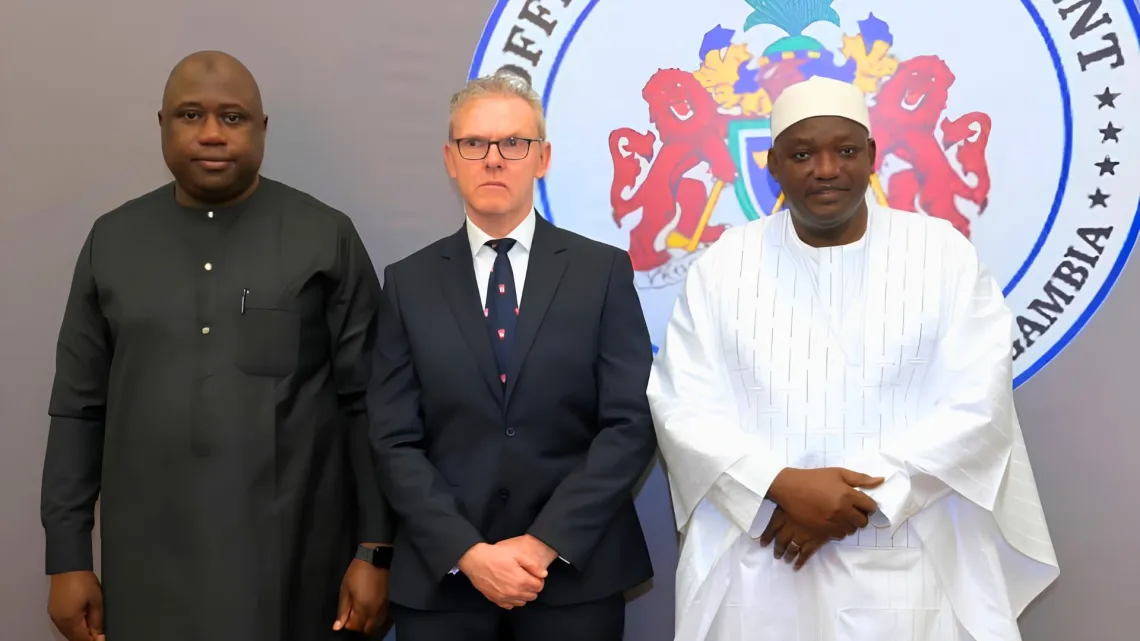
British Barrister Martin Hackett was sworn in as The Gambia’s Special Prosecutor on May 9, taking on a role that will see him prosecute cases before both the Special Criminal Division of the High Court and the Economic Community of West African States (ECOWAS)-backed Special Tribunal for The Gambia. His appointment comes as the West African nation continues to address alleged crimes committed under previous administrations. Mr. Hackett's responsibilities encompass legal proceedings in both key judicial bodies, signifying a dual approach to justice that integrates national and regional legal frameworks. The establishment of these mechanisms shows The Gambia's commitment to reckoning with its past and ensuring accountability for serious offenses.
Gambian-Driven Accountability Goals
The 2024 Special Accountability Mechanism Bill outlines a vision for a "Gambian-driven" accountability process, aiming to prioritize Gambian nationals for key positions. This legislative framework emphasizes the importance of local ownership and capacity in the pursuit of justice. The Special Prosecutor's Office Act further specifies that the president should give preference to Gambian nationals for the inaugural Special Prosecutor role, reflecting a clear legislative intent regarding national preference for this critical position. However, the Special Tribunal Statute establishes a different hierarchy for appointments, prioritizing candidates from Economic Community of West African States (ECOWAS) member states first, followed by those from other African countries. This creates a potential tension between the national preference outlined in the Special Prosecutor's Office Act and the broader regional focus of the Special Tribunal Statute. Attorney General Dawda Jallow said Martin Hackett was selected from a broad pool of candidates, indicating a wider search beyond Gambian nationals. This statement suggests that the selection process considered a diverse range of applicants, potentially aligning with the broader scope permitted by the Special Tribunal Statute.
Unexplained Appointment Process
The government has not publicly explained its decision to appoint a non-Gambian prosecutor or detailed whether a specific recruitment process focused on Gambian nationals was conducted. This lack of transparency has led to questions regarding the adherence to the "Gambian-driven" principles articulated in the 2024 Special Accountability Mechanism Bill and the specific preference for Gambian nationals in the Special Prosecutor’s Office Act. Reportedly, only one of the 13 applicants for the Special Prosecutor position was Gambian, a statistic that further notes the challenges or choices made in the selection process. While foreign judges have occasionally served in The Gambia, foreign prosecutors have been rare, with Phillip Bridges, who served from 1965 to 1968, being the sole exception cited. This historical context shows the unusual nature of Mr. Hackett's appointment. In contrast, The Gambia’s Truth, Reconciliation and Reparations Commission (TRRC) operated without foreign staff, apart from a single mental health expert. The TRRC's final report was entirely authored by Gambian commissioners, staff, and legal experts, noting a different approach to national capacity in a previous accountability mechanism. This historical precedent from the TRRC demonstrates that national mechanisms have successfully relied almost exclusively on Gambian expertise, raising further questions about the rationale behind the current appointment.
Broader Meaning for Justice
Martin Hackett's mandate as Special Prosecutor specifically addresses serious human rights violations and international crimes allegedly committed during the rule of former President Yahya Jammeh, which spanned from 1994 to 2017. These alleged crimes include acts of torture, extrajudicial killings, and enforced disappearances, representing a dark chapter in The Gambia's history. His appointment signifies a continued effort to address accountability for these actions within The Gambia's justice system. The scope of his work encompasses a period marked by numerous documented human rights abuses, with the aim of prosecuting individuals found responsible. This focus on violations from a specific historical period shows the ongoing efforts in The Gambia to establish judicial accountability for past events. The remit of the Special Prosecutor is designed to bring legal proceedings against those implicated in such grave offenses, utilizing both national and regional judicial frameworks to ensure full justice. The pursuit of these cases is key for victims and for establishing the rule of law in the country, contributing to a broader process of healing and reconciliation.