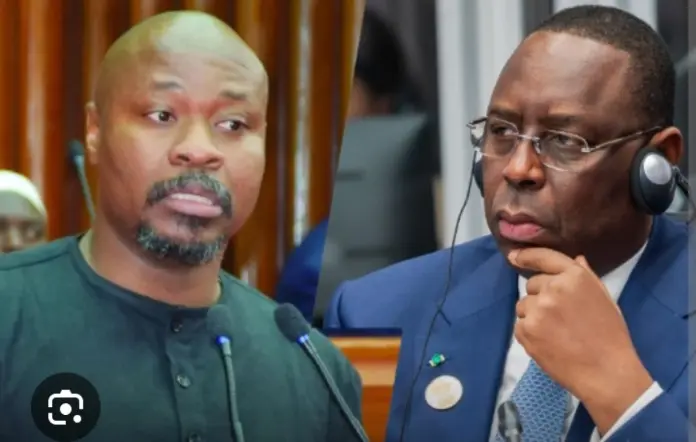
Senegalese President Bassirou Diomaye Faye dismissed Prime Minister Ousmane Sonko on Friday, marking a significant development in the nation's political landscape. This move has ignited a power struggle within the ruling coalition, reshaping the dynamics of Senegal's political future. For two years, President Faye held constitutional power, while Mr. Sonko commanded the political movement that brought them to prominence. The dismissal comes as Mr. Sonko had been a prominent figure in Senegal's recent political shifts, playing a key role in mobilizing support and shaping the political agenda.
Sonko's Next Move
Ousmane Sonko is expected to officially resume his seat in Senegal’s National Assembly later on Tuesday, a move that could provide him with a new platform for influence. His return to the assembly follows the resignation of Speaker El Malick Ndiaye, creating an opening for Sonko to re-establish his legislative presence. Sonko built his rise through a distinct strategy characterized by mobilization, confrontation, and pressure from the streets, which resonated deeply with a significant portion of the Senegalese electorate. His political party, Pastef, controls around 130 seats in Senegal’s 165-member National Assembly, giving him and his allies a commanding majority within the legislative body. This substantial parliamentary presence means that even without the premiership, Sonko remains a formidable political force, capable of influencing legislative outcomes and national discourse. His return to the National Assembly is therefore not merely a symbolic gesture but a strategic repositioning within the country's political architecture.
Pastef's Internal Dynamics
Following Ousmane Sonko’s dismissal from his position as Prime Minister, his political party, Pastef, issued a statement praising his “leadership,” “vision,” and “remarkable work.” The party’s statement noted these qualities in the context of his tenure, showing their continued support for their leader despite the change in his official government role. Pastef’s executive committee also addressed reports indicating that senior state officials and political appointees associated with the movement had started to resign following Sonko’s removal from the premiership. This acknowledgment from the executive committee suggests internal discussions within the party regarding the implications of the dismissal on its members holding government positions, and possibly an attempt to manage perceptions of unity and stability. The party is preparing for its congress, which is scheduled to take place on June 6. This upcoming event will likely serve as a platform for Pastef to outline its future strategy, consolidate its internal structure, and reassert its political direction in the wake of the recent political changes. The congress will be key for the party to demonstrate cohesion and to define its relationship with the presidency moving forward.
Faye's Shifting Alliances
President Bassirou Diomaye Faye was elected under the banner of the Diomaye President coalition, not Pastef itself, primarily because the party had been dissolved under former President Macky Sall before the 2024 election. This distinction in their political origins notes a structural difference in their power bases. Faye's administration includes figures such as former prime minister Aminata “Mimi” Touré, who is already part of his inner circle, indicating a diverse array of allies.
Some observers suggest that President Faye may increasingly rely on networks connected to former presidents Abdoulaye Wade and Macky Sall. This potential shift indicates a broadening of his political base beyond the immediate confines of his original support, potentially seeking to build bridges with established political factions. Faye may have little choice but to begin building power through alternative channels, including state institutions, technocrats, business elites, international partners, and political figures linked to previous administrations. This approach could allow him to consolidate authority and govern effectively amidst the evolving political landscape, especially as he navigates the complexities of governing with a powerful former Prime Minister and party leader operating outside his cabinet. This strategy would mark a departure from the more insular approach initially envisioned by some within the movement.
Future Political Maneuvers
One option reportedly under serious discussion within the presidency involves dissolving parliament once legally feasible later this year. Such a move would be a bold step, potentially aimed at reshaping the legislative landscape and consolidating presidential power by seeking a fresh mandate. Many political operators in Senegal have historically adapted easily from one regime to another, demonstrating a pragmatic flexibility in their allegiances. These operators have maintained influence, access, and privilege regardless of who occupied the presidential palace, suggesting that the current political shifts might also see a realignment of loyalties among the country's political class. The potential dissolution of parliament, combined with the dismissal of Sonko, signals a period of significant political flux and strategic maneuvering as President Faye seeks to establish his own distinct authority and governance model. The coming months are expected to reveal the full extent of these power dynamics and their implications for Senegal's democratic institutions.