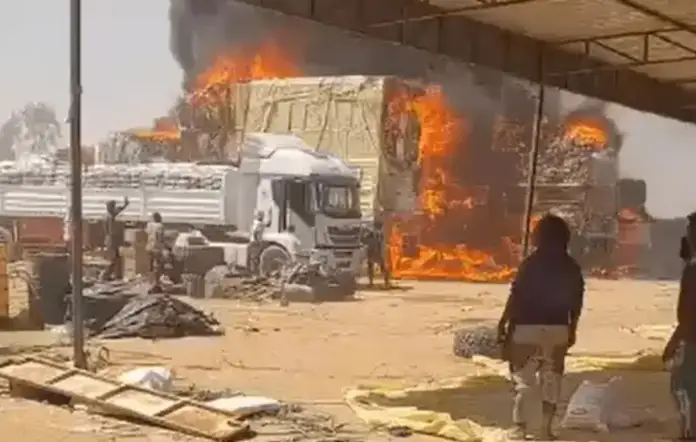
The Group for the Support of Islam and Muslims (JNIM) has imposed a blockade along the Dakar-Bamako corridor, leading to significant trade disruptions and the burning of at least eleven trucks. This aggressive action by JNIM has severely impacted vital transport routes connecting Mali and Senegal, two key West African nations. The blockade represents a direct challenge to commercial activities in the sub-region, profoundly affecting the movement of essential goods and dramatically increasing security concerns for traders and transport companies operating in the area. The escalating situation shows the fragile security landscape and the militant group's growing influence over critical economic arteries.
JNIM's Grip on Trade Routes
The Dakar-Bamako corridor is currently under blockade, impacting key trade routes between Mali and Senegal that are key for regional commerce. The Group for the Support of Islam and Muslims (JNIM) has explicitly stated that it does not tolerate the transport of fuel along this route, enforcing its directive with force. According to JNIM, the trafficking of other goods, excluding fuel, is managed by Malians, indicating a selective control over commercial flows. This stance notes JNIM's asserted control over commercial activities and its significant influence on the types of goods permitted to pass through the region, effectively dictating terms of trade. The blockade has contributed to significant disruptions for traders, causing delays and increased costs, and has heightened security concerns within the sub-region, making transit increasingly perilous. The militant group's ability to enforce such a blockade demonstrates a concerning level of territorial control and operational capability.
Impact on Senegalese Drivers
Dozens of other trucks are stranded along the route due to the ongoing blockade, creating a humanitarian and economic crisis. This dire situation has left many Senegalese drivers in a precarious position, unable to complete their deliveries or return to their homes and families. The prolonged stoppage has severe implications for their livelihoods, as many depend on timely deliveries for their income, and for the perishable goods some may be transporting, which are at risk of spoiling. Drivers face immense uncertainty regarding the safety of their cargo and their personal security while awaiting a resolution to the blockade, often in remote and unprotected areas. The disruption also contributes to increased operational costs for transport companies, which are forced to bear expenses for extended periods of idleness, potential losses from damaged or spoiled goods, and the added burden of security risks for their personnel and assets.
Authorities' Perceived Inaction
Senegalese authorities are widely perceived as powerless to resolve the ongoing crisis caused by the Group for the Support of Islam and Muslims (JNIM) blockade. The lack of a clear intervention strategy from Dakar has led to growing frustration among those directly affected by the trade disruption on the vital Dakar-Bamako corridor. This perceived inability to act has further complicated the situation for traders and drivers, who remain stranded or unable to transport goods through the region, exacerbating their financial and personal distress. The blockade continues to highlight significant challenges faced by regional governments in asserting control over critical trade routes amid persistent militant activity, exposing vulnerabilities in state authority and regional security cooperation. The absence of a strong response from national authorities leaves a vacuum that militant groups are keen to exploit.
Call for Dialogue and Regional Stability
Senegalese nationals are among the victims impacted by the burning of trucks on the Dakar-Bamako corridor, showing the direct human cost of this conflict. The incident has drawn urgent attention to the severe human cost of the ongoing blockade imposed by the Group for the Support of Islam and Muslims (JNIM). The presence of Senegalese citizens among those affected shows the transnational nature of the crisis, impacting individuals and livelihoods far beyond Mali's borders and creating ripple effects across the sub-region. The situation has raised profound concerns about the safety and security of drivers and traders operating in the sub-region, prompting calls for greater regional cooperation and effective strategies to ensure the protection of commercial routes and the well-being of those who depend on them. The international community and regional bodies are increasingly pressured to address the escalating instability.