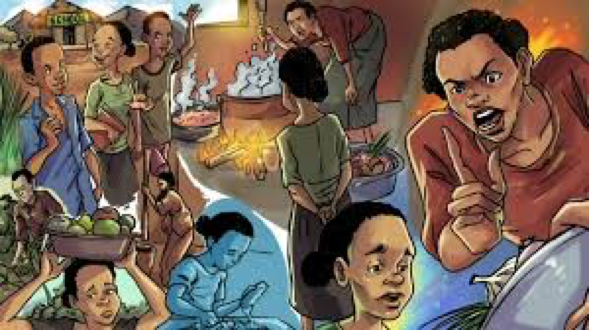
Fatou, a Gambian woman, endured verbal, emotional, and financial abuse from her husband, Modou. Modou controlled their finances, consistently dismissed her opinions, and belittled her, leaving her under the constant threat of divorce or escalating conflict. He undermined her confidence and frequently insulted her. This pattern of abuse, encompassing verbal, emotional, and financial control, created an environment of fear and instability for Fatou. Meanwhile, in 2025, Liberia and Sierra Leone employed the Women’s Empowerment in National Statistical Systems (WEMNS) framework to gather gender-disaggregated data through nationally representative surveys. This initiative received technical assistance from the UN Food and Agriculture Organization (FAO) and formed part of the broader 50×2030 Initiative. The 50×2030 Initiative aims to transform agricultural data systems to improve rural livelihoods and food security, aligning the data collection efforts with broader developmental goals.
Shifting Societal Expectations
As more African women pursue higher education, build careers, and achieve financial independence, marriage is no longer tied to survival or social acceptance as it once was. This fundamental shift in women's economic and social standing has profound implications for their marital expectations. Despite these advancements, many educated African women are still expected to embody traditional roles, such as being nurturing, accommodating, and responsible for the home. Simultaneously, they are also expected to function as modern women who contribute financially, build careers, and remain independent, often carrying a double burden with little support. This dual expectation places significant pressure on women, forcing them to navigate conflicting societal demands.
Sociological research indicates that when women have the means to support themselves, they are less likely to remain in unfulfilling or harmful relationships, a finding supported by Cherlin (2010). This evolving perspective represents a rejection of imbalance, lack of accountability, emotional immaturity, and abuse in all its forms. The shift aims to raise the standard of what partnership should entail, moving towards relationships built on mutual respect and shared responsibility. This change reflects a growing desire among women to seek relationships that are not only stable but also emotionally and intellectually fulfilling.
The Price of Unmet Needs
Many African women continue to experience physical abuse within marriage, with violence often minimized, normalized, or silenced by cultural expectations. This societal pressure to 'endure' for the sake of family or reputation has led numerous women to remain in dangerous situations, prioritizing external perceptions over their personal safety and well-being. The widespread stigma associated with divorce in many African communities means women are frequently judged more harshly for leaving a marriage than for silently enduring suffering within it. This cultural judgment can trap women in harmful situations, making the decision to leave even more daunting.
However, a growing number of African women are no longer willing to build with partners who have not undertaken the internal work required for a healthy, equitable connection. This shift reflects a re-evaluation of marital expectations, moving away from a culture of endurance towards one that prioritizes mutual respect and emotional maturity. This evolving perspective challenges traditional norms that historically placed the burden of marital stability almost entirely on women. The expectation for women to shoulder the emotional and relational labor alone is being increasingly questioned. In one example, Modou was celebrated and praised for quickly remarrying another wife after his previous marriage, noting the societal biases that often overlook women's experiences and struggles within marital breakdowns. This societal reaction further shows the double standards women often face when relationships end.
Empowerment and New Standards
Conversations surrounding mental health, personal self-worth, and the establishment of boundaries are increasingly visible, particularly among younger generations of African women. This growing awareness is fostering a new environment where women feel more empowered to articulate their needs and expectations within relationships. This shift aligns with broader efforts to understand how women perceive their ability to make fundamental choices regarding family formation, including when and whom to marry, whether to seek divorce, or decisions about if and when to have children. A key component for promoting gender equality is understanding how women perceive their ability in society to make these basic choices about family formation. For instance, Fatou rebuilt her life by returning to school and establishing a career that not only sustained her but also provided a higher income than her former husband, Modou, had ever earned. Her journey exemplifies how personal empowerment can lead to significant life changes and greater autonomy.
Data collected in Liberia and Sierra Leone indicates that slightly more than one-third of respondents in each country believe women should have the autonomy to choose when to marry or divorce, and whether or when to have children, or to have no more children. These views exhibit substantial regional and age variations, according to reports, offering critical insights for policymakers. These variations suggest that while progress is being made, there are still significant disparities in attitudes and beliefs across different demographics and geographical areas within these nations.
Broader Implications for Society
Data for this section was gathered utilizing the Women’s Empowerment Metric for National Statistical Systems (WEMNS), a survey tool developed by the International Food Policy Research Institute (IFPRI) and its partners. WEMNS is designed to provide a full understanding of women's empowerment across various dimensions, including their decision-making power and control over resources. This initiative forms part of the broader 50×2030 Initiative, which seeks to transform agricultural data systems. The 50×2030 Initiative’s objective is to enhance rural livelihoods and improve food security across participating nations. The use of WEMNS in Liberia and Sierra Leone to collect gender-disaggregated data supports these wider goals by providing critical insights into women's empowerment. By understanding the factors that influence women's ability to make choices about their lives and families, policymakers can develop more targeted and effective interventions to promote gender equality and improve overall societal well-being. The data collected through WEMNS offers a granular view of empowerment, allowing for a more nuanced approach to development strategies.