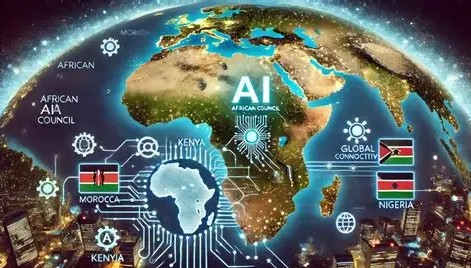
Artificial Intelligence (AI) is transforming global operations, including how societies learn, communicate, produce goods and services, conduct business, and govern. Indeed, Artificial Intelligence (AI) is fundamentally transforming the way the world works, learns, communicates, produces goods and services, conducts business, and governs societies. This widespread technological shift presents both immense opportunities and significant challenges for continents like Africa. Andrew Sylva stated that Africa has missed several technological revolutions in the past. Sylva emphasized, "Africa has missed several technological revolutions in the past. It must not miss this one." This sentiment shows the urgency and strategic importance of Africa's engagement with the AI revolution, not merely as a consumer but as a developer and innovator.
The Digital Divide
Africa enters the AI revolution from a position of considerable disadvantage, facing challenges such as inadequate electricity and weak digital infrastructure. The continent also experiences limited access to high-speed internet, insufficient research funding, and a shortage of advanced technological skills. These factors contribute to a significant digital divide, leaving millions of Africans digitally excluded. This exclusion impacts their ability to participate in and benefit from the rapid advancements in artificial intelligence, hindering their access to the transformative potential of these technologies. The foundational requirements for widespread AI development and adoption, including reliable power and strong internet connectivity, are not uniformly met across the continent, creating significant barriers to entry and progress. Addressing these infrastructural and skill-based gaps is critical for Africa to move beyond mere consumption of AI technologies and towards their development, ensuring that the benefits of AI are widely accessible and inclusive.
AI's Potential for Africa
Africa's priority should be to develop technologies that directly address critical challenges such as poverty, food insecurity, healthcare deficits, educational inequality, unemployment, climate change, financial exclusion, and weak public services. By focusing AI development on these pressing issues, the continent can leverage technology to create tangible, impactful solutions tailored to its unique context. While artificial intelligence is expected to create new jobs, it will also eliminate or transform many existing ones, necessitating proactive strategies for workforce adaptation.
In the agricultural sector, AI offers new possibilities for enhancing productivity and food security. AI-powered systems have the capacity to analyze weather patterns, identify crop diseases, improve irrigation techniques, predict crop yields, and provide farmers with timely and essential information. This data-driven approach can significantly boost agricultural output and resilience, directly combating food insecurity. In the healthcare sector, AI-supported diagnostic tools, telemedicine, medical data analysis, and advanced disease surveillance can significantly extend the reach of limited healthcare resources across the continent, improving patient outcomes and public health management. AI offers substantial potential in education. It can provide personalized learning experiences for students, assisting them in mastering complex subjects and adapting to individual learning styles. AI can also assist teachers in their roles, offering tools for lesson planning, assessment, and administrative tasks, thereby freeing up valuable time for direct instruction. AI has the capacity to translate educational materials into various African languages, breaking down language barriers and expanding access to quality instruction for a broader population, fostering educational equity and inclusion. The application of AI in these critical sectors can drive sustainable development and improve the quality of life for millions of Africans.
Charting a Path Forward
Africa has one of the youngest populations in the world, a demographic reality that presents both opportunities and challenges in the context of the AI revolution. This youthful demographic represents a vast potential workforce and a dynamic consumer base, but also requires significant investment in education and skill development to harness its capabilities effectively. To harness this potential and mitigate risks, African countries must urgently develop policies for data sovereignty, digital security, and responsible AI governance. These frameworks are considered essential for protecting national interests and ensuring ethical deployment of artificial intelligence technologies, fostering trust and preventing misuse. Establishing clear guidelines for data ownership and protection is critical in an increasingly data-driven world.
Governments across the continent must begin investing in digital literacy, vocational training, reskilling, and lifelong learning initiatives. Such investments are critical to equip the workforce with the necessary skills for an AI-driven economy and to foster a culture of continuous adaptation to technological change. These educational programs should be designed to prepare individuals not only for new job opportunities created by AI but also to adapt to the transformation of existing roles. Regional cooperation can play a significant role in advancing Africa's AI agenda. Collaborating across borders can facilitate the establishment of shared research centers, fostering innovation and knowledge exchange among African nations. It can also lead to the development of common digital standards, ensuring interoperability and facilitating trade and data flow across the continent. The creation of unified data frameworks can enhance data sharing for research and development while upholding privacy and security. Lastly, regional cooperation enables the pooling of resources for computing infrastructure and technology markets, which are often expensive and difficult for individual nations to develop alone. This collaborative approach could significantly strengthen the continent's collective capacity to engage with and shape the global AI landscape, ensuring that Africa is not left behind in this key technological transformation.