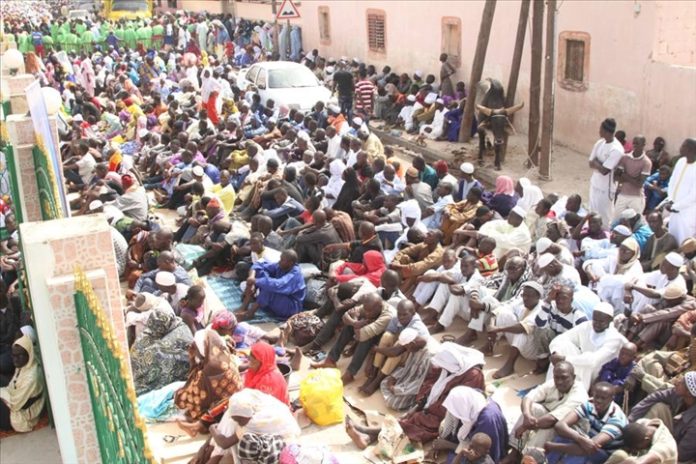
Muslims across The Gambia will gather today, August 25, to commemorate the birth of the Holy Prophet Muhammad (peace be upon him) through gamo events. These gatherings, known as gamo, are significant religious observances marked by prayers, recitations, and discussions on the Prophet's life and teachings. The Gambian government has declared Wednesday, August 26, a public holiday in observance of the occasion, allowing the populace to fully participate in the spiritual reflection and celebrations. This annual commemoration serves as a vital opportunity for the Muslim community to renew its commitment to the Prophet's message. Abdoulie Mam Njie, a prominent voice, stated that Prophet Muhammad was given "as an example to follow," not merely to be admired, showing the practical application of his life's lessons.
Prophet's Character and Mission
Muslims across The Gambia observe Gamo on August 25, commemorating the birth of the Holy Prophet Muhammad (peace be upon him). This day is dedicated to reflecting on the profound impact of his life and his enduring message. Abdoulie Mam Njie emphasized the significance of the Prophet's life as a guide for humanity, pointing out that his actions and character provide a full blueprint for moral and spiritual living. Njie stated, "The Holy Prophet Muhammad (peace be upon him) was not given to us merely to be admired; he was given to us as an example to follow." This perspective shows the active emulation of the Prophet's virtues and actions in daily life, encouraging believers to internalize and manifest his exemplary conduct. The Quran itself describes the Prophet's universal mission, noting his role as a source of divine mercy and guidance for all existence. In Surah Al-Anbiya (The Prophets), verse 107, Allah refers to the Holy Prophet Muhammad (peace be upon him) as "a mercy to the worlds." This divine description notes the Prophet's role as a source of compassion and guidance for all of creation, extending beyond specific communities or eras, emphasizing the universal applicability of his message. His teachings transcend geographical and temporal boundaries, offering timeless wisdom for humanity.
Lessons for Gambian Discourse
In Surah Al-Ahzab (The Confederates), verse 21, Allah presents Holy Prophet Muhammad (peace be upon him) as "an excellent example" for believers. This divine commendation shows the Prophet's life as a model for moral conduct and spiritual practice, providing a benchmark for human excellence. His life story, replete with instances of justice, compassion, and perseverance, serves as a perpetual source of inspiration. Another declaration from Allah in Surah Al-Qalam (The Pen), verse 4, states, "And indeed, you are of a great moral character." This verse directly affirms the Prophet's exemplary ethics and integrity, positioning his character as a foundational guide for Muslims worldwide. These scriptural references provide a framework for understanding the Prophet's role not just as a historical figure, but as a perpetual source of guidance, whose attributes are meant to be reflected in the lives of his followers. As The Gambia approaches another presidential election, these teachings on character and exemplary conduct can offer significant lessons for public discourse and leadership within the nation. The emphasis on moral character and setting a positive example becomes particularly relevant in times of political transition and public engagement, urging leaders and citizens alike to uphold principles of integrity and service.
Call for Unity and Respect
Abdoulie Mam Njie stated that the observance of the Prophet's birth should transcend mere admiration, emphasizing that "Love must produce imitation. Remembrance must produce change." Njie previously articulated this sentiment, noting, "The Holy Prophet Muhammad (peace be upon him) was not given to us merely to be admired; he was given to us as an example to follow." This reiteration stresses the imperative for Muslims to translate their reverence into tangible actions that reflect the Prophet's virtues. The teachings of the Holy Prophet Muhammad (peace be upon him) challenged notions of arrogance, tribal superiority, and injustice, which are often sources of division within societies. Instead, these teachings placed righteousness and character at the core of human worth, promoting a framework where an individual's moral standing and conduct are critical over societal divisions. This message of unity, respect, and the elevation of character over superficial distinctions holds profound relevance for contemporary Gambian society, particularly in fostering harmony and understanding during periods of national dialogue and political activity. The Prophet's emphasis on justice and equality serves as a guiding light for all interactions, urging individuals to treat one another with dignity and fairness.