The United States is preparing for its 250th anniversary, known as the semiquincentennial, with two distinct initiatives leading the commemorative efforts: America250 and Freedom 250. This milestone, referred to as the 'semiquincentennial', marks a significant moment in the nation's history, prompting a wide array of planned events and celebrations. America250 is a bipartisan organization created by the US Congress in 2016, tasked with planning and orchestrating the celebration. A spokesperson for America250 stated the organization was set up to "plan and orchestrate the 250th anniversary of the signing of the Declaration of Independence." This entity emphasizes community participation through programs such as America’s Block Party and Giving 4th, aiming for broad engagement across the country.
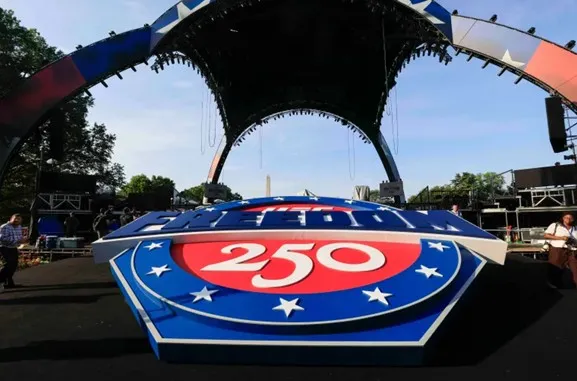
Conversely, Freedom 250 operates as part of a White House task force. White House Task Force 250 was established in 2025 to "plan, organize, and execute" the semiquincentennial, with Donald Trump serving as its chair. Freedom 250 is structured as a public-private partnership operating within the National Parks Foundation. Its focus is on marquee functions, including high-profile events like an IndyCar race and a World Cup Fan Zone. This dual approach has led to differing strategies and, at times, contrasting visions for how the nation should mark its significant anniversary.
Historical Anniversary Traditions
The United States' anniversaries have varied in scale and success over time, providing a historical context for the current commemorative efforts. The nation's first 50-year anniversary celebration in 1826 was a muted affair, a stark contrast to the elaborate plans for the upcoming semiquincentennial. Coincidentally, former Presidents John Adams and Thomas Jefferson both died on the day of the 1826 semicentennial, adding a somber note to the otherwise quiet observance. The 100th anniversary in 1876 marked the country's first world's fair, which was held in Philadelphia, showcasing American innovation and progress to a global audience. Fifty years later, the 150th anniversary in 1926 also featured a world's fair in Philadelphia, attempting to replicate the success of its predecessor. However, that event was not universally acclaimed, with Variety magazine famously calling it "America’s greatest flop," noting the challenges of orchestrating large-scale national celebrations.
The 200th anniversary in 1976 set the template for a yearlong, cross-country celebration, aiming for widespread public involvement. Festivities for the 1976 bicentennial included a train-mounted museum that traveled the country, bringing historical exhibits to various communities. Additionally, volunteers journeyed in covered wagons, reenacting historical migrations and connecting with local populations along their routes. Despite the widespread participation and efforts to engage different segments of the population, the 1976 celebrations earned the pejorative nickname 'the buy-centennial' due to the extensive sales of souvenirs and commercialization surrounding the events. Looking ahead to the 2026 observances, a fireworks display is scheduled for Mount Rushmore in South Dakota on July 3, promising a spectacular visual tribute as part of the upcoming festivities.
Divergent Approaches and Funding
The two organizations, Freedom 250 and America250, are pursuing distinct strategies for the semiquincentennial. The Ultimate Fighting Championship (UFC) is staging UFC Freedom 250, an event organized by Dana White, CEO of the Ultimate Fighting Championship. This high-profile mixed martial arts fight is scheduled to take place on the White House lawn on June 14, drawing significant attention to the celebrations. The UFC event will feature two title fights, with Ilia Topuria facing Justin Gaethje in the lightweight division and Alex Pereira competing against Ciryl Gane for the heavyweight interim title, promising a thrilling spectacle. White stated that the event aims "to tell the story of America" through the lens of competitive sport. Beyond the UFC fight, the Freedom 250 Grand Prix will see IndyCars racing around capital monuments in Washington, DC, from August 22 to 23, transforming the nation's capital into a temporary race circuit. The commemorative events also include a World Cup Fan Zone held in Washington, DC, from June 11 to July 16, offering a public viewing area for the international soccer tournament. Additionally, The Great American State Fair, which will feature booths representing all 50 states on the National Mall from June 25 to July 10, is planned as a major cultural showcase. Mobile museums known as Freedom Trucks are planned to travel across the country, aiming to bring educational exhibits directly to communities nationwide.
America250 is pursuing a different strategy with initiatives such as America’s Block Party, which encourages communities nationwide to engage in charitable works and host local celebrations, fostering a grassroots approach to the anniversary. This initiative, alongside Giving 4th, is central to America250's focus on community participation. America250’s chairwoman, Rosie Rios, lauded Freedom 250, characterizing it as a method to advance presidential initiatives, suggesting a degree of collaboration or at least recognition between the two entities despite their separate mandates. The financial backing for these celebrations comes from federal appropriations. Congress appropriated $150 million to the Department of the Interior to support the various celebrations. The Interior Department subsequently allocated $100 million of this funding to Freedom 250, channeled through the National Park Foundation, showing the significant resources directed towards the White House-backed initiative. America250 received $50 million from the Interior Department's allocation, a smaller but still substantial sum for its congressionally mandated role. America250's stated mission is to "plan and orchestrate the 250th anniversary of the signing of the Declaration of Independence," emphasizing its role in coordinating a national commemoration.
Controversies and Partisanship
The parallel existence and differing approaches of America250 and Freedom 250 have not been without controversy, particularly concerning issues of control and partisanship. The creation of White House Task Force 250 was viewed by some as a maneuver by Donald Trump to seize control of the celebrations, raising questions about the intended non-partisan nature of a national anniversary. Amidst these developments, Ari Abergel, Trump's appointee to lead America250, was fired for "serious and repeated breaches" of his authority, further noting internal tensions and power struggles within the commemorative planning. A significant point of scrutiny has been the financial transparency of both organizations. Neither America250 nor Freedom 250 are required to disclose their private donors, a point that has drawn scrutiny from transparency advocates and the public. However, America250’s parent commission must submit an annual report to Congress detailing its funding and spending, providing some level of oversight for the congressionally created body. Freedom 250 lists "sponsors" and "partners" online but is not subject to independent oversight regarding its financial mechanisms, leading to concerns about potential influence from undisclosed donors.
Further reports have shed light on fundraising practices. The New York Times reported that Freedom 250 offered access to a reception hosted by Trump in exchange for large donations, linking financial contributions directly to exclusive access to the former president. Separately, USA Today pointed out that America250 offered packages that included invitations to events with government officials, indicating that both organizations engaged in practices that could be perceived as leveraging access for funding. Critics raised concerns that Trump was steering public funds away from America250, the congressionally mandated organization, towards his own initiative. This concern was amplified by the allocation of funds: nearly $10 million went to supporting the Freedom Trucks, whose exhibits were criticized for offering a whitewashed portrait of US history, prompting debates over historical accuracy and interpretation in the anniversary celebrations.
The Great American State Fair, a Freedom 250 initiative, also encountered significant challenges and criticisms. Artists began dropping out of its musical lineup after its announcement in May, citing concerns about the event's nature. Several performers felt misled by organizers' claims that the Great American State Fair is nonpartisan, suggesting a disconnect between the event's public presentation and its perceived political alignment. Further reflecting this sentiment, several states declined to take part in the Great American State Fair, including Connecticut, Massachusetts, North Carolina, Oregon, Rhode Island, Vermont, and Washington state. These withdrawals showed the growing perception of partisanship surrounding the event.
Outlook and Official Statements
Despite the controversies and withdrawals, official statements from Freedom 250 have sought to clarify its position and maintain its plans. A Freedom 250 spokesperson clarified that the presidential group "has not been responsible for the operations, logistics or funding of the UFC White House event," attempting to distance the task force from the specific details of the mixed martial arts fight. Meanwhile, a federal judge rejected an emergency petition aimed at stopping the UFC fight, allowing the event to proceed as scheduled on the White House lawn. The Great American State Fair, a Freedom 250 initiative, has faced criticism regarding its nature, particularly from participating states. A spokesperson for Oregon stated the fair "is shaping up to be a more partisan affair than originally presented," articulating the concerns that led to some states' withdrawal. Despite these withdrawals, Freedom 250 maintains that the Great American State Fair will continue with all 50 states represented, indicating a commitment to the original vision, even if some participation is symbolic or through other means. In a significant development, Donald Trump subsequently cancelled the Great American State Fair concert, replacing it with a "Rally to end all Rallies." This event is scheduled to include performances by country musician Lee Greenwood, tenor Christopher Macchio, and various military bands, further cementing the perception of a shift towards a more politically aligned celebration under the Freedom 250 banner. The divergent paths of America250 and Freedom 250 continue to shape the narrative of the nation's 250th anniversary, reflecting broader debates about national identity, historical interpretation, and the role of government in public commemoration.