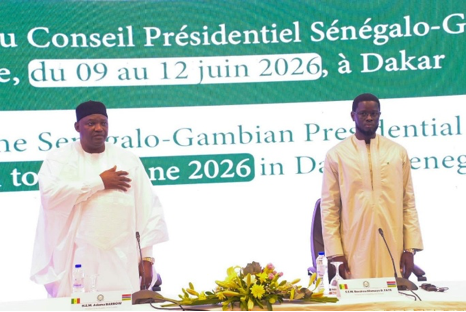
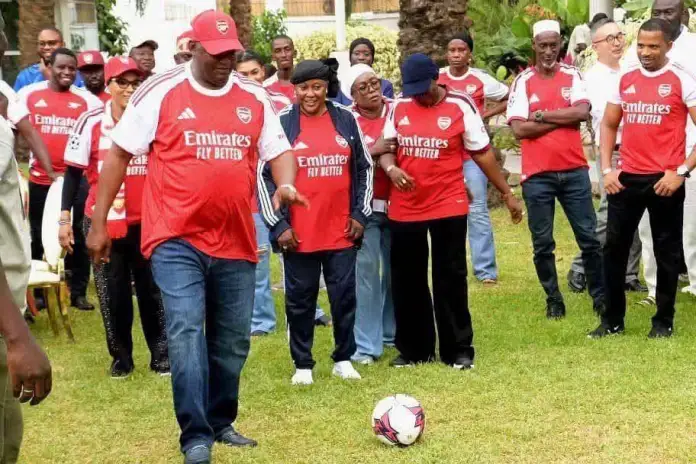
President Adama Barrow recently hosted a celebratory event at the State House, converting the official residence into a party ground to mark Arsenal Football Club's victory in the English Premier League. This action has drawn sharp criticism, with the article describing it as a display of "sheer tone-deafness and staggering arrogance." Beyond simple misjudgment, the article further characterizes the President's actions as indicative of a "profound inferiority complex," suggesting a deeper issue at play in the nation's leadership. This lavish celebration occurred at a time when the daily realities for many Gambian citizens were starkly different. While music played at the State House, citizens across Gambia faced immense difficulties securing basic necessities, struggling profoundly to find water to drink or electricity to light their homes. The stark contrast between the State House festivities and the widespread suffering of the populace has ignited public outrage and intensified scrutiny of the government's priorities. The article concludes that the State House celebration represented nothing less than a "celebration of ignorance, a victory lap for arrogance, and a direct mockery of our collective national pride," showing the deep sense of betrayal felt by many.
Corruption Fuels National Crisis
The article attributes the persistent and severe water and electricity shortages plaguing the Gambia directly to what it describes as "weaponised corruption eating away at the National Water and Electricity Company (NAWEC)." This ongoing issue, far from being a mere operational challenge, is presented as a deliberate systemic failure that profoundly affects essential services across the entire country. The impact of this "weaponised corruption" is felt daily by ordinary citizens who are deprived of fundamental utilities.
Adding to the gravity of the situation, reports indicate that criminal abuse of public funds, specifically those allocated for critical utility infrastructure projects, are not isolated incidents. Instead, these abuses are explicitly linked to corrupt networks operating in close proximity to the executive branch of government. These serious allegations suggest a widespread and systemic problem within the country's financial management, particularly concerning the allocation and oversight of resources intended for vital public services. The implication is that public funds meant to alleviate suffering are being systematically diverted or mismanaged, exacerbating the national crisis.
The widespread desperation caused by government corruption is cited as a primary and tragic factor driving young people to undertake increasingly hazardous journeys. Many are boarding precarious boats to cross the Atlantic Ocean, seeking a better life away from the systemic failures and lack of opportunity at home. This desperate migration trend shows the severe, life-altering impact of corruption on the lives and futures of Gambian youth, who see no viable path forward within their own country. The article paints a grim picture of a nation where corruption not only undermines public services but also forces its most valuable asset – its youth – into dangerous exile.
Stadium Renovation Scandal
The Gambian government's financial decisions have also come under intense scrutiny, particularly regarding the renovation of the Independence Stadium. The government has allocated over 350 million Dalasis towards this renovation project, a substantial sum for a nation facing such dire infrastructure needs elsewhere. However, what should have been a straightforward upgrade has instead become a symbol of mismanagement and alleged corruption.
A National Audit Office (NAO) report later exposed a litany of irregularities associated with this renovation project. These findings included significant contract overlaps, indicating a lack of proper planning and oversight, alongside widespread financial mismanagement. The NAO's revelations brought to light serious concerns about how public funds were being handled and whether they were being used effectively and transparently. The integrity of the entire renovation process was severely called into question by these official findings.
Further complicating matters, contracts for the stadium's upgrade were awarded to GIGO Construction and CFTM, companies that are described as deeply intertwined with President Adama Barrow's inner circle. This raises immediate concerns about potential conflicts of interest and cronyism in the distribution of lucrative public contracts. The article explicitly states that connections from these renovation contracts are reportedly tied back to influential figures within the President's administration, including First Lady Fatoumata Bah-Barrow, Chief of Staff Alieu Loum, and his nephew Amadou Sanneh. Such close ties between contractors and high-ranking government officials fuel public suspicion and undermine trust in the procurement process.
The direct consequence of the stadium situation has been a severe blow to national pride and sporting aspirations. The national team, affectionately known as the Scorpions, has been banned for years from playing home games on Gambian soil. This ban, a direct result of the substandard conditions or incomplete nature of the Independence Stadium, forces the team to seek alternative venues in other countries, diminishing the home advantage and the connection with their passionate supporters. Beyond the renovation itself, the scandal extends to the stadium's surroundings, which are reportedly carved up into lucrative land deals for business associates, valued at over 500 million Dalasis. This suggests that the stadium project has become a vehicle for personal enrichment, further diverting resources and attention from the public good.
Arrogance and Inferiority Complex
The article asserts that President Adama Barrow, through his public actions and priorities, operates as a "useful consumer" and a "free advertising agent for TV rights and colonial sports revenue." This characterization is particularly poignant given the broader criticisms regarding the State House celebration for Arsenal Football Club, a foreign entity. The President's enthusiastic public embrace of a foreign team's success, while his own nation struggles with basic services and sporting infrastructure, is seen as deeply problematic. This behavior is interpreted as an outward manifestation of the "profound inferiority complex" previously mentioned, suggesting a leader who prioritizes external validation over internal development and national achievement.
The contrast becomes even starker when considering the performance of the Gambian national football team. Under President Barrow's administration, the Scorpions, the pride of the nation, have unfortunately failed to qualify for the African Cup of Nations. This lack of success for the national team, a source of collective identity and aspiration for many Gambians, stands in stark opposition to the President's public celebration of a foreign club's victory. This discrepancy implies a significant disconnect between the executive's priorities and the country's own sporting achievements and national morale. The article strongly suggests that the President's focus is misdirected, further cementing the perception that the State House celebration was a "direct mockery of our collective national pride" and a clear indication of misplaced priorities within the highest office.