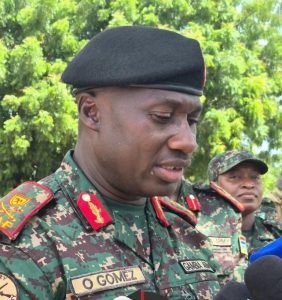
Chief of Defence Staff Major General Ousman Gomez addressed officers of the Police Intervention Unit (PIU) ahead of The Gambia's December 5 presidential election, urging them to maintain strict political neutrality. Major General Gomez emphasized that while PIU officers have the right to vote, they must not show open partisan political support. "We are getting into elections, and most of you will be deployed on election duties. That does not mean you give your support to a particular political party," he stated. He added, "The advice I have for my men is the same advice I have for you." This directive is critical as The Gambia prepares for a key electoral period, with security forces playing a vital role in ensuring a fair and peaceful process. The Chief of Defence Staff showed the importance of an impartial security apparatus to uphold democratic principles.
Election Duties and Neutrality
Major General Ousman Gomez delivered his address to the Police Intervention Unit officers in YBK, located in the Central River region. He reiterated that while security personnel possess the right to vote, they are prohibited from engaging in open partisan political activities. This distinction is key for maintaining the public's trust in the security forces. The Chief of Defence Staff emphasized this distinction as part of broader guidance to maintain institutional impartiality during the electoral process. He stressed that their role is to facilitate a secure environment for all citizens to exercise their democratic rights, free from any perceived or actual bias. The country is preparing for the December 5 presidential election, and the integrity of the security forces is critical.
The address at YBK was part of a wider nationwide tour of military institutions undertaken by Major General Gomez. This tour aims to communicate key directives and expectations to various security units in the lead-up to the presidential election. His remarks consistently show the importance of professional conduct and strict neutrality among all security forces as they prepare for election duties across the country. He reminded officers that their uniform symbolizes their commitment to the nation, not to any political faction. The Chief of Defence Staff's message was clear: security personnel have voting rights but should not engage in open partisan politics, ensuring that their actions are always perceived as unbiased and in service of the state.
Combating Tribalism and Partisanship
Major General Ousman Gomez cautioned officers against engaging in partisan activities while in uniform. He specifically implored members of the Police Intervention Unit to refrain from using social media platforms to comment on partisan politics or internal security matters. This instruction is particularly pertinent in the digital age, where online expressions can quickly be misconstrued or used to undermine institutional neutrality. The Chief of Defence Staff noted tribalism as a significant challenge confronting The Gambia's security sector. He stressed the importance of national cohesion, emphasizing that such divisions can erode trust and jeopardize stability, especially during sensitive periods like elections.
Major General Gomez further urged officers to prioritize national unity over ethnic loyalty. He explained that allegiance to the nation must supersede any other affiliation, particularly for those entrusted with maintaining peace and order. His address emphasized that professional conduct requires detachment from political and tribal divisions, especially as security forces prepare for their roles in the upcoming presidential election. He flagged tribalism as a challenge facing the security sector, calling for a concerted effort to foster a unified national identity within the ranks. The directives from Major General Gomez aim to ensure that all security personnel maintain an impartial stance, safeguarding the integrity of the electoral process and fostering stability across the nation. This guidance forms a critical part of the broader strategy to uphold the neutrality of security institutions, ensuring that the security forces remain a unifying rather than a divisive factor in Gambian society.
Broader Security Sector Cooperation
Major General Ousman Gomez emphasized the importance of serving The Gambia and the interests of all its citizens, rather than aligning with specific political parties. He conveyed this message to officers of the Police Intervention Unit, stressing that their duty was to the nation as a whole. He reminded them that their allegiance is to the constitution and the people of The Gambia, not to any particular political ideology or leader. This fundamental principle underpins the impartiality expected of all security personnel.
Gomez also urged Police Intervention Unit officers to foster close collaboration with the Gambia Armed Forces and other sister security services. This call for inter-agency cooperation aims to ensure a unified and effective approach to maintaining security and neutrality, particularly in the lead-up to the presidential election. Such cooperation is vital for a coordinated response to any security challenges and for presenting a united front in upholding law and order. His directives are designed to strengthen institutional impartiality across the security sector, promoting a smooth and integrated security framework that can effectively serve and protect all Gambians during this critical electoral period. He showed that by working together, the various security agencies can better fulfill their mandate of safeguarding national stability and ensuring a peaceful democratic process.