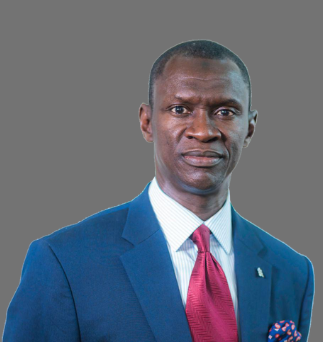
The appointment of a new Chief Justice in The Gambia has become a central topic of public discussion, following the nomination of US-based Gambian lawyer Mr. Edi MO Faal for the position. Mr. Faal's nomination has brought the constitutional role of Chief Justice, described as the country's third highest and one of its most consequential constitutional offices, under significant public scrutiny. This prominent position, key to the nation's legal framework and the upholding of justice, demands a rigorous adherence to constitutional requirements. Imran Darboe, Esq. A legal analyst, acknowledged that the appointment of a new Chief Justice has been "centre stage in recent public discussion, and that is a positive development." Darboe noted that provisions of the Gambian Constitution are increasingly being discussed beyond legal circles, making technical constitutional provisions part of public discourse, which he considers "desirable in any constitutional democracy." This burgeoning public engagement signals a growing awareness and demand for accountability in high-level judicial appointments.
Constitutional Qualifications for Chief Justice
Section 139 of The Gambia's 1997 Constitution outlines the specific qualifications required for an individual to be appointed as Chief Justice. This section serves as the fundamental legal framework governing who can hold this esteemed position. A primary qualification for the Chief Justice position is eligibility to be appointed as a Justice of the Supreme Court of The Gambia. This means that any candidate for Chief Justice must first meet the stringent criteria set for the nation's highest judicial body. The Constitution also stipulates an alternative pathway, stating that an individual can qualify for Chief Justice if they have served as a judge of a superior court in another common law jurisdiction for a minimum of ten years. This provision aims to ensure that candidates possess extensive judicial experience from a compatible legal system. However, Mr. Edi MO Faal, the nominated candidate, has not previously served as a judge, a fact that raises questions regarding his eligibility under this specific constitutional requirement.
Section 139(2) of the Constitution details two distinct pathways for qualification as a Supreme Court judge, which in turn determines eligibility for the Chief Justice role. These pathways are designed to ensure that Supreme Court Justices possess either significant appellate judicial experience or extensive practical legal experience. One path requires an individual to have served as a judge of the Gambian Court of Appeal or an appellate court in any other common law jurisdiction for at least five years. This criterion emphasizes the importance of judicial experience at the appellate level, where complex legal issues are often adjudicated. Mr. Faal has never served as an appellate court judge, meaning he does not meet the requirements of this particular route to Supreme Court qualification. The alternative route for Supreme Court judge qualification involves having practiced law before a court with unlimited jurisdiction in both civil and criminal matters within a common law jurisdiction for a period of no less than twelve years. This pathway acknowledges the value of substantial experience in legal practice, handling a broad range of cases. The constitutional provisions are precise, leaving little room for ambiguity regarding the required experience and background for these key judicial roles.
Defining 'Common Law Country' and its Implications
Section 139(5) of The Gambia's Constitution specifically defines what constitutes a "common law country" for the purposes of Section 139, which outlines the qualifications for judicial appointments. This constitutional provision clarifies the geographical and legal parameters within which prior legal experience or judicial service is considered valid for appointment to the Supreme Court and, by extension, the Chief Justice position. According to Section 139(5), a "common law country" can be defined in one of two ways. Firstly, it can be a country within the Commonwealth. This designation recognizes the shared legal heritage and judicial systems among Commonwealth nations. Secondly, a "common law country" can be a country outside the Commonwealth, provided it is prescribed by an Act of the National Assembly and its courts exercise a common law jurisdiction. This allows for flexibility but requires a formal legislative act to recognize non-Commonwealth jurisdictions for the purpose of judicial qualifications.
A critical point of discussion in Mr. Faal's nomination revolves around the fact that the United States is not a member of the Commonwealth. This distinction is significant because Mr. Faal's primary legal background is associated with the United States. Consequently, the article argues that legal practice or judicial service in the United States does not satisfy the constitutional requirement for Chief Justice unless the United States is specifically prescribed by an Act of the National Assembly. Without such an Act, any legal experience gained in the US, regardless of its duration or nature, would not constitutionally qualify a candidate for the Chief Justice role under Section 139. This notes a potential constitutional hurdle that must be addressed if Mr. Faal's nomination is to proceed in full compliance with the law. The precise definition of "common law country" in the Constitution is not a mere technicality but a fundamental safeguard designed to ensure that the nation's highest judicial offices are filled by individuals whose legal backgrounds align with The Gambia's constitutional and legal traditions.
Critique of Presidential Appointment Process
The President has the authority to select a single individual for the Chief Justice position, with the process requiring only consultations with the Judicial Service Commission. This method of selection has drawn criticism regarding its structure, particularly given the consequential nature of the Chief Justice role, which is considered the third highest office in the country. The current appointment process is observed to lack transparency, competitiveness, and broader participation from relevant stakeholders. The ability of the President to handpick a single individual, even with consultations, raises concerns about the potential for political influence and the exclusion of a wider pool of qualified candidates. Critics argue that a more open and competitive process would enhance public trust in the judiciary and ensure that the most capable and constitutionally eligible individual is appointed. The absence of clear, publicly accessible criteria for selection, beyond the constitutional minimums, and the limited involvement of other legal and civil society bodies contribute to perceptions of opaqueness.
The lack of transparency in the selection process is particularly troubling for an office as vital as the Chief Justice. A competitive process would typically involve public calls for applications, a rigorous shortlisting procedure, and potentially public hearings or interviews, allowing for a thorough examination of candidates' qualifications, experience, and judicial philosophy. Without such mechanisms, the public is left with little insight into how candidates are evaluated or why a particular individual is chosen over others. This limited participation extends beyond the public to other legal bodies and civil society organizations that could offer valuable input and scrutiny. The current system, by concentrating power in the hands of the executive, risks undermining the independence and perceived impartiality of the judiciary.
Discussions around constitutional provisions are increasingly extending beyond traditional legal circles, entering public discourse. This expanded engagement reflects a growing public interest in the mechanisms of governance and judicial appointments, particularly for an office as significant as the Chief Justice. The ongoing debate surrounding Mr. Faal's nomination shows the public's desire for a strong and constitutionally compliant appointment process for all high-ranking judicial positions. This increased public scrutiny, as noted by legal analysts, is a positive development for The Gambia's constitutional democracy, fostering greater accountability and understanding of the nation's legal framework.