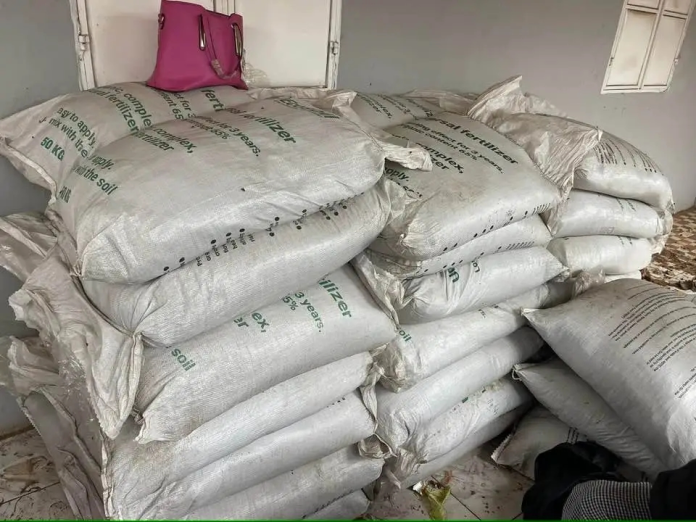
The Government of The Gambia announced subsidized fertilizer is available nationwide at D1,100 per bag, but distribution has yet to commence at the Basse depot in the Upper River Region (URR). Farmers in Basse are awaiting the arrival of the key agricultural input, which is vital for enhancing crop yields. This nationwide initiative aims to support agricultural productivity and food security across The Gambia. The National Food Security Processing and Marketing Corporation (NFSPMC) is responsible for the distribution program, overseeing the supply chain from procurement to local delivery. The government's commitment to making this essential input affordable is showed by the fixed price.
Distribution Bottlenecks Identified
Officials at the Basse depot indicated they were awaiting final approval before fertilizer distribution could commence in the Upper River Region (URR). This administrative step is a prerequisite for the official rollout of the subsidized commodity to local farmers. The National Food Security Processing and Marketing Corporation (NFSPMC), previously known as the Gambia Groundnut Corporation (GGC), holds significant responsibility for both the importation and subsequent distribution of the subsidized fertilizer. This dual role positions the NFSPMC as the central authority in ensuring the timely availability of the agricultural input. Efforts are currently underway to finalize arrangements with Community Production Marketing Committees (CPMCs), commonly referred to as 'seccos', which have been designated as authorized fertilizer distributors. These local committees are expected to play a key role in the last-mile delivery to individual farmers. The government has maintained the subsidized fertilizer price at D1,100 per 50-kilogram bag. This price point was set to ensure affordability for farmers across the country, mitigating the financial burden often associated with agricultural inputs. The ongoing coordination with local committees is a critical step in facilitating the timely delivery of the agricultural input to farming communities, particularly in remote areas. The NFSPMC's role encompasses the entire supply chain, from sourcing abroad to domestic allocation, ensuring a streamlined process for the nationwide distribution of the subsidized fertilizer.
Formalizing Arrangements with Local Committees
The government announced on June 23 that fertilizer stocks had arrived at all depots managed by the National Food Security Processing and Marketing Corporation (NFSPMC). This announcement signaled the readiness of the commodity for distribution across the country. Despite this official declaration, a visit to the NFSPMC depot in Basse subsequently found that no sales were taking place. This situation has left farmers in the Upper River Region awaiting the commencement of the subsidized fertilizer program, creating uncertainty regarding its immediate accessibility. The discrepancy between the national announcement and the local reality at the Basse depot notes the challenges in operationalizing large-scale distribution initiatives. Farmers in the region are eager to access the fertilizer to prepare for the planting season.
To facilitate distribution, contracts have already been signed with presidents of Community Production Marketing Committees (CPMCs), also known as 'seccos', in several regions. These agreements are key for outlining the roles and responsibilities of the local committees in the last-mile delivery of the agricultural input, ensuring accountability and efficiency. Further formalization efforts included meetings held with secco presidents. These meetings took place in both the North Bank Region (NBR) and the Upper River Region (URR) to establish clear distribution arrangements, fostering a collaborative approach between the NFSPMC and local stakeholders. The NFSPMC is working to ensure that these local entities are properly integrated into the supply chain, thereby addressing the logistical challenges of reaching individual farmers, especially those in more remote areas. The coordination with seccos is a key step in operationalizing the government's subsidized fertilizer initiative across the country, aiming to ensure equitable access for all eligible farmers. The signing of these contracts and the holding of meetings are essential steps to streamline the distribution process and ensure that the fertilizer reaches the intended beneficiaries efficiently.
Urgency Amidst Agricultural Outlook
Farmers in the Upper River Region (URR) are still waiting to access the commodity, despite the pressing need for agricultural inputs as the planting season progresses. Regional Agricultural Director Samba John has been encouraging farmers to plant early, a recommendation that gains particular urgency given seasonal forecasts. This advice is critical for farmers to maximize their yields and secure their livelihoods. Secco presidents in URR are expected to begin collecting their first consignment of 200 bags each on Monday. This key distribution aims to address the delays farmers have experienced, providing them with the necessary resources to proceed with their farming activities. Seasonal forecasts suggest below-normal rainfall during the 2026 farming season, adding pressure on farmers to optimize planting schedules and input use. Such climatic predictions make the timely availability of resources like subsidized fertilizer even more critical. The timely availability of subsidized fertilizer is therefore critical for maximizing yields under these projected climatic conditions, helping farmers mitigate the risks associated with adverse weather patterns. The agricultural director's advice to commence planting without delay shows the need for swift fertilizer distribution to support farming activities in the region, ensuring that farmers can make the most of the available growing period. The government's commitment to supporting farmers through affordable inputs is a cornerstone of its agricultural policy, aiming to bolster food security and economic stability in rural communities.