Senegalese troops crossed into a disputed border area and demolished more than 200 meters of the perimeter fence surrounding The Gambia's Bullock Military Border Post. The operation involved bulldozers to tear down the fencing around the Gambian military post in Bullock. The Gambia stated it would pursue a peaceful resolution through diplomatic channels instead of resorting to military action following the incident. This commitment to a peaceful resolution shows the nation's preference for dialogue over confrontation in the face of escalating border tensions.
Border Dispute Escalates
The dispute between The Gambia and Senegal centres on competing claims over the exact location of the international boundary. This long-standing issue has been a source of friction, making precise demarcation challenging. Senegalese military authorities have argued that the Gambian military camp at Bullock had extended into Senegalese territory, a claim that directly led to the recent demolition. The Gambia’s Chief of Defence Staff, Lieutenant General Ousman Gomez, firmly rejected this allegation, stating that the camp's positioning was entirely within Gambian soil. His assertion notes the fundamental disagreement between the two nations regarding the precise frontier.
Senegal described the July 16 incident, where its troops demolished part of a Gambian border fence, as part of a broader, unresolved border dispute that requires a permanent solution. The Senegalese government’s perspective frames the action as a response to an ongoing issue, rather than an isolated event. The Gambia and Senegal share one of West Africa’s most porous borders, which includes several disputed sections. This geographical characteristic has historically contributed to challenges in precise demarcation and management of the frontier between the two nations, often leading to incidents such as the recent demolition. The porous nature of the border means that defining and enforcing boundaries can be particularly complex, affecting both military installations and civilian populations living near the unmarked lines.
The incident has brought renewed attention to the need for a definitive resolution to these boundary ambiguities. While Senegal maintains its actions were justified due to alleged encroachments, The Gambia views the demolition as a unilateral and unwarranted act. The differing interpretations of the border's exact location remain at the core of the dispute, necessitating concerted diplomatic efforts to prevent further escalation. The international community, particularly regional bodies, may play a role in facilitating discussions to clarify and formalize the boundary lines, ensuring lasting peace and stability along the shared frontier.
Gambia's Official Response
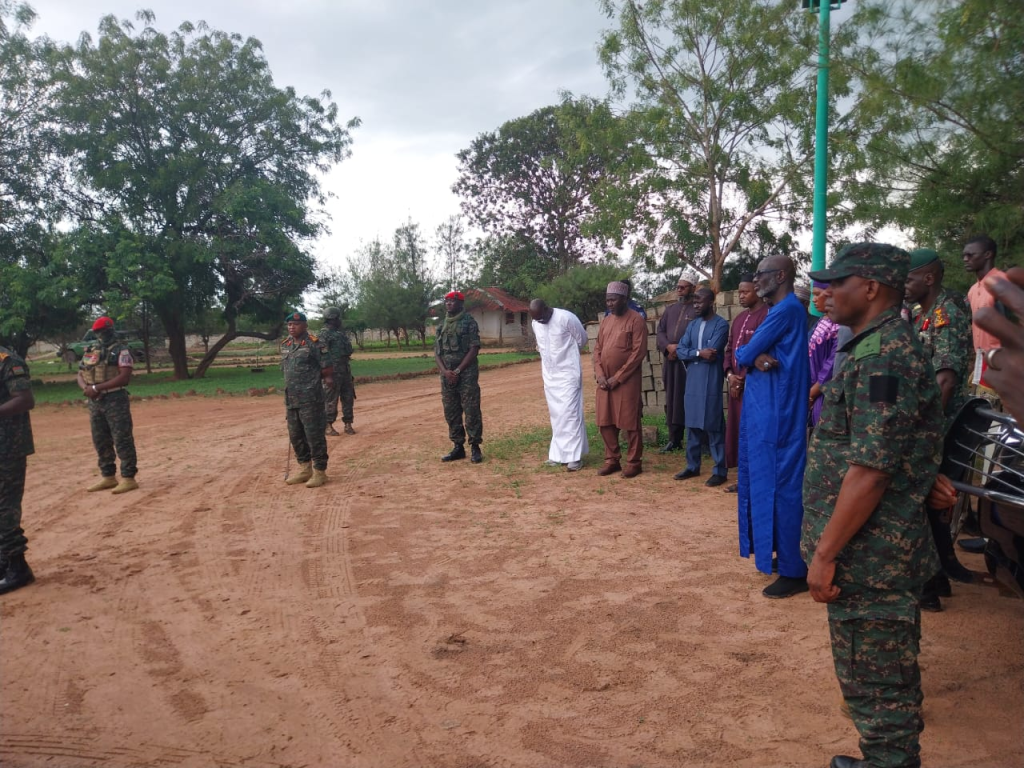
Gambian soldiers stationed at the border did not retaliate during the incident, instead waiting for orders from their commanders. This restraint was a key element of The Gambia's response, preventing a potentially violent escalation. National Security Adviser Abubakarr Suleiman Jeng stated that the demolition was an unnecessary act and could have been avoided through dialogue. Mr. Jeng told reporters, "We take the matter seriously and have already started engaging the Senegalese government on the issue. President Adama Barrow is travelling to ECOWAS and will pick up the matter with the ECOWAS president." He also praised the Gambian military personnel, saying, "They could have handled the situation roughly, but because they respect commands and regimentation. That’s why they were able to act professionally." The Gambian government's immediate focus is on diplomatic engagement, showing its commitment to peaceful resolution.
Chief of Defence Staff Lt. Gen. Ousman Gomez commended the troops for adhering to military discipline. Lieutenant General Gomez addressed the soldiers directly, stating, "You have done what is expected of you, and as the CDS is, I will never sacrifice any of you. I know you were waiting for a command from the top and I salute you for that. Let’s continue to maintain the discipline we are always known for and continue to defend this country." His words reinforced the importance of following orders and maintaining professionalism, even under provocation. He further instructed the soldiers, "You are not here to determine where the borders end. You are here to protect lives and properties. Never feel provoked, continue to do what you are supposed to do." This directive emphasizes the defensive and protective role of the military, rather than an offensive one in border disputes. The discipline shown by the Gambian soldiers is being noted as a testament to their training and adherence to military protocol, which ultimately de-escalated a tense situation.
The Secretary General and Head of the Civil Service, Alieu Njie, reassured soldiers that the government would pursue the matter through diplomatic channels. Mr. Njie echoed Lieutenant General Gomez's praise, telling the troops, "You have done what is expected of you, and we commend you for that. The government will take up the matter to the highest level and make sure it is solved in a diplomatic way." This high-level commitment from the Gambian government indicates the seriousness with which they view the incident and their determination to find a non-military resolution. The unified message from the Gambian leadership, from the National Security Adviser to the Chief of Defence Staff and the Secretary General, is one of restraint, professionalism, and a firm commitment to diplomacy. This approach aims to prevent any further deterioration of relations with Senegal and to safeguard regional stability.
Senegal, for its part, stated it had repeatedly warned Gambian authorities about encroachments into Senegalese territory and installations incompatible with joint border management. These warnings, according to Senegal, were part of an ongoing dialogue that had not yielded the desired results, leading to the recent intervention. This is not the first instance of cross-border military action; in May 2002, Senegalese military aircraft bombed the Gambian border village of Dimbaya during operations targeting MFDC fighters. This historical context illustrates that border incidents, while infrequent, have occurred previously, noting the persistent challenges in managing the shared boundary. The Senegalese government's perspective suggests that their actions were a culmination of unheeded warnings and a perceived necessity to enforce their territorial claims.
Diplomatic Path Forward
The demolition of the border fence occurred on July 16, 2026. The Gambian government described the action as “profoundly provocative and totally unacceptable.” This strong condemnation reflects the severity with which The Gambia views the unilateral demolition of its military infrastructure. In a statement issued on Friday, July 17, the Gambian government confirmed that a portion of the perimeter fence had been demolished “without prior consultation through the established bilateral military and diplomatic mechanisms.” The lack of prior communication is a key point of contention for The Gambia, as it bypassed agreed-upon channels for resolving such disputes.
The Gambia remains committed to resolving the matter peacefully through dialogue. Officials indicated that the existing Joint Military Committee and other bilateral channels would be utilized to address the situation. These mechanisms are designed precisely for managing and resolving border-related issues between the two nations. President Adama Barrow is scheduled to raise the matter with the ECOWAS president during his travel to ECOWAS, signaling a regional approach to the issue. This move to involve the Economic Community of West African States (ECOWAS) demonstrates The Gambia's intent to seek mediation and support from a broader regional body, emphasizing the importance of collective security and dispute resolution within West Africa. The involvement of ECOWAS could provide an impartial platform for both countries to present their cases and work towards a mutually acceptable solution.
The Government of Senegal released a statement on Friday, July 17, reaffirming its commitment to friendly relations with The Gambia. The Senegalese statement insisted that the disputed area had been under discussion for years, implying that the recent action was a result of prolonged unresolved issues rather than an abrupt escalation. This suggests that Senegal perceives its actions as a measure taken after diplomatic avenues, from its perspective, had been exhausted or were not progressing sufficiently. Both nations, despite the recent incident, have expressed a desire to maintain amicable relations, which is key for regional stability. The challenge now lies in translating these stated commitments into concrete steps that address the root causes of the border dispute and prevent future confrontations. A full and lasting solution will likely require detailed border demarcation and strong communication protocols to manage any future disagreements effectively.