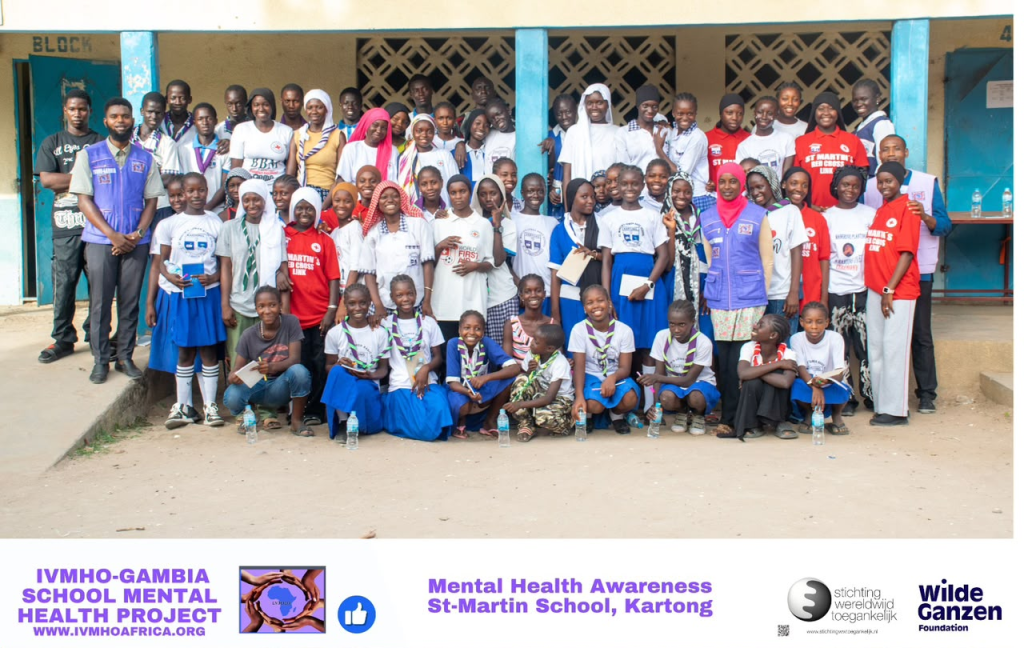
Disability inclusion discussions in The Gambia frequently center on physical accessibility measures such as wheelchair ramps, accessible buildings, sign language interpretation, inclusive education, and assistive devices. While these elements are key for fostering a more accessible society, genuine disability inclusion cannot be fully achieved without also addressing mental health considerations. This critical aspect often remains overlooked, despite its profound impact on individuals' lives and their ability to participate meaningfully in their communities. To bridge this gap and elevate the discourse around mental well-being as a component of disability rights, International Voluntary Mental Health Organisation (IVMHO)–The Gambia conducted a Mental Health and Psychosocial Support (MHPSS) sensitisation programme at St Martin’s Lower and Upper Basic School in Kartong on 10 July 2026. This initiative shows a growing recognition that mental health is not merely a separate public health concern, but an intrinsic part of full disability inclusion.
The Invisible Barriers to Full Participation
Mental health in The Gambia, as in many parts of the world, is often surrounded by misunderstanding, fear, and stigma. These societal perceptions create significant barriers that can be as debilitating as physical obstacles. Mental health is central to how people think, learn, relate to others, make decisions, and participate fully in society. When mental health challenges are not acknowledged or addressed, individuals face profound difficulties in navigating daily life, accessing opportunities, and exercising their fundamental rights. The Persons with Disabilities Act, 2021 specifically recognises and protects the rights of individuals living with disabilities, including those with psychosocial and intellectual disabilities. This legislative framework provides a legal foundation for advocating for the rights of these individuals, ensuring they receive the same protections and opportunities as those with physical disabilities. However, legislative recognition must be coupled with active community engagement and educational initiatives to dismantle the invisible barriers of stigma and discrimination that persist.
IVMHO's Community Efforts and Broad Reach
International Voluntary Mental Health Organisation (IVMHO)–The Gambia is actively engaged in schools and communities across the nation, promoting mental health awareness as a vital component of disability inclusion efforts. The organisation's commitment extends beyond national borders, with its activities reaching into neighbouring Senegal and Guinea-Bissau, demonstrating a regional approach to mental health advocacy and support. This broader reach allows for the sharing of best practices and a more full impact on mental health awareness in West Africa.
IVMHO–The Gambia orchestrated its 2026 Volunteer Orientation Programme on July 11, 2026, an essential step in preparing its dedicated volunteers for their critical work in the field. This orientation ensures that volunteers are equipped with the knowledge and skills necessary to effectively engage with communities and deliver impactful sensitisation programmes. Prior to this, a significant sensitisation exercise took place at Nusrat Senior Secondary School in Bundung on July 4, 2026, targeting younger populations and fostering early awareness about mental health. The Drug Law Enforcement Agency of The Gambia (DLEAG) was represented at the IVMHO orientation, noting the key nature of inter-agency collaboration in addressing complex issues like mental health, which can be intertwined with other societal challenges. Such partnerships are vital for a holistic approach to community well-being.
Expertise from various sectors bolsters IVMHO–The Gambia's initiatives. Mr. Amadou D. Jallow, a Senior Nurse at the Psychiatric Unit of Kanifing General Hospital, contributes his invaluable clinical experience to these programmes, offering a professional perspective on mental health care and support. His involvement shows the importance of integrating clinical knowledge with community outreach. Mr. Samba Baldeh serves as the Coordinator of School and Community Mental Health Programmes at IVMHO–The Gambia, playing a key role in designing and implementing educational initiatives for diverse audiences. Additionally, Mr. Monikou Badjie holds the position of National Coordinator for the Home Care Support Programme and Mental Health and Psychosocial Support (MHPSS) within the organisation, overseeing critical support services for individuals and families. These dedicated individuals form the backbone of IVMHO–The Gambia's efforts, bringing specialized skills and commitment to their roles.
During the volunteer orientation, participants reaffirmed their commitment to serving communities throughout the upcoming 2026–2027 volunteer year. This dedication is key for sustaining the long-term impact of IVMHO–The Gambia's work. A planned community sensitisation programme for Busura Village, located in Kombo Central District, on July 12, 2026, was unfortunately postponed due to heavy rainfall. Despite such logistical challenges, the organisation remains steadfast in its mission to reach underserved communities and disseminate vital information on mental health.
A Call for Integrated Inclusion and Rights
Mental health is frequently treated as a separate public health issue rather than an integral part of disability inclusion. This approach often overlooks the interconnectedness of mental well-being and a person's ability to participate fully in society. Persons living with psychosocial disabilities frequently encounter invisible but damaging barriers, such as discrimination, isolation, and negative stereotypes. These challenges can prevent individuals from accessing education, employment, and community life, despite their legal rights and inherent capabilities. The societal perception that mental health conditions are less "real" or less deserving of accommodation than physical disabilities perpetuates these inequalities.
The United Nations Convention on the Rights of Persons with Disabilities (UNCRPD) provides a strong international framework that guarantees equality, accessibility, participation, and protection from discrimination for individuals with disabilities. This key international framework emphasizes that mental health conditions, when they substantially limit one or more major life activities, fall squarely within the scope of disability. Therefore, signatory nations, including The Gambia, are obligated to ensure that individuals with psychosocial disabilities are afforded the same rights and protections as all other persons with disabilities. Advocates argue that recognising mental health as a core component of disability inclusion is not merely a matter of social justice but is essential for upholding these international rights and fostering a truly equitable society where every individual has the opportunity to thrive. Integrating mental health into broader disability inclusion strategies is critical to fostering a society that values and supports all its members.