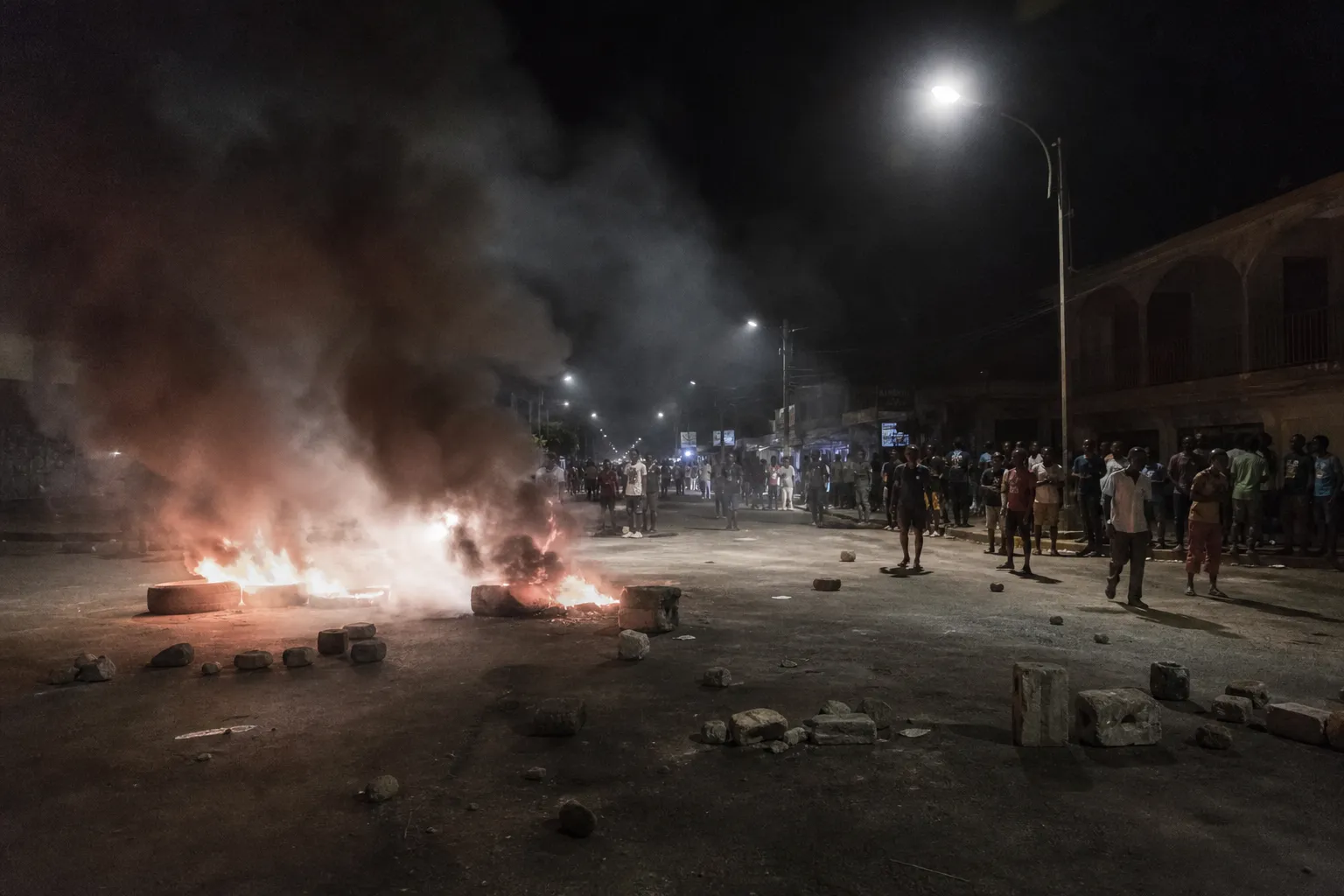
Protesters in Gambia burned tires at night and erected barricades on the streets of Banjul and around the capital, protesting against prolonged power outages. These demonstrations, which also spread to surrounding areas, were a direct response to the extended power cuts affecting communities across the country. Some residents reported power cuts lasting up to 48 hours, fueling the widespread unrest and public discontent. During the protests, demonstrators chanted, "Barrow must go," referring to President Adama Barrow, signaling a direct challenge to his administration. By morning, traffic in Banjul had returned to normal, though the underlying frustrations remained.
Protests Spread to Vice President's Area
The protests were not confined to the capital. In the city of Farato, protesters gathered near the residence of Vice President Mohammed B. S. Jallow, indicating the broad reach of public anger. During their demonstration, participants destroyed banners at the office of the ruling National People’s Party, further emphasizing their dissatisfaction with the current government. The chant "Barrow must go" echoed through the streets of Farato as well. After the protests subsided before dawn, resident Ousainou Jammeh joined a group of young men in extinguishing fires with water and clearing barricades from the streets. Jammeh and others worked to restore order following the night's unrest in the area, noting community efforts to recover from the widespread disruption.
Government Explains Power Disruptions
President Adama Barrow acknowledged that power disruptions are significantly affecting the daily lives of citizens, recognizing the severe impact on households and businesses. The President attributed the situation to a combination of factors, including record electricity demand, failures of major generating units, and seasonal conditions that reduce hydropower generation. This explanation aimed to provide context for the ongoing energy crisis.
The National Water and Electricity Company Ltd (NAWEC) provided further details regarding the challenges. On August 15, NAWEC reported an unforeseen increase in peak-period electricity demand, which it linked directly to high temperatures across the country, stressing the existing infrastructure. NAWEC also stated that a technical incident occurred involving one of the main generating units on the import line, further exacerbating the supply challenges and reducing generation capacity. Due to these compounding issues, NAWEC warned of the need for supply restrictions in several parts of the country to manage the available power, indicating that outages would continue as a necessary measure.
Planned Solutions and Apologies
In response to the crisis, the Gambian government announced it expects to receive new generators this week, a move anticipated to help alleviate some of the immediate power shortages. Officials stated that the electricity supply is planned to be restored by the end of October, setting a timeline for public expectations. The government is also completing the installation of an additional 24-megawatt generating unit, which will significantly boost the country's power capacity once operational. Further efforts to diversify and strengthen the energy sector include the signing of a contract for the construction of a 50-megawatt solar power plant, aimed at reducing reliance on traditional power sources and improving long-term energy security. Information Minister Ismaila Ceesay issued an apology to the public for the inconvenience caused by the widespread power outages, acknowledging the hardship faced by citizens.
Protesters' Demands
The demonstrations show a deep-seated frustration among the populace regarding persistent electricity shortages across the country. Police used tear gas to disperse people who also gathered near the official residence of President Adama Barrow, indicating the intensity and proximity of the protests to the highest levels of government. The protests, which included barricades and tire burning, reflect growing public anger and a demand for immediate and lasting solutions to the energy crisis. The widespread nature of the unrest, from Banjul to Farato, notes the national scope of the dissatisfaction with the current power situation.