The Gambian government recorded a D195.84 million budget deficit in the first quarter of 2026, driven by an imbalance between domestic revenue and government expenditure. This deficit occurred as the 2026 budget was managed and executed during the January-March period, marking the initial phase of the fiscal year's financial operations. The administration's financial performance during this period is a key indicator of its ability to meet its fiscal targets and manage public funds effectively.
Total domestic revenue collected for the first quarter of the 2026 fiscal year amounted to D7.68 billion. This figure represented 21 percent of the overall 2026 budget target, which was set at D35.87 billion. The collection of D7.68 billion in domestic revenue during the first three months of the year reflects the government's efforts in taxation and other revenue-generating activities. Concurrently, government expenditure and net lending for the same period reached D7.87 billion. This spending encompassed various governmental operations and financial commitments. The resulting difference between the revenue collected and the total spending led to the recorded gross deficit of D195.84 million for the quarter, noting the fiscal gap. This deficit indicates that the government spent more than it collected from its internal revenue sources during this initial period of the fiscal year.
Expenditure Breakdown and Trends
Personnel emoluments for the first quarter reached D2.45 billion. This expenditure category saw an increase due to a 5 percent year-on-year pay rise, reflecting adjustments in civil service salaries and benefits. The D2.45 billion allocated to personnel emoluments shows the significant portion of the budget dedicated to government employee compensation. Subsidies and transfers for the same period amounted to D2.14 billion, contributing significantly to the overall spending. This substantial allocation to subsidies and transfers helps support various sectors and social programs. Debt interest payments constituted D1.36 billion of the government's outlays during the quarter, indicating the ongoing cost of servicing national debt.
The spending on subsidies included a D500 million input subsidy, which is designed to support specific economic sectors or activities. Additionally, transfers to subvented agencies encompassed salaries specifically allocated for the education and health sectors. These allocations reflect ongoing operational costs and support mechanisms within the government's financial framework for the period, ensuring the continued functioning of critical public services. The D2.14 billion in subsidies and transfers also included other forms of financial assistance and grants to various entities. The total expenditure of D7.87 billion across these categories illustrates the broad scope of government financial commitments in the first quarter.
Capital Investment and Sectoral Execution
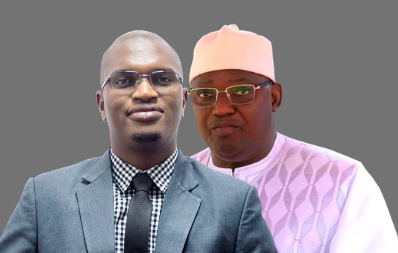
Capital expenditure for the first quarter of the 2026 financial year totaled D738.74 million. Minister Seedy Keita stated, "Capital Expenditure amounted to D738.74 million, representing 21 percent of its approved annual budget of D3.54 billion, which compared to the corresponding period a year ago, decreased by D409.18 million." This represents a significant reduction in capital spending compared to the previous year, suggesting a shift in investment priorities or a slower pace of project implementation. The D738.74 million in capital expenditure accounted for 21 percent of its approved annual budget of D3.54 billion, indicating that approximately one-fifth of the planned capital investments had been executed within the first three months.
Infrastructure contractor payments during the quarter exceeded D652 million, showing the government's commitment to ongoing infrastructure development projects. The Ministry of Works executed 24.55 percent of its budget, demonstrating progress in its mandated areas of responsibility. This level of execution notes the ministry's operational capacity during the quarter.
The Ministry of Basic and Secondary Education was identified as the single largest spender during the quarter, reflecting the government's significant investment in educational services and infrastructure. Conversely, the Ministry of Agriculture achieved the highest execution rate among government ministries, indicating efficient and rapid deployment of its allocated funds. The Ministry of Agriculture's spending included D450 million for groundnut subsidies and D177.4 million for agricultural input subsidies, totaling D627.4 million in direct support to the agricultural sector. These subsidies aim to bolster agricultural productivity and support farmers. The ministry also procured 90 tractors for D35 million in the first quarter, a move intended to modernize farming practices and increase efficiency. The Ministry of Health's expenditure during the same period reached D446.1 million, reflecting its operational costs and service delivery efforts.
Government Operations and Oversight Spending
The Ministry of Interior spent 23.31 percent of its approved budget, which amounted to D553,634.29 million during the first quarter of 2026. This expenditure supports internal security, law enforcement, and civil registration services. Data from the quarter further indicated that the Office of the President's expenditure reached D266,499.87 million, covering the operational costs of the highest office in the country. The National Assembly recorded an expenditure of D155,669.05 million for the same period, reflecting the costs associated with legislative functions and parliamentary activities.
Judiciary expenditure was reported at D51,651.66 million, allocated to maintaining the judicial system and ensuring the administration of justice. Meanwhile, the Independent Electoral Commission (IEC) spent D115,302.92 million, likely in preparation for or in the course of electoral processes. The Public Service Commission's expenditure stood at D3,474.98 million, covering its role in managing and overseeing the civil service. The Ministry of Defence recorded outlays of D306,871.09 million, dedicated to national security and military operations. Meanwhile, the Ministry of Foreign Affairs' expenditure for the quarter was D313,494.20 million, covering diplomatic activities, international relations, and foreign missions. These detailed expenditure figures provide a full overview of how various government entities utilized their budgets during the first quarter of 2026.