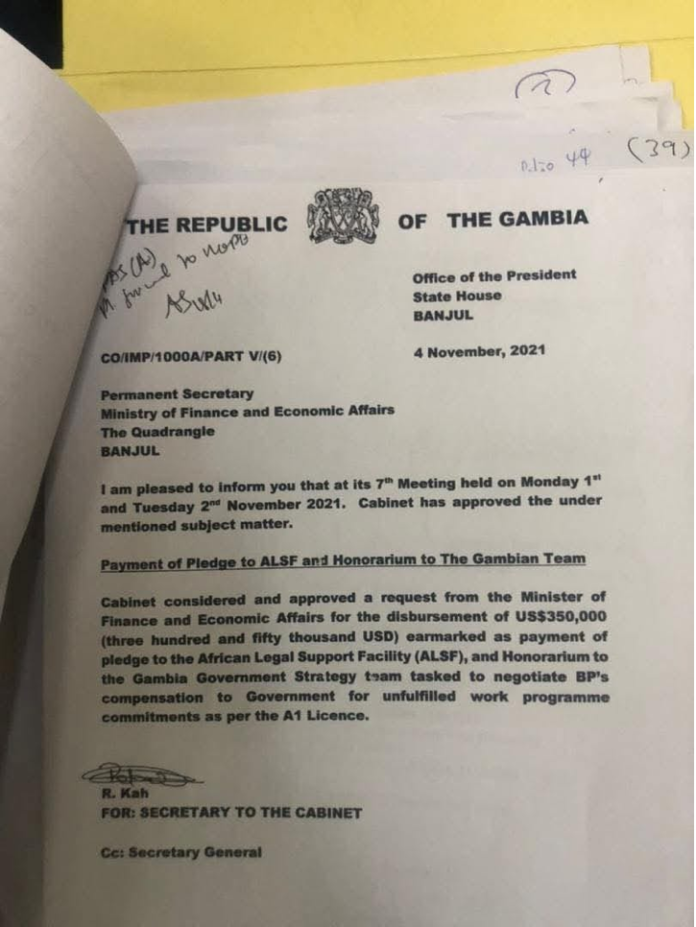
In 2021, a deeply concerning financial transaction unfolded within the Gambian government, setting a troubling precedent for transparency and accountability. Government officials, ranging from high-ranking Ministers and Permanent Secretaries to essential support staff such as drivers and cleaners, received significant "honorariums." These payments were not from the national budget but originated from compensation paid by the international oil giant BP to the Gambia government. This distribution of funds, effectively a windfall, occurred at a time when the economic realities for ordinary Gambians and indeed, many civil servants, were starkly different. The lowest-paid civil servant in the country, for instance, earned a meager monthly salary of D1,200 (one thousand two hundred Dalasis) in the same year, noting a profound disparity in financial benefit distribution. The implications of such a system, where a select group benefits disproportionately from national resources, are broad, eroding public trust and fostering an environment conducive to further malfeasance.
The recent activities of the Local Government Commission of Inquiry further show these systemic issues. This key body has diligently investigated Local Government Authorities and Municipalities across the nation, culminating in the presentation of its full report directly to President Barrow. The findings detailed within this report are expected to shed considerable light on the state of local governance and the challenges it faces. Notably, testimonies presented during the Local Government Commission of Inquiry hearings have already revealed widespread corruption and abuse of office across the country, painting a grim picture of governance at the grassroots level. This widespread corruption, if left unaddressed, threatens the very fabric of democratic governance and equitable public service delivery.
A Culture of Corruption Takes Root
The specifics of the "honorarium" payments reveal a pattern of significant financial disbursements to key figures within the government. According to a recent accounting, two ministers each received D1.2 million in two distinct rounds of payments, indicating a substantial personal financial gain from the BP compensation. This level of payment to individual ministers raises serious questions about the criteria for distribution and the oversight mechanisms in place. Similarly, a Permanent Secretary, the Commissioner of Petroleum, and the Managing Director of GNPC, the national oil company, each received D1.1 million during the same payment periods. These figures highlight not only the scale of the payments but also the concentration of these benefits among a select group of influential officials, further exacerbating the perception of an elite benefiting at the expense of the wider public. Such financial transactions, lacking clear public justification and occurring outside standard salary structures, fuel public cynicism and distrust in government institutions.
The issue of corruption in The Gambia is not new, nor is it confined to recent events. The nation has a history of grappling with allegations of grand corruption, exemplified by the establishment of the Janneh Commission. This commission was specifically constituted to investigate alleged corruption by former President Yahya Jammeh, aiming to recover assets and bring accountability for past abuses. However, the pursuit of justice and accountability has itself faced scrutiny. The National Assembly Special Select Committee (SSC) later released a report indicating that the Janneh Commission did not demonstrate probity in its handling and disposal of former President Jammeh's assets. This finding is deeply troubling, as it suggests that even institutions tasked with correcting past wrongs may have fallen short of the highest ethical standards, undermining the very principles they were meant to uphold. The integrity of such processes is critical for a nation striving to overcome a legacy of corruption.
In another development that points to ongoing challenges with accountability, Lt. General Mamat O. Cham resigned from his position after documents emerged that substantiated allegations of corruption against him. This resignation, while a step towards acknowledging wrongdoing, also notes the persistent nature of corruption within high-level government and military circles. The allegations against such a senior figure show the systemic nature of the problem and the urgent need for strong mechanisms to prevent, detect, and prosecute corruption at all levels of government and public service.
Shadows of Sierra Leone's Past
The Gambia’s history includes instances of intervention and internal strife that draw unsettling parallels to regional events, particularly the civil unrest seen in neighboring countries. A notable example of The Gambia's regional role and influence, albeit from a different era, involves former President Sir Dawda Kairaba Jawara. Serving as Chairman of ECOWAS, President Jawara played a key role in the creation of ECOMOG, the Ecowas intervention force. This force is widely credited with helping to end the devastating civil war in Sierra Leone, a conflict that began in 1991 and inflicted immense suffering on the Sierra Leonean people. ECOMOG's intervention was a significant regional effort to restore peace and stability, and President Jawara’s leadership in this initiative showcased a period of constructive engagement and regional responsibility for The Gambia.
However, The Gambia itself has experienced profound political instability, demonstrating that even nations involved in regional peacekeeping are not immune to internal turmoil. A critical turning point in Gambian political history came when Gambian soldiers who had served in Liberia later mutinied. This internal military discontent proved to be a significant factor that contributed to a successful coup against President Jawara in 1994, abruptly ending his long tenure and ushering in a new political era. This incident marked a significant turning point in the country's political landscape, demonstrating the fragility of democratic institutions when faced with internal military grievances. Earlier, in 1981, an abortive coup attempt in The Gambia resulted in mass graves, showing a history of violent political upheavals and the severe consequences of political instability. These historical events serve as stark reminders of the potential for rapid deterioration of peace and order, echoing the regional experiences that The Gambia once sought to mitigate.
More recently, the current administration has also had to confront issues of accountability within its ranks. President Barrow ordered an independent inquiry into allegations against former Chief of Defence Staff Mamat O. Cham. This investigation came after documents emerged substantiating corruption claims against Mr. Cham, reflecting ongoing concerns about accountability within the government and the military. The need for such an inquiry, following the General's resignation, indicates a continued struggle to maintain ethical standards in public office, drawing a line from past instabilities to present-day challenges in governance.
Leadership Failures and Public Trust
The integrity of national security institutions, key for any state's stability, has also been called into question. The National Security Adviser, a key figure in the country's security apparatus, was identified as the landlord of Chinese nationals arrested in September 2025 on allegations of criminal activity. This connection raises serious questions about due diligence, oversight, and the potential for compromise within the highest echelons of government. The involvement of such a senior official, even indirectly, in activities linked to criminality, can severely erode public confidence in the state's ability to protect its citizens and uphold the rule of law.
Separately, the then Chief of Defence Staff (CDS) of the Gambia Armed Forces (GAF), Lt. General Mamat O. Cham, faced accusations of corruption, which ultimately led to his resignation. These claims contributed to a broader perception of governance issues within the country's leadership, suggesting that problems of graft and lack of accountability are not isolated incidents but rather indicative of a more systemic malaise. The implications of such allegations against top military and security officials are particularly grave, as they can undermine institutional integrity and public trust in the very bodies responsible for national security. Following his tenure in the military, former CDS Lt General Masaneh Kinteh (Rtd.) was appointed Ambassador to the People’s Republic of China, a move that, while not directly related to corruption allegations, notes the circulation of high-ranking officials through various state roles.
Beyond high-level corruption and security concerns, the impact of governance failures is keenly felt in the provision of essential public services. Concerns about public services have also emerged, with a deeply tragic incident reported where a niece of the author lost her daughter due to a critical lack of oxygen in the Maternity Ward at the Edward Francis Small Teaching Hospital (EFSTH) in Banjul. This heartbreaking event showed profound challenges within the healthcare system, revealing critical deficiencies in basic medical provisions and infrastructure. Such incidents highlight how systemic failures in governance, resource allocation, and oversight directly translate into dire consequences for ordinary citizens, particularly the most vulnerable. The inability to provide a continuous supply of essential medical resources like oxygen speaks volumes about the state of public health infrastructure and accountability.
The Perilous Trajectory
The confluence of corruption, instability, and a deteriorating public service infrastructure paints a perilous picture for The Gambia's future. In September 2025, Gambian authorities arrested 60 Chinese nationals who were later convicted of operating cybercrime activities from within The Gambia. This incident not only noted the country's vulnerability to international criminal enterprises but also raised questions about the effectiveness of border controls and internal security measures. The fact that such a large-scale operation could be conducted from within the country points to potential weaknesses in law enforcement and regulatory oversight.
The fragility of public services, particularly healthcare, continues to be a critical concern. In another tragic incident, a friend of the author reportedly died at Serrekunda Hospital after a power outage disconnected his ventilator, which was not linked to an uninterrupted power supply (UPS). This preventable death shows the critical need for resilient infrastructure in vital public services and the devastating consequences when such provisions are absent. It speaks to a broader failure in ensuring basic operational necessities for critical medical equipment, directly impacting patient safety and outcomes. The lack of a UPS for a life-sustaining ventilator in a hospital setting is an indictment of the state of public health infrastructure and emergency preparedness.
Meanwhile, testimonies presented during the Local Government Commission of Inquiry hearings have also revealed widespread corruption and abuse of office across the country. These revelations confirm that the issues are not isolated to the central government but are deeply entrenched within local administrative structures, affecting governance at all levels. The cumulative effect of these various challenges – from high-level financial impropriety and allegations of corruption against security chiefs to critical failures in public health services and the infiltration of cybercrime – suggests a nation grappling with fundamental issues of governance and stability. Without decisive action to address these deeply entrenched problems, The Gambia risks a perilous trajectory towards further instability and a potential descent into a failed state, undermining the aspirations of its people for a just, prosperous, and well-governed nation.