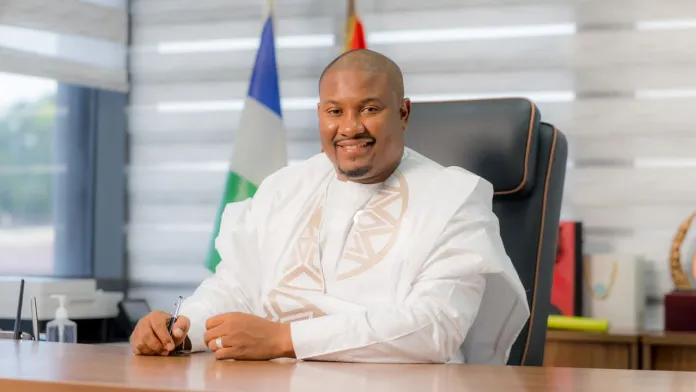
Talib Bensouda, leader of the Unite Movement for Change (UMC), stated that the size of individual parties should not dictate the selection of a candidate to lead a potential opposition coalition for the 2026 elections. Bensouda’s remarks, published on June 8, 2026, come as discussions intensify regarding the formation of such a coalition.
"Individual party numbers don’t matter," Bensouda said. "If your party can win you an election, then you don’t need to enter a coalition." He stressed the importance of unity and trust, adding, "If a coalition is to be formed, we must elect a candidate who can unify us and will be accepted by Gambians." Bensouda referenced the 2016 coalition, noting, "big political parties didn’t matter." He concluded, "We are not against coalition, but we must trust each other and have the same ideology."
Coalition Criteria Over Party Numbers
Talib Bensouda, leader of the Unite Movement for Change (UMC), asserted that a political party capable of winning an election independently would not require participation in a coalition. This statement shows his position that coalition formation should prioritize strategic alignment rather than the individual size of constituent parties. Bensouda emphasized that successful coalitions are built upon shared principles and public credibility, moving beyond simple numerical calculations of party strength. He argued that these factors, rather than arithmetic, are key for a coalition to achieve its objectives.
In line with this perspective, Bensouda endorsed recent remarks made by Essa Faal of APP-Sobeyaa. Faal had previously stated that leadership roles within a coalition should not be automatically granted based on a party's numerical representation or its perceived strength. The UMC leader's support for Faal's view reinforces the idea that trust and a unified ideology are more significant than party size when selecting a candidate to lead an opposition alliance. Bensouda maintains that such an approach is vital for any potential coalition aiming for success in the 2026 elections.
Lessons From 2016 Coalition
Talib Bensouda, leader of the Unite Movement for Change (UMC), drew parallels to the 2016 opposition coalition, asserting that the influence of large political parties was not a determining factor in its success. Bensouda suggested that a different outcome could have unfolded if the United Democratic Party (UDP) had not been a participant and if Mamma Kandeh had agreed to join the alliance. His remarks show his belief that coalition leadership should stem from trust and shared ideology rather than the numerical strength of individual member parties. Bensouda's analysis of the 2016 political landscape reinforces his current stance on candidate selection for the upcoming 2026 elections, emphasizing unity over party size.
Vision for National Support
Talib Bensouda believes the primary consideration for selecting a candidate to lead a potential opposition coalition should be their ability to command broad national support. The UMC leader stated that such a candidate must also be capable of unifying the opposition ahead of the 2026 elections. This perspective emphasizes that the candidate's appeal across various segments of society and their capacity to bring together disparate political factions are key for a successful coalition effort. Bensouda's vision prioritizes a unifying figure over one chosen based on the size or individual strength of their party.
Endorsement and Future Alliances
Talib Bensouda stated that opposition parties must first establish mutual confidence and ideological coherence before entering any coalition arrangement. The UMC leader cautioned against rushing negotiations, warning that alliances formed without genuine trust and shared objectives often collapse under pressure.