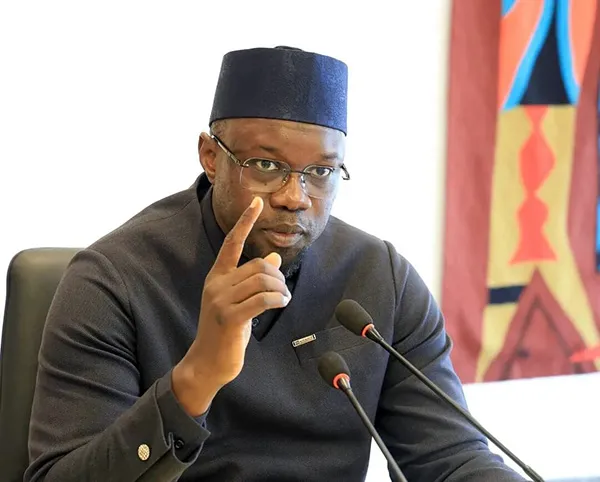
Ousmane Sonko announced on Tuesday that his Pastef party will not initiate any motion of censure against the new executive, despite the party's exclusion from the government. Sonko stated that Pastef is maintaining its decision not to participate in the cabinet. "Pastef would not seek to bring down the government through a motion of censure, despite their differences with President Bassirou Diomaye Faye," Sonko said. He instead called for continued institutional dialogue and urged restraint across the board to avoid any political crisis that could undermine national stability. This declaration came as the political landscape in Senegal continues to evolve following the recent presidential elections, setting a distinct tone for the relationship between the ruling administration and the dominant parliamentary force.
New Executive Appointed
A presidential decree appointed a 30-member government, comprising 26 ministers and four junior ministers. The cabinet was formed just hours after Pastef’s executive committee announced its official decision not to be represented in the government. This decision by Pastef to remain outside the executive branch, despite its significant political influence, marks a key development in the country's governance structure.
The government appointed by President Bassirou Diomaye Faye includes Yankoba Diémé as Minister of Armed Forces, Cheikh Diba as Minister of Economy, Finance and Planning, Mohamedou Makhtar Cissé as Minister of Interior and Public Security, and Cheikh Niang as Minister of African Integration, Foreign Affairs and Senegalese Abroad. The formation of this new cabinet signals the official commencement of the new administration's work. The first Council of Ministers of the newly established government is scheduled to take place tomorrow under the direct chairmanship of the president, where key policy directions and immediate priorities are expected to be discussed.
Pastef Explains Non-Participation
Pastef's decision to remain outside the executive stemmed from disagreements regarding the parliamentary majority's role within the government's structure. Further issues arose over several policy directions that were discussed with President Bassirou Diomaye Faye. These disagreements were fundamental to the party's stance. Pre-government consultations between Pastef and the head of state failed to yield a consensus on the party's inclusion in the new ministerial team. This lack of agreement ultimately led to Pastef's firm decision to maintain its distance from direct governmental participation. Despite these issues, Pastef is advocating for continued dialogue with President Bassirou Diomaye Faye. The party has indicated its commitment to institutional engagement, even while maintaining its distance from direct participation in the government. This stance aims to ensure ongoing communication and collaboration on national matters, reflecting a strategic approach to influence policy from outside the executive.
Sonko's Call for Dialogue
Ousmane Sonko affirmed that his Pastef party would not initiate efforts to destabilize the government through a motion of censure, despite existing disagreements with President Bassirou Diomaye Faye. Sonko stressed that Pastef would not seek to bring down the government through a motion of censure, despite their differences with President Bassirou Diomaye Faye. This statement shows a commitment to political stability, even in the face of significant policy and structural differences. He further advocated for ongoing institutional dialogue between political actors, emphasizing its importance for the nation's progress. Sonko urged restraint from all parties involved, emphasizing the need to prevent any political crisis that could potentially jeopardize national stability. This call for dialogue shows Pastef's commitment to engagement, even while operating outside the new executive, and notes their role as a constructive opposition force.
Parliamentary Majority Context
Pastef remains the dominant political force within the National Assembly, holding a large parliamentary majority. This legislative strength positions Pastef to significantly influence policy and legislative processes, even without direct representation in the cabinet. Despite its decision not to participate directly in the new government, this legislative strength positions Pastef to significantly influence policy and legislative processes. Its continued presence as the dominant party in the National Assembly means that the government will likely need to engage with Pastef to secure passage of its legislative agenda. This parliamentary configuration establishes a framework where dialogue and negotiation will be key for effective governance, even without Pastef members in the executive cabinet. The party's ability to shape legislation from its position in the National Assembly ensures that its voice will be heard and considered in national decision-making.