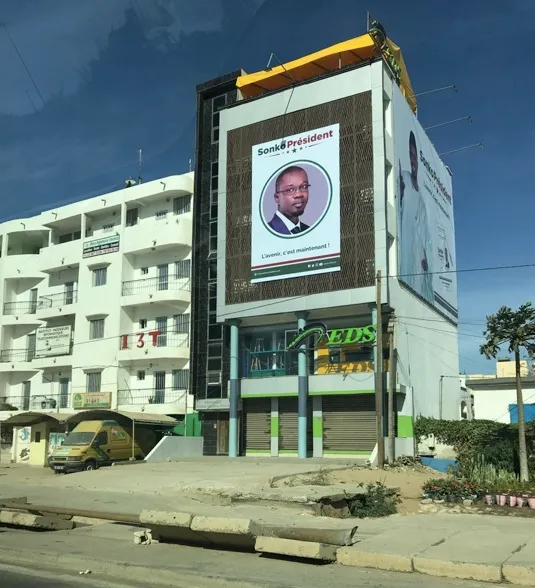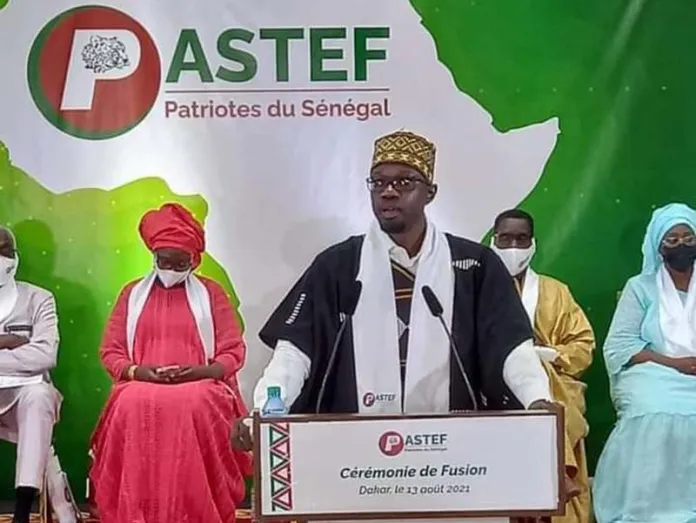
Ousmane Sonko was re-elected leader of Senegal's main opposition party, Pastef-Les Patriots, on Saturday, amidst prevailing economic and political tensions in the country. This re-election marks a significant moment for the opposition leader, solidifying his position at the helm of one of Senegal's most prominent political forces. Sonko's candidacy for the party leadership was notably the only one admitted by Pastef, showing the unified support he commands within the party. His re-election follows his recent dismissal as prime minister by the current head of state, Bassirou Diomaye Faye, an event that has contributed to the heightened political climate. The dynamic between these two influential leaders, Faye and Sonko, is closely watched, as they are widely expected to measure forces at the polls in 2029, setting the stage for future political competition and potentially defining the nation's trajectory. Sonko's continued leadership of Pastef-Les Patriots positions him as a key figure in the country's political landscape moving forward, with his actions and statements carrying substantial weight in public discourse.
Party Congress and Leadership
Ousmane Sonko’s re-election as leader of Pastef-Les Patriots occurred during the party's first national congress since its establishment in 2014. This event was not merely a procedural formality but a significant internal gathering that showed the party's resilience and its commitment to its foundational principles. The congress provided a platform for the party to reaffirm its direction and leadership under Sonko. This significant internal event for the opposition party solidified Sonko's position within its ranks, reinforcing his mandate from the party faithful. Following this, Sonko was subsequently elected president of Parliament, marking another key development in his political trajectory and further cementing his influence within the national political structure. This dual leadership role places him at the forefront of both the legislative body and the primary opposition movement.
Political tension in Senegal has intensified significantly since Sonko’s dismissal as head of government. This particular event has not only reshaped the immediate political landscape but has also fueled considerable public discourse and reactions across the country. The removal from the prime ministerial post has been a focal point of discussion, contributing to a period of heightened political sensitivity and public engagement. This intensification of political tension is an ongoing challenge for the nation, influencing various aspects of governance and public life. The political environment remains charged, with many stakeholders closely observing the interactions and decisions of key political figures, particularly in light of the upcoming electoral cycle.
Economic Challenges and IMF Talks
The Senegalese economy is currently navigating growing debt commitments, presenting a complex challenge for the current administration. This financial pressure was significantly exacerbated by a critical discovery in 2024, which revealed billions of dollars in previously undeclared liabilities. This substantial financial revelation added considerable strain to the nation's already burdened financial pressures. This situation, characterized by the unexpected uncovering of hidden financial obligations, directly led the International Monetary Fund (IMF) to freeze a substantial US$1.8 billion loan in 2024. The IMF's decision was directly attributed to the existence of this hidden debt, which was inherited from the previous government and only came to light during the current administration's thorough review of national finances. The discovery of these undeclared liabilities has profoundly complicated Senegal's economic outlook, prompting intense scrutiny of past financial practices and raising questions about fiscal transparency. The frozen loan represents a substantial financial resource that the country had anticipated for its economic development and stability. Its suspension means that the government will now have to re-evaluate its economic planning and explore alternative avenues to address its financial needs and development goals. The implications of this frozen loan are broad, affecting various sectors of the economy and potentially influencing future international financial relations.
Divergent Stances on Debt
In response to these pressing economic challenges, the executive branch is actively holding talks with the International Monetary Fund (IMF) to close a new financing programme for Senegal. These discussions are critical for securing the necessary financial support to stabilize the economy and address the nation's debt burden. However, there are notable divergences in approach among key political figures regarding these negotiations. Ousmane Sonko has maintained a very tough stance against the IMF, expressing strong reservations about the terms and implications of engaging with the international financial institution. Sonko also explicitly rejected the possibility of a debt restructuring for the nation, signaling a firm position against what he perceives as potentially detrimental financial interventions. In contrast to Sonko's unyielding posture, President Bassirou Diomaye Faye and the new prime minister, Al Aminou Lo, have adopted a more moderate tone regarding the IMF. Their approach suggests a willingness to engage in dialogue and explore potential solutions that could involve collaboration with the IMF. This difference in perspective between the opposition leader and the current executive notes the complex political and economic considerations at play as Senegal seeks to navigate its financial future. The outcome of these talks and the government's chosen path will undoubtedly have significant implications for the country's economic stability and its relationship with international financial bodies.