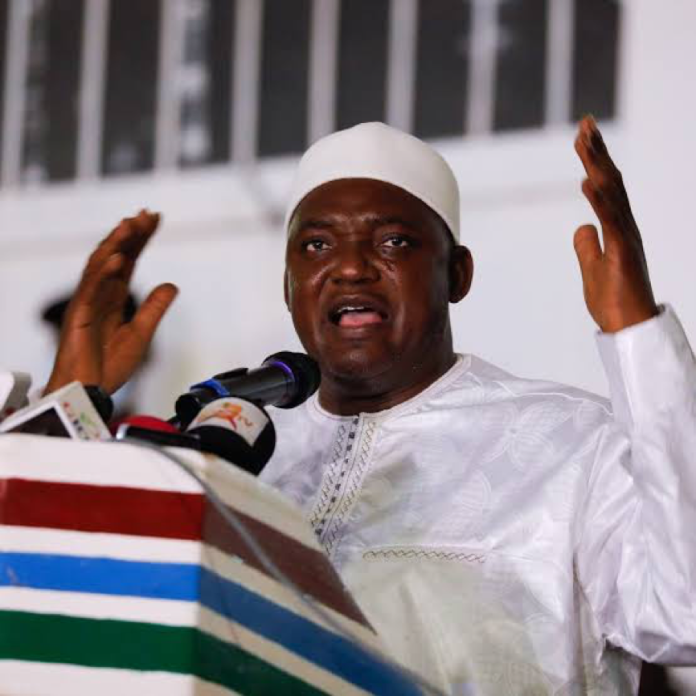
The Gambia's opposition coalition process for the 2026 presidential election faces considerable challenges in presenting a single candidate capable of defeating incumbent President Adama Barrow. The current 2026 coalition process faces significant obstacles and may struggle to produce a single candidate capable of defeating Adama Barrow on 5 December 2026. The coalition taskforce's stated primary objective is to unite various opposition factions behind one candidate to effectively challenge Barrow on 5 December 2026. For the coalition to successfully defeat the President, it must achieve full opposition unity, select a credible flag bearer, articulate a compelling national vision, and ensure strong grassroots mobilization. Additionally, securing adequate financing, generating voter enthusiasm, and facilitating effective vote transfer between coalition partners are deemed essential for their success. For the coalition to defeat President Barrow, it must simultaneously achieve full opposition unity, a credible flag bearer, a compelling national vision, strong grassroots mobilization, financing, voter enthusiasm, and effective vote transfer between coalition partners.
Echoes of 2016, Different Realities
Coalitions have a history of success in Gambian politics, with the most prominent example being the 2016 opposition alliance that unified behind Adama Barrow to defeat then-incumbent Yahya Jammeh. In politics, coalitions have succeeded before in The Gambia, the most notable example being the 2016 opposition coalition that united behind Adama Barrow and defeated Yahya Jammeh. However, the political landscape today differs significantly from that period. The 2016 conditions that facilitated such a victory are no longer present, according to analysts. The 2016 Conditions no longer exist, making the current political climate distinct. In 2016, opposition forces successfully united against a long-standing incumbent, Yahya Jammeh, who had been in power for 22 years. This created a unique environment conducive to broad-based unity among disparate political factions. The current political dynamics and the nature of the incumbency present a different set of challenges for the opposition.
Structural Obstacles to Unity
The coalition taskforce process involves a diverse array of political parties and movements, including the United Democratic Party (UDP), Gambia Democratic Congress (GDC), Alliance for Democracy and Development (ADD), National Democratic Party (NDP), Alliance for Patriotic Reorientation and Construction-Sobeeyaa (APP-SOBEYAA), National Democratic Alliance (NDA), and the Unite Movement, among others. The coalition actors involved include parties and movements associated with UDP, GDC, ADD, NDP, APP-SOBEYAA, NDA, Unite Movement and others part taking in the taskforce process. The People's Democratic Organisation for Independence and Socialism (PDOIS) has publicly stated it is pursuing a separate "Team Gambia" coalition initiative and has not fully participated in the taskforce process. PDOIS publicly explained that it has been pursuing a separate “Team Gambia” coalition initiative and has not fully participated in the taskforce process. The selection of a single candidate presents a complex challenge, with six possible models under consideration: party size, previous election performance, public opinion surveys, a delegates convention, consensus selection, or an independent vetting panel. There are six possible models for candidate selection: Party size, previous election performance, public opinion surveys, delegates convention, consensus selection, or independent vetting panel.
The coalition efforts face four significant structural constraints. These include competing presidential ambitions among various leaders, incomplete opposition unity across the political spectrum, potential disputes over candidate selection methods, and the inherent advantages enjoyed by incumbent President Adama Barrow. The coalition will face four major structural constraints: competing presidential ambitions, incomplete opposition unity, candidate-selection disputes, and the incumbent advantages enjoyed by President Barrow. President Barrow has publicly commented on the ongoing coalition talks, arguing that they would struggle due to the numerous opposition leaders who harbor presidential ambitions. President Barrow himself publicly argued that the ongoing coalition talks would struggle because numerous opposition leaders have presidential ambitions. These factors collectively complicate the path toward a unified opposition front for the 2026 election.
Path to Victory or Inevitable Failure
The coalition 2026 taskforce is reportedly pursuing a strategic approach that involves building opposition consensus, selecting a single candidate, avoiding vote splitting, and presenting a united front. The coalition 2026 taskforce appears to be pursuing a reasonable strategy: first, build opposition consensus; second, select one candidate; third, avoid vote splitting; and fourth, present a united front. This strategy aims to consolidate opposition efforts ahead of the December 2026 presidential election.
However, observers suggest that unless the coalition develops a unifying national vision that extends beyond mere opposition to the incumbent government, and resolves its internal contradictions swiftly, its efforts may fall short. While the coalition might succeed in producing a candidate, it is unlikely to generate the broad electoral coalition necessary to defeat President Adama Barrow in the upcoming election. This assessment notes the critical need for both internal cohesion and a compelling platform to overcome the challenges.