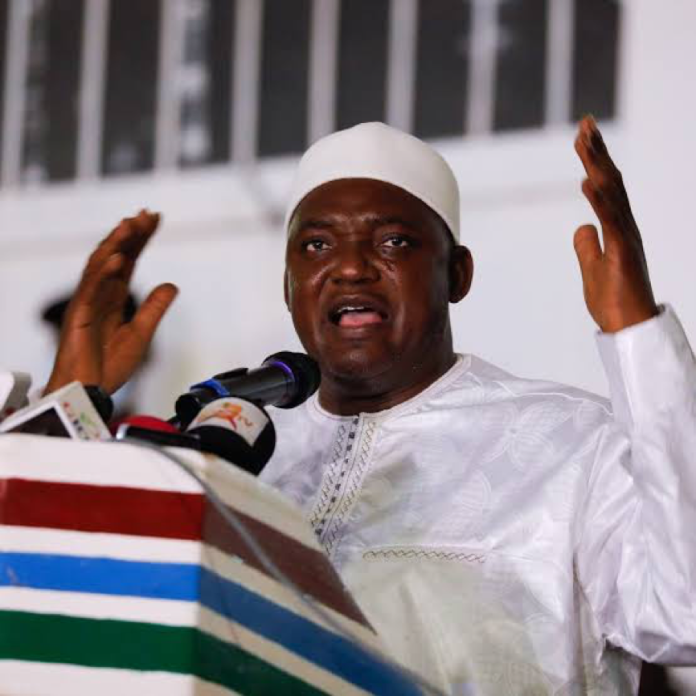
President Adama Barrow's recent pardons have drawn scrutiny regarding their alignment with his constitutional oath, which he took upon assuming office in 2017 and again in 2021. The President, in taking this oath, pledged to uphold and defend the Constitution of The Gambia. The pardons, which benefited 105 convicts, were reportedly issued in observance of Yawmul Ashura, a significant religious occasion. This act of clemency, while seemingly straightforward, has ignited a debate over the procedural requirements stipulated by the nation's highest legal document.
Constitutional Framework for Pardons
The power to grant pardons in The Gambia is established within the country's legal framework, ensuring that such significant executive actions are governed by specific guidelines. Section 82 of the 1997 Constitution outlines the provisions for such executive actions, providing the legal basis for presidential clemency. Specifically, Section 82(1) grants the President the authority to issue pardons, allowing for the remission of sentences, punishments, or penalties. However, this constitutional provision mandates that the President must first consult with the Prerogative of Mercy Committee before exercising this power. This consultation is not merely a suggestion but a constitutional requirement, designed to ensure due process and provide a structured approach to the exercise of mercy.
Further detailing the composition and role of this key body, Section 82(2) of The Gambia's 1997 Constitution stipulates that the Prerogative of Mercy Committee shall comprise the Attorney General and three other individuals. These three additional members are to be appointed by the President. Crucially, these appointments are subject to confirmation by the National Assembly, showing the principle of checks and balances within the Gambian governance structure. The establishment and proper functioning of this committee are therefore central to the lawful exercise of the presidential pardon power. Without a duly constituted committee, the framework for granting pardons, as laid out in the Constitution, cannot be fully satisfied. The requirement for National Assembly confirmation also notes the importance of parliamentary oversight in such executive decisions, ensuring transparency and accountability in the selection of committee members.
Alleged Procedural Irregularities
Despite the constitutional clarity, no public list of the 105 convicts who benefited from President Barrow's recent pardons, nor the specific reasons for their selection, has been disclosed. This lack of transparency has raised questions regarding the process and the criteria used for granting clemency. An examination of government and National Assembly records indicates that the Prerogative of Mercy Committee, a body constitutionally required to be consulted by the President before granting pardons, appears not to have been formally constituted. Records show no evidence of its members being appointed, confirmed by the National Assembly, or their names publicly gazetted. The absence of such foundational records suggests a significant procedural lapse.
These findings suggest a potential deviation from established legal protocols governing the exercise of presidential clemency. The careful search of government records and the records of the National Assembly yielded no evidence that the Prerogative of Mercy Committee has been constituted, that its members have been appointed and confirmed as per constitutional requirements, or that their names have ever been published. This absence of critical information directly contradicts the constitutional mandate for the committee's formation and operation. Until it can be demonstrated that all constitutional requirements have been satisfied, sufficient grounds exist to argue that the recent exercise of the prerogative of mercy may not have adhered to constitutional mandates. The absence of a publicly formed committee and beneficiary details contrasts sharply with the procedural expectations for such executive actions, leading to concerns about the legitimacy of the pardons.
Implications and Citizen Demands
President Adama Barrow granted a presidential pardon to 105 prisoners, an act that has now placed his administration under intense scrutiny. The constitutional framework for such actions is detailed in Section 82(2) of The Gambia's 1997 Constitution, which stipulates that the Prerogative of Mercy Committee shall comprise the Attorney General and three other individuals appointed by the President. These appointments are subject to confirmation by the National Assembly, a safeguard designed to ensure the integrity and independence of the committee.
If the exercise of the prerogative of mercy was unconstitutional, it would amount to a violation of the constitution by the president, which constitutes grounds for impeachment. This potential constitutional breach shows the gravity of the allegations. Citizens and legal observers are demanding full disclosure regarding the constitution of the Prerogative of Mercy Committee, including the identities of its members and proof of their National Assembly confirmation. There is a strong call for transparency regarding the specific criteria used to select the 105 beneficiaries and the reasons behind their pardons. Adherence to constitutional principles is critical, and the current situation demands a clear and full explanation from the presidency to alleviate concerns about the rule of law in The Gambia.