The Gambian government has pursued an ambitious infrastructure programme since 2022, aiming to expand road networks and public facilities across the country. These development projects now intersect with the economic struggles of rural residents who report enduring losses from past regional instability. Musa Badjie, a farmer from Ballen Village in the Foni Kansala District, stated that the impact of prior military operations remains a barrier to local food production. "The small gardens we managed to build within the community were completely destroyed during the Senegalese military raids," he said. "Since then, we have had no gardens at all." Government officials continue to evaluate how these broad construction initiatives address the needs of agricultural communities in regions like Foni Kansala.
Scope of National Infrastructure Projects
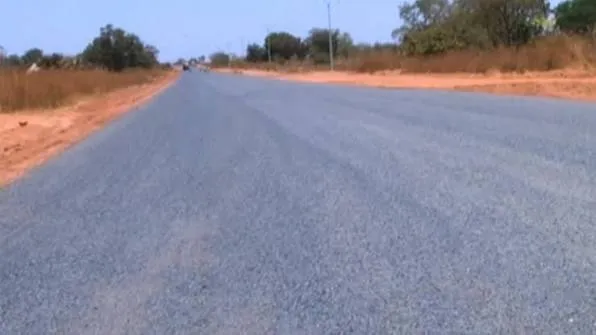
The Connect Gambia Infrastructure Project comprises the 84.5km Niumi-Hakalang Road and the 90km Kiang-Kabada road project. These developments form part of a broader national initiative that targets more than 1,500km of roads. Beyond transport infrastructure, the government reports that more than 1,100 villages have been connected to the national electricity grid. Additionally, the University of The Gambia established a campus at Faraba by 2025.
Musa Badjie, a farmer from Ballen Village in the Foni Kansala District, questioned the focus of these investments. "Development starts from the stomach," he said. "You can only measure development when you are fed. These newly constructed roads do not bridge the gap between development and hunger. They don’t solve our immediate problems; our main challenge is simply putting food on the table. This government should have prioritised agriculture over road construction."
Aminata Dibba, a resident of Kiang Sankandi, noted that infrastructure does not alleviate financial pressures. "We welcome these projects, especially when it comes to water and electricity, but our main challenges are yet to be solved," she stated. She added that "the cost of living is very expensive; prices of basic commodities keep escalating on a daily basis."
Haddy Cham, a fish vendor in Tanji, echoed these concerns regarding the economic climate. "The cost of living is very expensive in The Gambia," she said. "Having roads alone does not solve the problem; we need more than roads." She also observed shifting demographics within her industry, noting, "I have observed that foreigners are now occupying the highest percentage of our fishing sector."
Alagie Mbowe, the National Assembly Member for Upper Saloum, addressed the financing of these national projects. Regarding the reliance on international versus local funding, he stated, "Where possible domestic debt is preferred to foreign debt because domestic debts are paid in the local currency." He characterized the ongoing debate over the prioritization of infrastructure as a complex issue, remarking, "It seems it is the chicken and the egg situation — which one comes first."