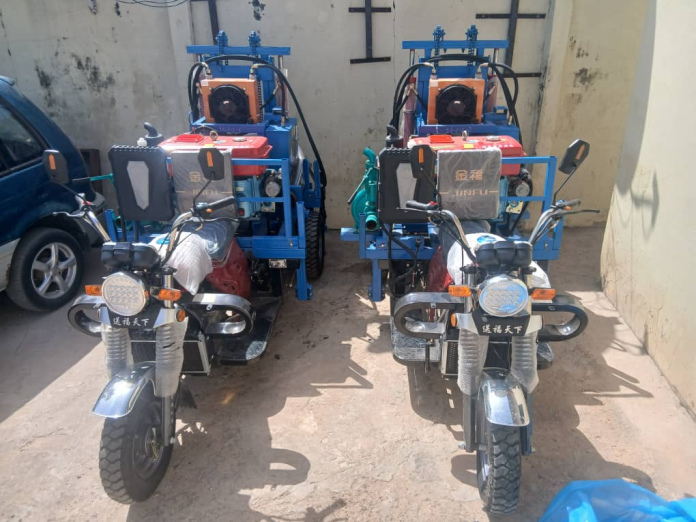
The Justice for All Union recently acquired two new borehole drilling machines, aiming to enhance agricultural productivity and enable year-round farming across The Gambia. The acquisition of these two new borehole drilling machines by the Justice for All Union marks a significant step towards agricultural self-sufficiency for its members. The machines represent a substantial investment by the union to provide farmers with consistent access to water, a critical resource often lacking during dry seasons. This initiative is expected to support farming communities in overcoming water scarcity challenges, thereby boosting food security and economic opportunities for members. The union's proactive approach is designed to transform traditional farming methods and ensure a more stable income for agricultural workers.
Self-Funded Initiative for Agricultural Empowerment
The initiative seeks to lessen farmers' reliance on seasonal rainfall, making irrigation more accessible and promoting agricultural production year-round. This approach aims to ensure consistent harvests and improve food security for communities across The Gambia, moving away from the unpredictable nature of rain-fed agriculture. The initiative is specifically intended to reduce farmers’ dependence on seasonal rainfall by making irrigation more accessible and encouraging agricultural production throughout the year. This shift is key for fostering sustainable agricultural practices and enhancing the livelihoods of farming communities. To sustain the program, the union will collect a percentage from each borehole drilled. For the drilling service itself, the Justice for All Union has established a charge of D10,000. This fee contributes to the ongoing maintenance and expansion of the borehole machine initiative, ensuring its long-term viability. Members who have consistently paid their monthly dues will be granted priority access to the borehole drilling service. This system is designed to reward member loyalty and ensure that those who have supported the union's efforts benefit first from its agricultural empowerment programs. The union's acquisition of the machines and its operational model show its commitment to fostering sustainable farming practices and empowering its members through self-reliance.
Vision for Farmer Prosperity
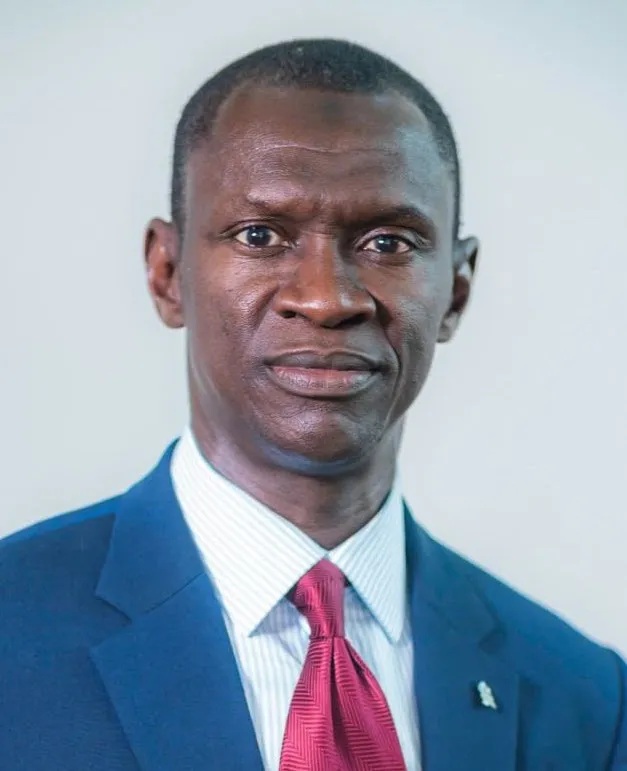
The Justice for All Union operates as a broad-based organization, representing six key societal sectors. These include workers in the transport sector, market vendors, youth, farmers, fishermen, and other vulnerable communities. This diverse representation notes the union's full approach to community development and economic empowerment across various segments of society. Modou Lamin Faye, President of the Justice for All Union, stated that the organization aims to change perceptions about agriculturalists. Faye articulated the union's vision, declaring, "The era of seeing farmers as poor people is over." This statement shows a shift in the union's approach, focusing on enhancing the economic standing and prosperity of farmers within The Gambia. The initiative to acquire borehole machines aligns with this broader objective, aiming to empower agricultural communities through improved access to resources and modern farming techniques. The union believes that by providing essential infrastructure and support, farming can become a profitable and respected profession.
President's Vision and Union's Mission
Modou Lamin Faye, President of the Justice for All Union, confirmed that the borehole drilling machines were acquired through the union's own funding, not external assistance. The borehole drilling machines were purchased by Modou Lamin Faye, President of the Justice for All Union, rather than through external assistance, reinforcing the union's commitment to self-reliance. Faye stated, "We don’t rely on people. We don’t wait for people to donate to us. If that happens, it defeats the whole purpose of being a union." He emphasized the union's commitment to self-sufficiency, adding, "We have a mindset to create a system to be able to fund ourselves and empower the members of the Union." Faye further elaborated on this principle, saying, "We can do things by ourselves and empower one another." This philosophy drives the union's initiatives, ensuring that members are active participants in their own development.
The union also intends to provide financial support for agricultural activities to interested farmers, contingent on contractual agreements. The union also plans to finance agricultural activities for interested farmers under contractual agreements, further solidifying its commitment to farmer prosperity. Faye explained, "The Union will also support farmers financially to do farming, but they will have to sign a contract." Under this arrangement, farmers will repay the union after harvesting and selling their produce. Faye noted, "At the end of the harvest and after selling their produce, the farmer will repay the Union," noting that "The idea is to help the farmers with the market." This initiative aims to address the unpredictability of seasonal farming, as Faye stated, "The idea of waiting for the rainy season is no longer durable because the rainy season is not predictable." He concluded by asserting, "The era of seeing farmers as poor people is over," reiterating the union's dedication to transforming the economic landscape for agriculturalists in The Gambia.