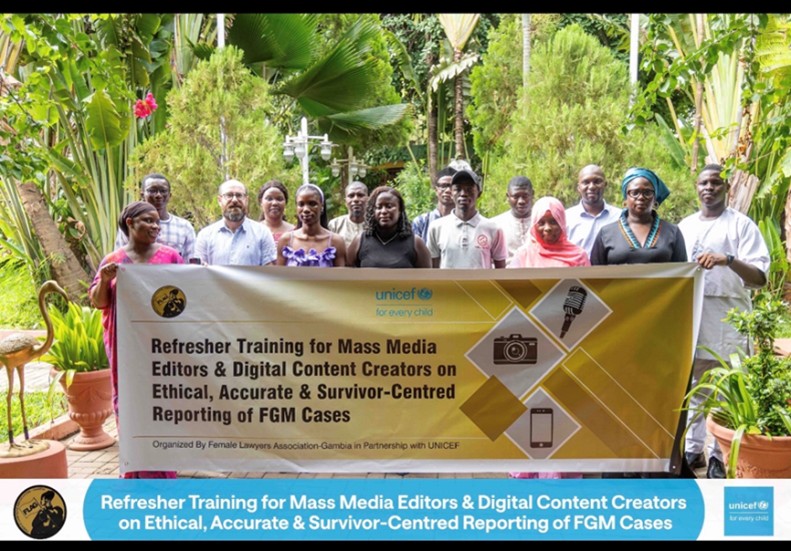
The Female Lawyers Association–Gambia (FLAG), in partnership with UNICEF, recently convened a key training session for editors and senior newsroom personnel. This significant event took place at the Senegambia Beach Hotel, a central location chosen to facilitate broad participation from the media sector. The primary objective of the initiative was to enhance ethical reporting standards, particularly concerning gender-based violence (SGBV) cases, a critical area requiring sensitive and accurate media coverage. This training occurred amid significant public interest surrounding the Supreme Court’s ongoing deliberations on female genital mutilation (FGM) in The Gambia, a legal process that has drew considerable public and media attention. Yassin Senghore, who serves as the Vice President of FLAG, noted the critical importance of responsible media coverage in such sensitive legal and social matters, showing the potential impact of reporting on public understanding and victim welfare. The session provided a vital platform for media leaders to discuss best practices for balanced and accurate reporting, while simultaneously safeguarding the dignity of victims and upholding the fundamental principles of journalistic integrity.
Call for Accuracy and Ethics in Reporting
The training session specifically addressed the complex requirements for responsible reporting of SGBV cases. It placed a strong emphasis on several key areas: legal and ethical standards in court reporting, strong survivor protection mechanisms, diligent child safeguarding protocols, the use of responsible language that avoids stigmatization or re-traumatization, and the development of practical courtroom skills for journalists covering legal proceedings. Participants engaged in in-depth discussions on these topics, recognizing the multifaceted challenges inherent in reporting on such sensitive issues.
Yassin Senghore, Vice President of FLAG, elaborated on the rationale behind engaging editors directly in this training. She stated that the decision to involve senior newsroom personnel stemmed from concerns that had been consistently voiced during earlier training sessions with journalists. These concerns primarily revolved around the accuracy of reporting court proceedings, with observations indicating a need for greater precision and understanding in media accounts. Senghore further stressed the imperative necessity for journalists and editors alike to enhance their familiarity with legal language and the intricate processes of the court system. This improved understanding, she argued, is key to significantly improve the overall quality and reliability of reporting on legal matters.
Emmanuel Michaud, UNICEF Child Protection Manager, also speaking at the event, urged journalists to rely exclusively on factual evidence when reporting on female genital mutilation (FGM). Michaud noted that extensive research has thoroughly documented the severe and harmful effects associated with the practice of FGM, emphasizing that reporting should reflect this established body of evidence rather than perpetuate myths or misinformation.
UNICEF's Role and Media Influence
UNICEF Child Protection Manager Emmanuel Michaud stated that this full training for editors and senior newsroom personnel was an integral part of UNICEF’s wider engagement with various stakeholders. This broader initiative aims to enhance media capacity on child protection and related issues, recognizing the media's key role in shaping public discourse and driving positive change. Michaud further emphasized the significant influence the media holds over the public agenda, noting its unparalleled power to bring pressing social concerns to the attention of decision-makers. "This influence makes accuracy especially important when reporting technical and legal matters," Michaud explained, showing the potential for misrepresentation if complex legal or technical information is not handled with precision. He further clarified UNICEF's objective, stating, "The idea is not to influence what you think and what you should report, but it’s important to ensure that accurate information is disseminated." This statement reinforced the training's focus on journalistic standards rather than prescriptive content. Michaud also addressed the scope of ethical reporting, asserting that "Ethical reporting does not mean avoiding stories about violence or sensitive community issues. It means ensuring that such cases are reported responsibly without causing further harm to survivors," a critical distinction for media professionals navigating challenging narratives.
Broader Implications for Reporting and Editorial Responsibility
The appeal for enhanced ethical reporting standards was made on Friday during a refresher training session specifically tailored for editors and senior editorial representatives. Yassin Senghore, Vice President of the Female Lawyers Association–Gambia (FLAG), issued a cautionary note regarding the inherent complexities of legal proceedings. She warned that such proceedings frequently involve highly technical terminology and nuanced legal concepts that can be challenging for both journalists to accurately interpret and for the general public to fully comprehend. Such complexity, Senghore noted, creates a significant and ever-present risk of inaccurate or misleading reports being disseminated, which can have detrimental consequences for public understanding and the judicial process.
Senghore noted the key and indispensable role of editors in ensuring the quality, accuracy, and ethical integrity of news content before it reaches the public. She articulated this responsibility clearly, stating, "At the end of the day, when the journalists submit the stories, you are the guys that are going to edit it and distil the headlines." This powerful statement shows the immense responsibility of senior newsroom personnel in shaping public understanding of sensitive legal matters, particularly those involving gender-based violence, where misreporting can cause profound harm. The training aimed to equip these influential media leaders with the necessary tools, knowledge, and ethical frameworks to navigate such complexities effectively, ensuring that their editorial decisions contribute to informed public discourse and uphold the dignity of all involved parties. The ongoing deliberations in the Supreme Court concerning FGM show the immediate relevance and critical importance of such training, as accurate and responsible reporting plays a key role in public education and legal awareness.