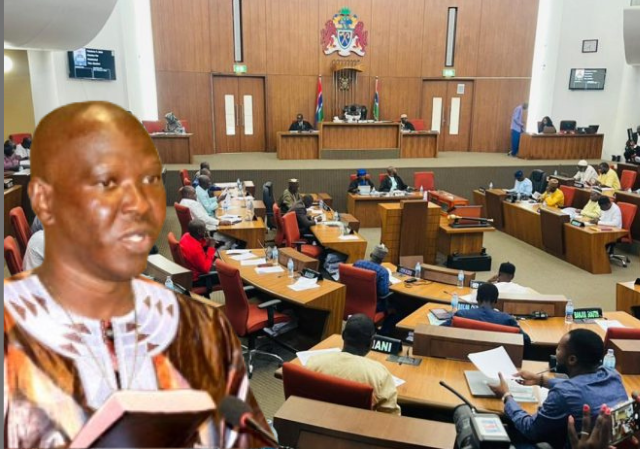
The National Assembly recently adopted the report from its Finance and Public Accounts Committee (FPAC) concerning the audited financial statements of public institutions for the 2020-2024 period. This adoption follows a review that identified significant financial discrepancies within the Independent Electoral Commission (IEC). The National Assembly's decision came after a thorough examination of the financial operations of various public bodies, with the IEC's accounts drawing particular scrutiny. A reconciliation for the 2021–2023 electoral cycle specifically revealed unretired funds totaling D6,926,003.55. The committee's findings have prompted the National Assembly to demand the recovery of these amounts, which are identified as unlawful allowances distributed by the IEC. The adoption of the FPAC report shows the legislative body's commitment to ensuring financial accountability and transparency across all government institutions.
Probe into Unlawful Payments
The Finance and Public Accounts Committee (FPAC) recommended that the Independent Electoral Commission (IEC) recover D15.8 million, which it reportedly paid unlawfully to its members and staff as election allowances. These allowances were disbursed across several categories, including three months’ gross salary incentives, nomination allowances, supervision and monitoring allowances, and motivational tokens. According to FPAC, these specific categories of payments were not covered under the Election Service Code of 2018, the established regulatory framework for such disbursements. The committee's investigation noted that these payments lacked the necessary legal backing, rendering them irregular.
The IEC Chief Executive Officer justified these payments as an established Commission practice intended for staff motivation. This justification was presented during the committee's review, where the CEO explained the rationale behind the payments. For instance, in the context of the 2021 Presidential Election, the Chief Electoral Officer recommended paying three months’ gross salary to staff instead of hosting a staff party. This decision, intended to boost morale and acknowledge the staff's efforts, was made despite the absence of specific provisions in the Election Service Code for such remuneration. FPAC has since recommended that the IEC submit a full recovery plan to the National Assembly within 45 days after the tabling of the report. The committee further ordered that the funds be recovered in full within a 12-month period, emphasizing the urgency and seriousness of the financial irregularities. This directive aims to ensure that the public funds are returned to the appropriate accounts without undue delay.
Unaccounted Election Funds
The Finance and Public Accounts Committee (FPAC) noted that the Independent Electoral Commission (IEC) transferred budgeted election funds directly into the private bank accounts of several returning officers. This practice raised significant concerns regarding financial controls and the proper management of public funds. FPAC urged the IEC to ensure the recovery of these sums within 12 months and to submit a full recovery document to the National Assembly, detailing the steps taken and the progress made. The committee's findings indicated that funds totaling D1,540,351 remained in the respective bank accounts of these officers, having been neither withdrawn nor returned to the IEC. This situation points to a critical lapse in financial oversight and accountability within the electoral body.
Specific amounts were retained in the accounts of individual returning officers, illustrating the extent of the issue. Anthony Robert Secka held D31,369, while Amadou Taal retained D818,719. Lamin Jadama's account contained D111,012, and Lamin Cham held D18,666,027. Joseph Colley had D56,876, Haddy Sidat D126,928, and Sulayman Joof D131,150. These figures represent significant sums that were not properly accounted for. In light of these findings, FPAC recommended that the Inspector General of Police and the Financial Intelligence Unit investigate these returning officers within 45 days after the tabling of the report. This recommendation shows the committee's determination to uncover the full scope of these financial discrepancies and to hold individuals accountable for the misuse or retention of public funds.
Contract Overpayment Investigation
The Independent Electoral Commission's (IEC) contract with Electoral Service International (ESI) for voter registration materials specified a total sum of $2,995,000. However, records indicate that actual payments made to ESI amounted to $3,080,789.99. This discrepancy resulted in an overpayment of $85,789.99 to the vendor. The Finance and Public Accounts Committee (FPAC) has recommended that the Inspector General of Police (IGP) investigate these discrepancies to ascertain the reasons behind the overpayment and identify any potential wrongdoing. The committee's findings highlight concerns regarding financial oversight within the IEC, suggesting weaknesses in procurement and payment processes. This investigation into the overpayment is part of a broader parliamentary effort to scrutinize the financial operations of public institutions and ensure that taxpayer money is managed responsibly. The National Assembly is seeking accountability for all identified financial irregularities within the electoral body, reinforcing its role in safeguarding public resources.