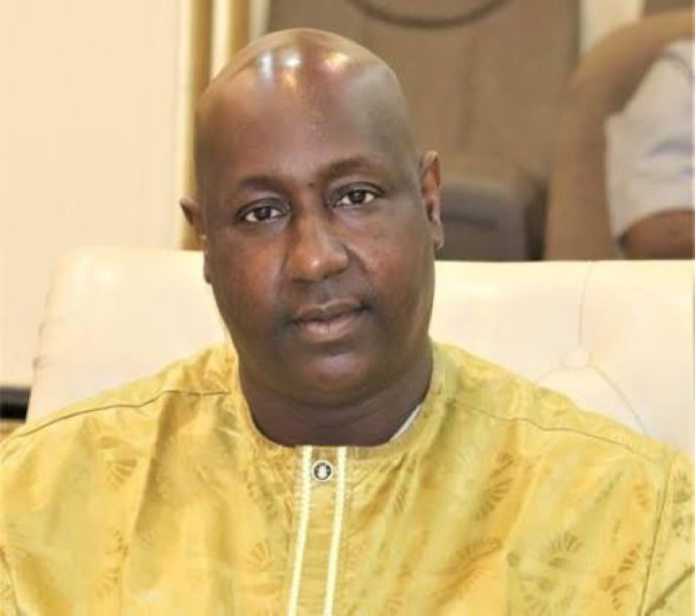
Yusupha Tunkara, president of the National People’s Party (NPP) Students’ Wing, on Tuesday defended the party’s new nine-point agenda, which the NPP has presented as a blueprint for its next term in office. Tunkara described the agenda as focusing on "consolidation and continuity." This core vision, he explained, underpins the party's strategy for sustained national progress. The nine-point agenda, according to Tunkara, is designed to build upon the achievements of President Adama Barrow's administration and guide the country's development trajectory in the coming years.
Tunkara noted the government's past actions, stating, "If you look at what the government has been doing in the last eight years, access to the University of The Gambia was very challenging, but this government took advantage and completed it." He asserted that the agenda is key for economic development, saying, "This is the only way we can create jobs in the country." Tunkara added that "The manifesto of the NPP is youth and women-centred," and praised President Adama Barrow, noting, "President Barrow has given young people in the party so much privilege and listens to our needs." He showed that this focus on youth and women is not merely rhetorical but is deeply embedded in the party's programmatic approach to governance. The president of the NPP Students' Wing further elaborated that the agenda aims to address critical issues facing the nation, ensuring that the benefits of development are widely distributed across all segments of society.
Consolidating Gains and Continuity
The National People’s Party's newly unveiled nine-point agenda aims to consolidate gains made under President Adama Barrow, according to Yusupha Tunkara, president of the NPP Students’ Wing. Tunkara stated the new agenda represents a continuation of policies the party has pursued since President Barrow assumed office. This approach, he suggested, builds upon the foundational work established during the current administration, ensuring that progress is not only maintained but also accelerated. The agenda is specifically designed to solidify the achievements of the past eight years, providing a stable platform for future growth and development. Tunkara emphasized that the principle of "consolidation and continuity" forms the bedrock of the NPP's vision, aiming to provide a consistent and predictable policy environment for both citizens and investors.
Tunkara further emphasized the role of young people within the party and government. He noted President Barrow's engagement with youth, noting, "President Barrow has given young people in the party so much privilege and listens to our needs." This focus on youth and continuity is presented as central to the NPP's strategy for the future. The party leadership intends for the agenda to serve as a roadmap for further development and to ensure the sustainability of existing initiatives. Tunkara pointed out that the agenda reflects a commitment to empowering the younger generation, recognizing their potential as key drivers of national progress. He stressed that the active involvement of youth in policy formulation and implementation is a distinguishing feature of the NPP's approach.
Focus on Education and Skills
The National People’s Party's new nine-point agenda prioritizes education, skills training, and youth empowerment, according to Yusupha Tunkara, president of the NPP Students’ Wing. Tunkara indicated that skills development, human capital investment, and youth empowerment are key priorities within the agenda. He stated that access to higher education has significantly improved under the current administration, making it more accessible to a broader segment of the population. This improvement in access is a direct result of the government's strategic investments in the education sector.
Investments have been made at the University of The Gambia and other tertiary institutions, supporting this focus. More than D7 billion has been invested in the University of The Gambia and other tertiary institutions to bolster educational infrastructure and opportunities. These substantial investments are part of a broader strategy to enhance the quality and reach of education across the country, ensuring that Gambian youth are equipped with the necessary skills for the modern economy. Tunkara elaborated that the emphasis on skills training is aimed at reducing youth unemployment by matching educational outputs with market demands. He explained that the agenda seeks to create a strong educational ecosystem that fosters innovation and entrepreneurship among young people.
Youth and Women Centered Vision
The National People’s Party's manifesto is youth and women-centred, according to Yusupha Tunkara, president of the NPP Students’ Wing. Tunkara stated that the party's vision centers on "consolidation and continuity." He emphasized that Gambians should scrutinize the party’s program and hold it accountable for promises outlined in the nine-point agenda if the NPP is re-elected in December. This call for accountability shows the party's confidence in its proposed plan and its commitment to transparency. Tunkara further noted youth employment, skills training, and women’s empowerment as prominent priorities within the agenda. He noted that the manifesto was drafted with significant input from young people, ensuring that their perspectives and needs are adequately addressed.
The NPP Students’ Wing president reiterated that the agenda's focus on youth employment is a direct response to one of the most pressing challenges facing the country. He explained that the proposed initiatives aim to create sustainable job opportunities through various sectors, including agriculture, technology, and vocational trades. Women’s empowerment, he added, is not just a social imperative but also an economic one, with specific programs designed to enhance women's participation in leadership, entrepreneurship, and all spheres of national life. Tunkara concluded by urging all Gambians to engage with the nine-point agenda, understand its objectives, and actively participate in the democratic process to ensure that the country continues on its path of development and progress.