President Adama Barrow announced that fuel pump prices in The Gambia will be reduced nationwide starting in July 2026. The reduction, which Barrow stated would take effect across the country, aims to alleviate economic pressures on citizens. The presidential announcement outlines a future measure intended to impact households and businesses throughout The Gambia, with a specific start date of July 2026 for the nationwide implementation of lower prices.
Fuel Price Relief Promised
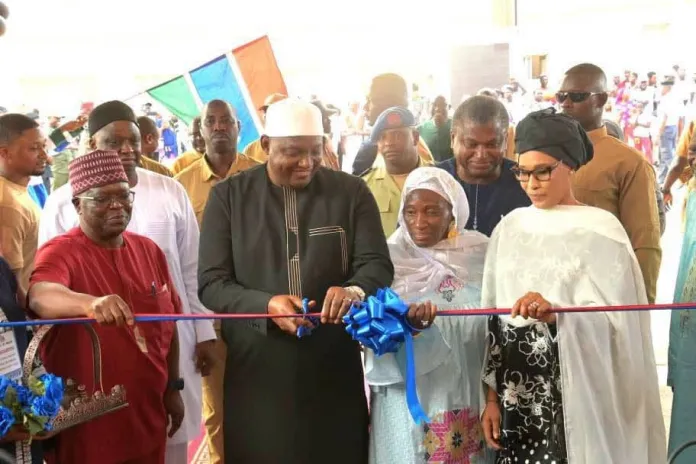
The announcement of the fuel price reduction was made on Saturday during the inauguration of the Farato National Emergency Treatment Centre and Biomedical Engineering Unit. This facility is located in Farato, within The Gambia's West Coast Region, and is expected to enhance healthcare services in the Greater Banjul Area. Commercial transport operators have previously cited fuel prices as a primary factor contributing to fare increases observed in recent months. The president's decision aims to address these economic concerns expressed by various sectors, including public transport providers who have been vocal about the impact of rising fuel costs. The planned reduction in fuel costs is intended to mitigate the upward pressure on transportation fares and other related expenses that impact Gambian households and businesses across the nation. This move is anticipated to provide significant relief to commuters and businesses grappling with the current economic climate.
New Health Facility Opens
The National Emergency Treatment Centre and Biomedical Engineering Unit in Farato was established through joint funding from the Government of The Gambia and the World Bank. This new facility features a capacity of 104 beds, which includes 84 observation beds and 20 Intensive Care Unit (ICU) beds designed to cater to critical patients. Additionally, the unit incorporates isolation facilities, houses the National Blood Transfusion Service, and provides specialised public health laboratories. These full services are expected to significantly bolster the country's public health infrastructure.
The Health Minister described the project as the initial phase of a more extensive Health City initiative. This broader plan is expected to develop into a full hospital complex, ultimately offering an estimated capacity of about 1,500 beds. This ambitious long-term vision aims to transform healthcare provision in the region. The current facility marks a significant step in enhancing healthcare infrastructure in the region, providing immediate benefits while laying the groundwork for future expansion. The strategic design of the centre, including its specialized units, reflects a commitment to improving emergency response and critical care capabilities.
President Addresses Public Concerns
President Adama Barrow addressed public concerns regarding infrastructure and services, stating that the power supply has improved after months of intermittent outages in parts of the Greater Banjul Area and the West Coast Region. "Electricity is stable now," President Barrow said, adding, "When there was no electricity, you complained. Now that it is stable, come out also and acknowledge that electricity is back." He further asserted his role as president, stating, "You should accept that I am the president of this country; that is the truth." Barrow also remarked, "When you are sick, you go to my hospital. When you have problems, you go to my police station. The roads you criticize are the same roads you drive on." Government authorities have not yet announced the revised pump prices for fuel or provided detailed implementation plans for the fuel price reduction measure. President Barrow reiterated his commitment to the fuel price cut, stating, "The Gambia is in the hands of the Almighty Allah, and I will reduce the price of fuel by the first of July." This presidential commitment shows the administration's focus on addressing key economic and infrastructural challenges.