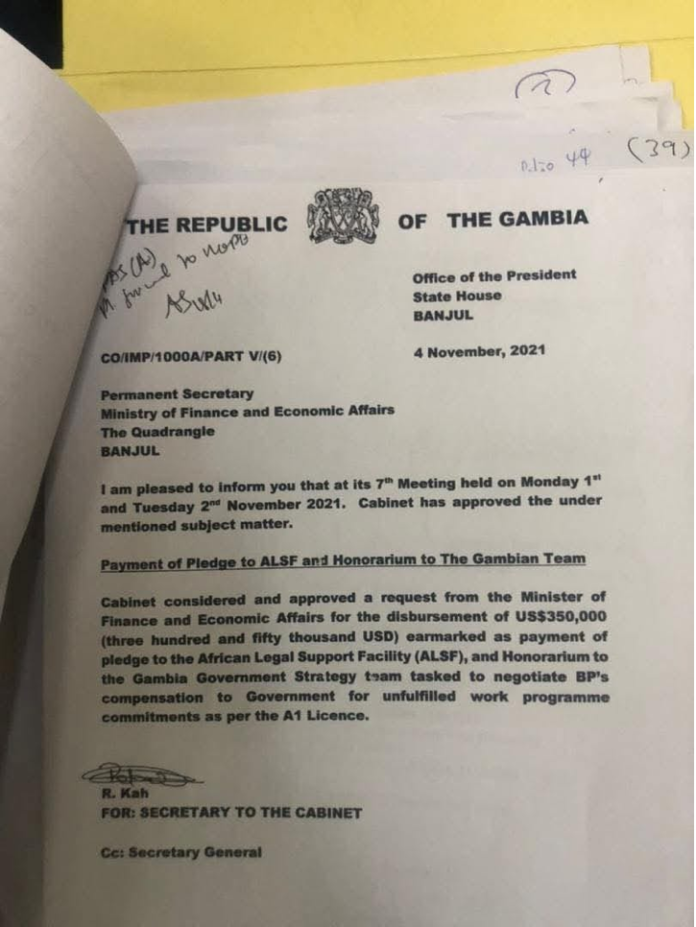
On Friday, the Government of The Gambia signed a Petroleum Exploration, Development and Production Licence Agreement (PEPLA) with Eni Gambia Ltd for offshore Block A1. Eni Gambia Ltd is a subsidiary of the Italian multinational energy company Eni SpA. The agreement specifically covers offshore Block A1, which spans an area of 1,300 km2. This block is situated in water depths ranging from 1,250 to 3,500 meters, presenting significant technical challenges for exploration and development. The signing of this agreement marks a new chapter for a block with a complex history of previous operators and unfulfilled exploration commitments.
A Block's Tumultuous History
The journey of Block A1 through various hands shows the challenges and uncertainties inherent in offshore petroleum exploration. Buried Hill Energy initially held the licenses for both A1 and A4 blocks, securing these rights in 2006. This initial phase set the groundwork for subsequent involvement by other companies. African Petroleum subsequently farmed in with Buried Hill, acquiring a significant 60% stake in Block A1, demonstrating early interest in the block's potential.
PetroNor retained control of the block until 2018, when the Government of The Gambia revoked its license. This revocation occurred after PetroNor failed to drill a well within the agreed period specified in its contractual obligations, a critical requirement for maintaining exploration rights. The government's decision noted its commitment to enforcing contractual terms and ensuring active exploration.
BP's license for Block A1 then became effective on 30th July 2019, bringing a major international player into the Gambian offshore sector. However, BP's exploration period concluded on 29 July 2021 without any drilling activity. The company subsequently withdrew from The Gambia before drilling any well, citing reasons that included the impact of the global COVID-19 pandemic and a strategic shift in its corporate focus. Despite its withdrawal, BP paid the Government of The Gambia USD$29m before exiting the block, a sum that provided some compensation for the unfulfilled exploration work. This sequence of events left Block A1 open for new negotiations, leading to the recent agreement with Eni Gambia Ltd.
Data Management and Oversight
The Petroleum Commission Act, 2021 outlines specific responsibilities for the country's energy sector oversight. Section 5(k) of this Act mandates the Petroleum Commission to manage the national petroleum repository. This provision establishes a strong legal framework for the centralized collection, storage, and careful maintenance of all geological, geophysical, and other technical data related to petroleum exploration and production activities within The Gambia. The repository is designed to serve as a full and authoritative database, ensuring that valuable information gathered from various exploration efforts is preserved and accessible for future reference, detailed analysis, and strategic planning by the government and relevant stakeholders. Its management by the Commission is intended to provide a systematic and transparent approach to data handling and ensure national control over critical petroleum-related information, thereby safeguarding national interests and intellectual property.
In February 2024, officials from the Petroleum Commission engaged in a reconciliation exercise with FAR Gambia Ltd. The purpose of this exercise was to determine the precise volume and nature of technical records received from the company, ensuring a complete and accurate transfer of historical data. This process involved a detailed review and comparison of records held by both parties to ensure accuracy and completeness. The reconciliation is part of ongoing efforts to maintain an updated and accurate national petroleum repository, aligning with the Commission's mandate under the Petroleum Commission Act, 2021. Such exercises are key for verifying that all data generated during exploration phases are properly transferred and cataloged, contributing significantly to the integrity of the national data archive for Block A1 and other operational areas.
Eni's Global Standing
Eni SpA, the parent company of Eni Gambia Ltd, is an Italian multinational energy company with a substantial global footprint. The Italian government holds a 33.084% golden share in Eni, providing the government with significant influence over the company's strategic decisions and operational direction. This state backing underlines Eni's importance to Italy's national interests. Eni, through its subsidiary Eni Gambia Ltd, recently signed a Petroleum Exploration, Development and Production Licence Agreement (PEPLA) for offshore Block A1 in The Gambia, marking its entry into this promising West African basin. The company maintains a substantial presence in the global energy market, underlined by its impressive market capitalisation of €48 billion. This strong financial standing positions Eni as a major player in international oil and gas exploration and production, capable of undertaking large-scale and complex projects like those in Block A1.
Implications for Future Deals
The Gambia National Petroleum Corporation (GNPC) will hold a 10% carried interest in the newly signed licence. This arrangement stipulates that GNPC will not bear the exploration costs associated with the Block A1 deal. This structure means that other partners in the licence, primarily Eni Gambia Ltd, will cover GNPC's share of exploration expenditures during the initial high-risk phase. The provision for a carried interest is designed to allow the national oil company to participate in the potential upside of an oil or gas discovery without immediate financial exposure during the high-risk exploration phase. Such terms are common in petroleum agreements globally, aiming to ensure national participation while simultaneously attracting foreign investment for costly exploration activities. This model allows The Gambia to benefit from potential discoveries while mitigating the financial risks typically associated with frontier exploration.