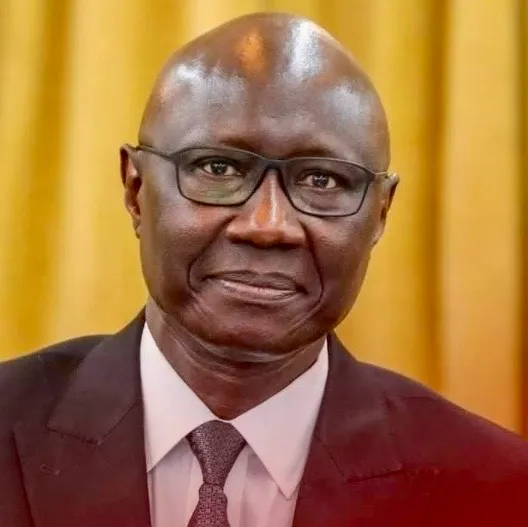
The Ministry of Information in The Gambia recently expressed "deep concern over the increasing spread of misinformation, deliberate distortions, and politically motivated narratives circulating on social media and certain online platforms" regarding corruption. This official statement, issued over the weekend, showed the government's apprehension about the public discourse surrounding graft and accountability. This development followed closely on the heels of a significant event in the nation's security apparatus: the resignation of Lt General Momat Cham, the chief of defence staff of the Gambia Armed Forces. His resignation was tendered only a few days prior and was promptly accepted by President Adama Barrow. The circumstances surrounding Lt General Cham’s departure were notable, as a former aide had publicly leveled serious allegations against him, including abuse of office, economic malfeasance, and nepotism. In response to these grave accusations, Lt General Momat Cham subsequently denied these allegations, setting the stage for a public debate on integrity within high-ranking government positions and the role of social media in shaping public perception.
The Widespread Scale of Corruption
The issue of corruption is not unique to The Gambia, but rather a widespread challenge across the African continent. Transparency International’s Corruption Perceptions Index consistently ranks most African countries below the global average, indicating widespread challenges with corruption. The financial toll of this phenomenon is staggering; research from the African Union and UNECA estimates that Africa loses over US$148 billion annually to corruption and illicit financial flows. This substantial drain on resources significantly hinders development and perpetuates economic instability across the region. In The Gambia, the scale of corruption became particularly evident during the Jammeh regime, when state resources were systematically merged with personal accounts, blurring the lines between public funds and private wealth. The Janneh Commission, established to investigate financial dealings under the former administration, later documented in extensive detail how public assets, cash, and land were systematically diverted and misappropriated during that period. For a nation like The Gambia, which operates with a relatively small budget, every loss to graft is profoundly significant. Each dalasi lost through corrupt practices represents a dalasi not spent on essential public services, such as funding the salaries of teachers, providing adequate resources for nurses, or ensuring stable electricity for its citizens. This stark reality shows the direct and detrimental impact of financial mismanagement on the nation's development trajectory and the daily lives of its people, noting how corruption directly undermines the state's capacity to deliver on its fundamental responsibilities.
Institutional Reforms and Persistent Gaps
Since 2017, the administration of President Adama Barrow has taken discernible steps to open space for audits, commissions, and press freedom within The Gambia, aiming to foster greater transparency and accountability. The government has also introduced several legislative and institutional changes specifically aimed at improving financial oversight and reducing opportunities for corruption. Key initiatives include the implementation of the Public Procurement Act, which seeks to standardize and transparently manage government purchasing, and the Asset Declaration law, designed to ensure public officials disclose their financial holdings. Additionally, significant reforms have been undertaken at key public institutions, including the National Water and Electricity Company (Nawec) and the Gambia Ports Authority. These reforms signal a clear intent to tighten operational rules, enhance financial management, and improve governance across critical sectors.
Despite these commendable efforts and the establishment of new frameworks, challenges persist in the fight against corruption. Official audit reports continue to reveal instances of unaccounted funds within various government ministries and agencies, suggesting that the journey towards complete financial integrity is ongoing. These findings indicate that while strong frameworks are being established, their consistent application and rigorous enforcement may still be incomplete or face implementation hurdles. The daily reality for many Gambian citizens continues to involve informal corruption. They frequently report having to pay "facilitation fees" to access basic public services. These informal payments are commonly cited for processes such as business registration, obtaining land documentation, and navigating police matters, suggesting that informal corruption remains a widespread and frustrating reality for many Gambians interacting with state institutions. This prevalence of petty corruption shows the need for reforms to penetrate beyond high-level policy changes into the everyday interactions between citizens and public services.
Systemic Change and International Examples
Examining international examples reveals that strong rules and unwavering political will can significantly alter outcomes in the fight against corruption. Botswana, Rwanda, and Mauritius are frequently cited as countries demonstrating this capacity. These nations have successfully implemented strong legal frameworks, strengthened institutional oversight, and fostered a culture of accountability at all levels of government and society, leading to improved transparency and significantly reduced corruption levels. Their experiences suggest that while corruption can be deeply entrenched within a system, sustained commitment from leadership, coupled with effective enforcement mechanisms, is absolutely key for achieving systemic change. This approach emphasizes moving beyond addressing individual cases of corruption to reforming the underlying structures and incentives that enable corrupt practices to flourish. The success of these countries is often attributed to their investment in independent anti-corruption bodies, the establishment of clear codes of conduct for public officials, and the consistent application of justice regardless of an individual's position or influence. Such transformations require a long-term vision, continuous effort to adapt and strengthen governance systems, and a steadfast commitment to upholding the rule of law against evolving challenges. These international models provide valuable lessons for The Gambia as it continues its own journey towards greater transparency and accountability.