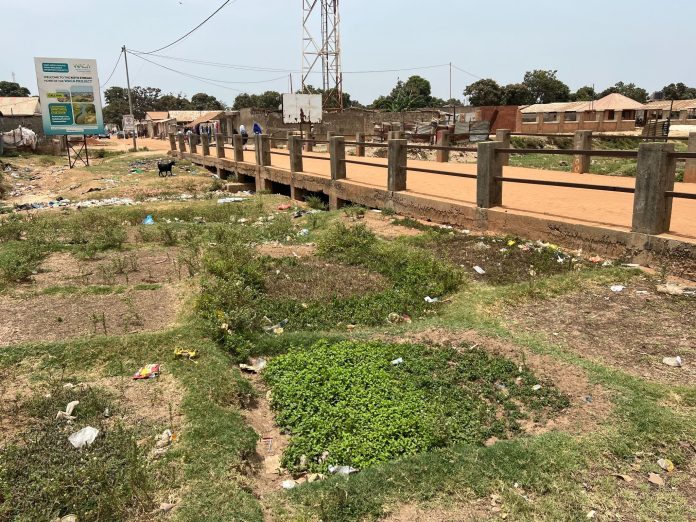
The West Africa Coastal Areas Resilience Investment Project 2 (WACA ResIP 2), a World Bank-funded initiative, visited Kotu Stream on June 10 in The Gambia, addressing concerns of residents living along the waterway. The project aims to mitigate coastal erosion, flooding, and environmental degradation in the area. WACA ResIP 2 is implemented in The Gambia and focuses on regions like Kotu Stream, which flows from Nema Kunku to Kotu at the shore of the Atlantic Ocean. Residents on the banks of Kotu Stream frequently experience the impacts of environmental challenges. These residents live on the banks of Kotu Stream, which stretches from Nema Kunku before reaching the Atlantic Ocean. The challenges faced by these communities include not only floods and environmental degradation but also significant health concerns and the loss of livelihoods, which directly impact their daily lives and economic stability. The WACA ResIP 2 project specifically aims to reduce coastal erosion, flooding, and environmental degradation, thereby improving the living conditions and resilience of the affected populations.
Project Scope and Stream Reprofiling
Residents of Kotu Stream contend with various challenges, including floods, health concerns, environmental issues, and the loss of livelihoods. The West Africa Coastal Areas Resilience Investment Project 2 (WACA ResIP 2) has been allocated a budget of $45 million to address these issues. The project is designed for execution over a five-year period. This substantial financial commitment shows the scale and importance of the interventions planned for the Kotu Stream area. The project's duration of five years allows for a full and sustained approach to tackling the complex environmental and social issues present.
WACA ResIP 2's primary objective involves reprofiling the stream, which includes enlarging the waterway and constructing various crossing points. These crossing points encompass bridges, culverts, and footbridges across different sections of the stream. This reprofiling work is key for improving water flow and reducing the risk of flooding, which has historically plagued communities along the stream's banks. The construction of new and improved crossing points will also enhance connectivity and accessibility for residents, facilitating easier movement and access to essential services. Project officials have clarified that WACA does not undertake the construction of roads, focusing instead on the direct hydrological and structural improvements related to the stream itself. The setback distance on either side of the stream is not uniform, with its specific measurement determined by evidence of flood risk in each area. This adaptive approach ensures that interventions are tailored to the particular vulnerabilities of different sections of the stream, maximizing effectiveness and minimizing unnecessary disruption.
Waste and littering within the stream have been identified as a significant challenge for WACA, with project officials describing it as WACA's biggest nightmare. The accumulation of waste not only obstructs water flow but also contributes to environmental pollution and health hazards for the surrounding communities. The project annually clears waste across the Kotu Stream and extends this effort 50 meters on either side of the banks. This extensive clearing operation is vital for maintaining the ecological health of the stream and preventing further degradation. Collected waste is then transported to the Bakoteh Dumpsite for proper disposal. Residents have also expressed concerns regarding the accumulation of silt in the stream, which contributes to the environmental problems in the area. This siltation further exacerbates flooding risks and impacts the stream's natural ecosystem, making the reprofiling efforts even more critical.
Community Engagement and Resettlement
The second phase of the project, WACA ResIP 2, commenced in 2023, initiating a series of preparatory activities for the Kotu Stream intervention. A feasibility study and engineering designs for the Kotu Stream works were developed over more than a year, spanning from February 2025 to May 2026. These detailed engineering designs underwent validation by various stakeholders on May 13th, 2026, marking a significant step in the project's planning phase. This validation process involved a thorough review by relevant experts and community representatives to ensure the designs are strong, appropriate, and responsive to local needs. Following this, the Environmental and Social Impact Assessment (ESIA) is scheduled for validation on June 30th, 2026, ensuring that environmental and social considerations are thoroughly addressed before implementation. The ESIA is a critical component of the project, designed to identify, predict, evaluate, and mitigate the environmental and social impacts of the proposed interventions. Its validation will confirm that all potential negative effects have been adequately considered and planned for.
The project timeline indicates that the procurement process for contractors will begin immediately after the ESIA validation. This sequence is designed to ensure all environmental and social safeguard measures are in place before construction tenders are issued. This structured approach adheres to best practices for large-scale infrastructure projects, prioritizing environmental protection and community well-being. In parallel with technical preparations, WACA ResIP 2 has also focused on community engagement and stakeholder consultations. A specific stakeholder consultation for the Resettlement Action Plan (RAP) Study was held, involving local leaders and community representatives. This consultation aimed to discuss and address potential impacts on residents and their livelihoods, ensuring their input is incorporated into the resettlement strategies. The RAP is a key document that outlines the procedures for compensating and assisting individuals and communities who may be displaced or whose livelihoods are affected by the project.
To facilitate ongoing communication and address community concerns, WACA has established several communication channels. These include dedicated WhatsApp forums for community members, as well as separate forums for local leaders such as Alkalos and Councilors. These digital platforms serve as a direct link between the project and the affected communities, allowing for real-time information sharing and feedback. The use of these forums ensures that information about project progress, upcoming activities, and potential impacts can be disseminated efficiently, and community feedback can be collected systematically. WACA operates a toll-free grievance line, 1144, which is active 24 hours a day, seven days a week. This dedicated line provides an accessible mechanism for residents to report issues, express concerns, or seek information related to the project, showing WACA's commitment to transparent and responsive community relations throughout the project's lifecycle. The availability of a 24/7 grievance line ensures that community members can raise urgent issues at any time, contributing to effective problem-solving and trust-building.
Livelihood Support and Environmental Initiatives
The International Trade Center (ITC) serves as the Lead Service Provider responsible for processing livelihoods applications related to the project. This partnership with ITC leverages their expertise in economic development and livelihood support, ensuring that affected communities receive appropriate assistance. Applicants who were shortlisted for livelihood support subsequently underwent a geographical verification process. This rigorous verification step ensures that assistance is directed to eligible individuals and families who are genuinely impacted by the project. A multi-stakeholder Evaluation Committee is scheduled to review and approve the final list of livelihood recipients on June 24, 2026. This committee, comprising representatives from various relevant organizations, will ensure fairness and transparency in the selection process, providing vital support to those whose economic activities may be affected by the stream reprofiling.
Regarding environmental initiatives, WACA has conducted awareness campaigns on waste management for two years, utilizing various platforms including television, radio, social media, and house-to-house outreach. These extensive campaigns aim to educate the public on the importance of proper waste disposal and its impact on the Kotu Stream ecosystem and public health. By engaging with communities through multiple channels, WACA seeks to foster a culture of environmental responsibility and reduce littering. WACA also provides support to the National Environment Agency (NEA) in its efforts for environmental monitoring and the enforcement of the Anti-Littering Regulations 2007. This collaboration strengthens the NEA's capacity to oversee environmental compliance and ensures that legal frameworks are effectively applied to protect the environment around Kotu Stream.
WACA supports the NEA's Schools Environment Outreach Program (SEOP), which targets twenty-four schools located along the Kotu Stream. This program is designed to instill environmental awareness and good practices among younger generations, promoting long-term sustainability. As part of this program, WACA supplied cleansing materials to the NEA for distribution to these schools. The provision included 120 wheelbarrows, 120 waste bins, and 120 rakes, aiming to enhance waste management practices and environmental education within the school communities. These tools empower students and staff to actively participate in keeping their school environments and surrounding areas clean, fostering a sense of ownership and responsibility towards their local environment.
Addressing Resident Worries
On May 19, the Honorable Minister of Environment, her senior team, and WACA toured the Kotu Stream, holding community meetings to engage with residents. These direct engagements provide a key platform for residents to voice their concerns and for project officials to provide updates and clarifications. Short-term interventions aimed at addressing sedimentation are scheduled to commence by June 25th. These immediate actions are designed to provide some relief from the impacts of silt accumulation while the larger reprofiling works are being prepared. Affected families were directly contacted and briefed during the Resettlement Action Plan (RAP) studies, which were conducted independently by SAL Ghana and SAL Gambia. The involvement of independent consultants ensures objectivity and adherence to international standards in assessing and addressing resettlement needs. Some properties require removal to facilitate flood mitigation works, necessitating resettlement. All affected families must receive compensation before any relocation or project work begins, according to project stipulations. This commitment to prior compensation is a fundamental safeguard, ensuring that no family is disadvantaged by the project's necessary interventions and that their rights are fully protected throughout the resettlement process. The diligent application of the RAP ensures that the project proceeds with the full consideration of the human element, balancing infrastructure development with community welfare.