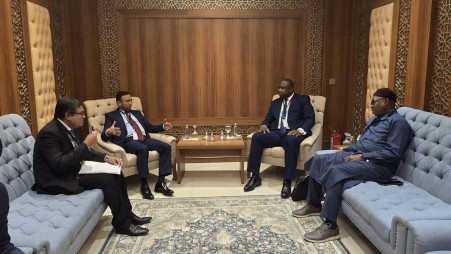
State Minister for Foreign Affairs Humayun Kobir conducted bilateral meetings on August 27, engaging with various international counterparts. During these discussions, Bangladesh formally requested Qatar to prioritize its liquefied natural gas (LNG) supplies to Bangladesh. This appeal was made with a specific condition, asking for priority once the Strait of Hormuz reopens and maritime movement in the area fully resumes. The series of important bilateral meetings show Bangladesh's proactive diplomatic efforts to address key national interests and regional challenges.
Rohingya Crisis Focus
State Minister for Foreign Affairs Humayun Kobir met with Gambia's Attorney General and Minister of Justice Dawda A Jallow. Their discussions focused on the ongoing pursuit of justice for the Rohingya community. Gambia has been a key player in the legal proceedings at the International Court of Justice (ICJ) regarding alleged genocide against the Rohingya in Myanmar. The meeting served as a key platform to reinforce the collaborative approach between the two nations on this pressing humanitarian issue.
During the meeting, Attorney General Dawda A Jallow stated, "The International Court of Justice (ICJ) is expected to deliver its verdict in October 2026 in the case concerning the alleged genocide against the Rohingya in Myanmar." This timeline shows the continued international focus on accountability for the atrocities faced by the Rohingya population. Bangladesh, hosting over a million Rohingya refugees, has consistently advocated for their safe, voluntary, and dignified return to Myanmar, alongside pursuing avenues for justice. The bilateral meeting between Bangladesh and The Gambia reinforced their shared commitment to this cause, emphasizing the critical importance of maintaining the Rohingya crisis high on the global agenda.
Energy and Bilateral Ties
State Minister for Foreign Affairs Humayun Kobir held a meeting with Qatar's Minister of State for Foreign Affairs Sultan bin Saad Al-Muraikhi. During their discussions, Bangladesh reiterated its backing for Qatar's ongoing mediation efforts between Iran and the United States. This reaffirmation notes Bangladesh's support for diplomatic solutions to regional tensions. The Qatari minister, Sultan bin Saad Al-Muraikhi, expressed his country's readiness to further strengthen energy cooperation with Bangladesh. This engagement comes as Bangladesh seeks to diversify its energy sources and secure reliable supplies for its growing economy. The bilateral talks showed the mutual interest in enhancing strategic partnerships, particularly in the energy sector, which is vital for Bangladesh's development. Qatar's commitment to bolstering energy ties aligns with Bangladesh's broader diplomatic goals of fostering strong relationships within the Organization of Islamic Cooperation (OIC) framework, promoting stability and economic prosperity among member states.
Maldives Discussions
State Minister for Foreign Affairs Humayun Kobir held discussions with Maldivian Foreign Minister Iruthisham Adam. During their meeting, Bangladesh and the Maldives addressed a range of bilateral issues, exchanging views on matters of mutual interest. The engagement served to deepen diplomatic ties between the two nations, building upon their existing friendly relations. Their talks also aimed at identifying avenues for enhanced cooperation across various sectors, including trade, tourism, and maritime security, reflecting a shared commitment to regional stability and economic growth.
Gambia's ICJ Case Role
Bangladesh emphasized the critical importance of close cooperation with The Gambia to maintain the Rohingya crisis as a prominent issue on the global agenda. This focus emerged during discussions between State Minister for Foreign Affairs Humayun Kobir and Gambia's Attorney General and Minister of Justice Dawda A Jallow. Bangladesh called for sustained efforts towards achieving a full and sustainable resolution to the crisis. This resolution, according to Bangladesh, must include the safe, dignified, and voluntary return of the Rohingya population to Myanmar. The bilateral engagement reinforced both nations' commitment to seeking justice and a durable solution for the displaced Rohingya, ensuring their plight is not forgotten. The ongoing collaboration aims to ensure international attention remains on the plight of the Rohingya, particularly as the International Court of Justice prepares to deliver its verdict on the alleged genocide, a landmark decision eagerly awaited by the international community and the affected population.