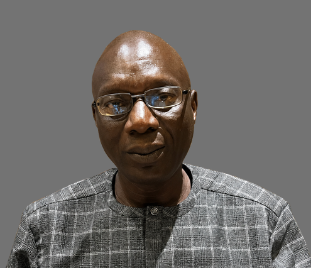
Sarjo Jarju, chairman of the Bulock Youth Development Association, has emphatically rejected claims made by Minister of Local Government and Lands, Hamat Bah, asserting that the land where a military barracks fence was recently erected at Bulock belongs to Senegal. Jarju stated that the minister's declaration at the National Assembly was "completely unacceptable to the people of Bulock." He insisted the territory is unequivocally Gambian, citing colonial boundary pillars as "physical evidence" that has been in place for generations. The people of Bulock staunchly believe that Senegalese security forces entered Gambian territory to demolish the military camp, an action they view as an infringement on their sovereignty. Jarju emphasized that the community has lived, farmed, and depended on this land for generations, asserting that the colonial boundary pillars have been present since childhood for many residents, serving as undeniable markers of the historical border.
The Minister of Local Government and Lands, Hamat Bah, had publicly stated that the land in question falls within Senegalese territory, a claim that has ignited significant controversy within the Bulock community. This assertion directly contradicts the long-held understanding and practical reality for the residents of Bulock. Jarju, representing the collective voice of the youth and the wider community, noted that the minister's statement not only disregards the historical context but also dismisses the lived experiences of the people who have inhabited and cultivated the land for centuries. He reiterated that the community's claim is not based on recent interpretations but on tangible, historical markers.
Generations of Gambian Use
Sarjo Jarju, chairman of the Bulock Youth Development Association, asserted that Bulock's claim to the land is based on "physical evidence" that has been in place for generations. Jarju stated that "The land is in Gambian territory, and the people of Bulock have lived, farmed and depended on this land for generations." He further elaborated on the community's long-standing connection to the area, stating, "We have the colonial boundary pillars. These pillars have been there since many of us were children. We know where they are, and our community has lived with them for generations." According to Jarju, one specific colonial pillar provides "critical evidence concerning the location of the historical boundary," serving as a definitive marker of the demarcation established during the colonial era. This pillar, among others, has been a constant presence in the lives of the Bulock residents, guiding their understanding of their territorial rights.
Jarju emphasized the profound significance of the land to the local population, stressing that its value extends far beyond mere geographical coordinates. "This is not merely about a piece of empty land. This is about people’s homes, farms, cashew orchards, orange orchards, grazing areas and livelihoods," he said, painting a vivid picture of the integral role the land plays in their daily existence. He concluded by stressing the importance of maintaining good relations with neighboring countries while simultaneously upholding community rights and territorial integrity. "We respect our neighbours in Senegal, and we do not seek conflict with anyone. But friendship and peaceful relations between two countries must never come at the expense of the territorial rights and livelihoods of innocent communities," Jarju added, advocating for a resolution that respects both international relations and local realities. The community's dependence on the land for agriculture and sustenance makes the dispute not just a matter of borders, but a fundamental issue of survival and cultural heritage.
Questioning the Official Narrative
Sarjo Jarju questioned the official narrative presented by Minister Bah by asking, "How can newly identified coordinates suddenly override physical colonial boundary pillars that have existed for generations?" He stated this in reference to the Minister's claim about the land, which appears to rely on modern surveying methods over established historical markers. The community border taskforce had previously accompanied the border commission and demonstrated the existing colonial pillars on the ground to them, providing direct, undeniable evidence of their location and historical significance. This direct engagement, according to Jarju, should have provided the commission with a clear understanding of the community's position and the physical evidence supporting it.
Concerns were subsequently raised regarding a second pillar, described by Jarju as "newly constructed and positioned near the Kafuta Forest," which appeared distinctly different from the older, authentic colonial markers. Jarju demanded clarity on this anomaly, stating, "If the commission itself observed irregularities surrounding that pillar, then the people of Bulock deserve a clear and transparent explanation." This discrepancy, he argued, casts doubt on the integrity of any new demarcation efforts and calls for a thorough investigation.
Jarju further requested that historical evidence and original demarcation records be made public for scrutiny, allowing independent verification of any claims. He also called for an independent examination of all colonial boundary pillars and demarcation records to ensure transparency and accuracy in determining the true border. Jarju articulated the community's questions directly, reflecting their deep skepticism and desire for truth: "We want to know who established this conclusion? What historical documents were examined? Where are the original demarcation records? What happened to the colonial pillars? Why should the people of Bulock accept a determination that appears to contradict the physical evidence they have known all their lives?" These questions show the community's demand for accountability and a clear, evidence-based justification for any proposed changes to the border. The reliance on colonial pillars as "physical evidence" forms the bedrock of their argument, making any deviation from these markers a matter of profound concern.
Demands for Transparency and Justice
Sarjo Jarju appealed directly to President Adama Barrow and the National Assembly for transparency regarding the conclusion that the land in question belongs to Senegal. Jarju, chairman of the Bulock Youth Development Association, stated that the community requires a clear and full explanation of how this determination was reached, especially given the community's long-standing presence and historical evidence. He emphasized the critical need for all relevant information, including historical documents, survey reports, and any new coordinate data, to be made public, allowing for thorough scrutiny by the affected communities and the wider Gambian public. This transparency, he argued, is essential for building trust and ensuring the legitimacy of any decisions made concerning their ancestral lands.
Jarju also requested proper and meaningful consultation with the communities directly impacted by the land dispute, particularly those who have lived and farmed on the territory for generations. He stated that any decisions regarding the territory should involve direct engagement with residents, whose perspectives and historical knowledge are invaluable. This consultation, according to Jarju, is not merely a formality but an essential step for ensuring that the perspectives, historical knowledge, and lived experiences of the local population are genuinely considered and integrated into the resolution of the border issue. The community believes that their intimate understanding of the land, passed down through generations, holds key insights that cannot be overlooked in favor of purely technical or political interpretations. Without such engagement, any resolution risks being perceived as illegitimate and imposed, potentially leading to further discord.