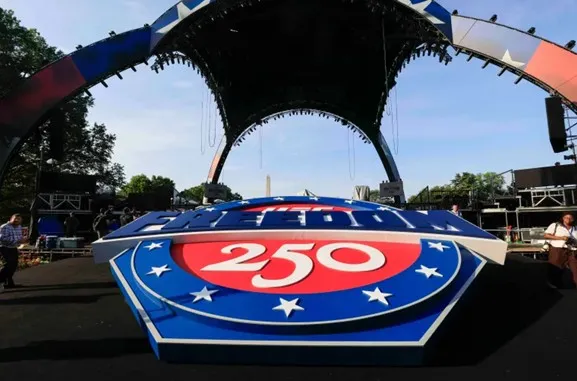
The 2026 FIFA World Cup, jointly hosted by the United States, Canada, and Mexico, is scheduled to unfold across the three North American nations. This monumental event, a celebration of global football, will see matches played across these diverse territories, uniting fans from around the world. A substantial portion of the tournament's matches, including many of its most significant fixtures, will be staged in the United States. This arrangement means that a World Cup intended to unite humanity risks becoming a tournament more accessible to wealthy nations than to ordinary supporters from the Global South. The consequence is that a World Cup that should unite humanity risks becoming a tournament more accessible to wealthy nations than to ordinary supporters from the Global South, thereby undermining the very spirit of global inclusion that football purports to represent.
The American Border Barrier
The current immigration and border control framework of the United States is among the most rigorous globally. For many Africans, Asians, and citizens of developing countries, obtaining a United States visa remains a difficult, expensive, and often uncertain process. This difficulty is compounded by practical challenges in their home countries. In some nations, appointment slots for visa applications are scarce, and visa processing times extend well beyond practical timelines for sporting travel. For example, the cost of airfare alone can be prohibitive for West African fans, a significant barrier when added to visa fees, travel documentation, accommodation expenses, insurance requirements, and the possibility of additional immigration scrutiny upon arrival. These factors create substantial financial and logistical hurdles for potential attendees from these regions, effectively creating an invisible wall for many aspiring spectators.
Beyond the financial outlay, the psychological toll of navigating complex and often opaque visa procedures can be immense. Applicants frequently face long waits, submit extensive documentation, and endure interviews with no guarantee of approval, adding a layer of stress and uncertainty to their travel plans. The current system, while designed to manage national security and immigration flows, inadvertently creates a disparity in global access to events like the World Cup. It establishes a de facto hierarchy of accessibility, where citizens of certain nations face significantly higher hurdles than others. This situation is particularly acute for individuals from countries with historically high visa refusal rates, where the perception of an insurmountable barrier can deter even the most ardent fans from attempting to apply. Even for those who can afford the costs, the sheer administrative burden and the uncertainty of approval can be a major deterrent.
Immigration has become one of the defining political issues in the United States, influencing policy and public discourse. The nation also maintains an extensive and sophisticated security architecture, which contributes to the stringent nature of its border controls. This framework contrasts with the situations in the co-hosting nations. Canada and Mexico have historically presented different immigration environments, and some fans may find entry into those countries more manageable. This divergence suggests that while the tournament is a shared event, the accessibility for international visitors varies significantly depending on the host country. The barriers preventing supporters from being present at the 2026 FIFA World Cup, therefore, were not created by football itself, but by politics, policy, and the invisible lines that divide humanity. These political and policy decisions, while perhaps serving national interests, inadvertently create significant challenges for an event striving for global unity.
The rigorous security architecture of the United States, while understandable from a national security perspective, translates into a highly scrutinised entry process for international visitors. This level of scrutiny, combined with the inherent complexities of visa applications, places a disproportionate burden on individuals from developing nations. The process is not merely about presenting a valid passport; it often involves proving sufficient funds, demonstrating strong ties to one's home country to negate immigration risk, and navigating a bureaucratic labyrinth that can be intimidating for first-time international travellers. The cumulative effect is a system that, while ostensibly open to all, effectively filters out a significant portion of the global football community based on nationality and economic standing.
Global Equity vs. National Policy
Football's enduring power often lies in its ability to erase divisions, if only for ninety minutes, fostering a sense of global community. This perspective suggests that the sport should open doors for participation and access rather than reinforce existing international borders through stringent national policies. Football should open doors rather than reinforce borders, embodying its stated principles of universal access and inclusion. West Africa provides a compelling lens through which to examine the challenges posed by current United States immigration policies in this context. The region, known for its passionate football fans and rich sporting culture, often faces some of the most significant obstacles in international travel.
While The Gambia itself is absent from the 2026 competition because it did not secure qualification, the disparity in access remains a significant concern. The absence of the national team does not diminish the passion of its supporters or their desire to witness the global spectacle. Gambian football officials, associated with the Gambia Football Federation, may attend the tournament through official channels and established diplomatic pathways, noting a stark contrast in accessibility. In contrast, ordinary Gambian supporters are confronted with substantial visa application and travel barriers, effectively preventing their attendance. This illustrates a broader issue: official delegations and VIPs often navigate a different, smoother path compared to the average fan, exacerbating the perception of unequal access.
The 2010 FIFA World Cup in South Africa offered a different model, with the event representing an African renaissance. That tournament brought the world to a continent long underrepresented in global sport, allowing broader participation and engagement. The South African experience demonstrated that a World Cup could be hosted successfully in a region with different economic and political realities, offering a more inclusive vision of global football. More recently, the 2022 FIFA World Cup in Qatar, despite controversies surrounding labor rights and governance issues, demonstrated a logistical advantage. The compact nature of that tournament allowed supporters to attend multiple matches with relative ease once they had gained entry into the country, providing a different kind of accessibility for those who could overcome the initial hurdle of entry. While the host nations were different, both tournaments offered unique lessons in how to manage global participation.
The contrast with past World Cups notes the potential for host nations to actively facilitate, rather than hinder, global attendance. The spirit of the World Cup, as a unifying event, is diminished when a significant portion of the global fanbase is effectively excluded due to policy rather than passion or ability. The current situation risks turning the 2026 tournament into an event primarily for those from wealthier nations or those with easier access to US visas, thereby undermining its universal appeal. The philosophical underpinning of football, as a sport for everyone, clashes directly with national policies that create such significant barriers.
Reimagining the World Cup Host
Fifa frequently proclaims that football belongs to everyone, a sentiment echoed by Muhammed Jallow, who stated, "Fifa frequently proclaims that football belongs to everyone. Its slogans celebrate equality, inclusion, and anti-discrimination. Yet these principles are tested when supporters from certain regions perceive that they face disproportionate obstacles to participation. The World Cup should not inadvertently mirror global inequalities. Rather, it should challenge and transcend them." The United States, as a host nation, possesses world-class stadiums, extensive transportation networks, advanced broadcasting capabilities, and substantial commercial resources. These attributes undoubtedly make it a highly capable host in terms of infrastructure and logistics. However, awarding hosting rights should involve a more full assessment of accessibility, moving beyond purely commercial and infrastructural considerations.
The current criteria for host selection often heavily weigh a nation's economic power and existing infrastructure, which naturally favors developed countries. While stadium quality and commercial capacity are important factors in host selection, visa policies, travel affordability, and the ease with which supporters from developing countries can attend are equally key considerations. A truly global tournament requires host nations to commit not only to providing top-tier facilities but also to fostering an environment of genuine inclusivity for all fans. This means actively working to mitigate the very barriers that national policies often erect.
Streamlined visa procedures for accredited fans, temporary World Cup travel arrangements, increased consular staffing, and collaborative agreements with participating nations could significantly reduce existing barriers. These measures would not compromise national security but would instead demonstrate a commitment to the World Cup's stated values of global unity and participation. Imagine a system where fans with legitimate match tickets could apply for a special, expedited World Cup visa, with clear guidelines and a transparent process. Such initiatives would send a powerful message that the host nation genuinely welcomes all supporters, regardless of their country of origin or economic status.
The voices of fans from Banjul, Dakar, Accra, Dhaka, and Jakarta matter just as much as those from New York, London, or Berlin, showing the need for equitable access. Their passion for the sport is universal, and their ability to participate in its greatest spectacle should not be dictated by the stringency of visa regulations. While stadium quality and commercial capacity are important factors in host selection, visa policies, travel affordability, and the ease with which supporters from developing countries can attend are equally key considerations. In recent decades, major sporting events have increasingly gravitated toward nations with substantial economic power and commercial influence, a trend that can exacerbate disparities in global participation. This trend, while ensuring financial success and high-quality venues, risks alienating a significant portion of the global fanbase and undermining the aspirational goals of international sport. The 2026 FIFA World Cup presents an opportunity to re-evaluate these priorities and strive for a more equitable and inclusive global event.